|
 |
Introduction Paperweights and trinkets
Inkstills and pen holders
Pens and letter openers
Candlesticks and lamps
Artillery shells cartridges
Miscelleanous objects
RETURN TO THE PREVIOUS MENU
|
 |
From the very first weeks of the conflict in August 1914, as in any war, soldiers collected trophies taken from the enemy - helmets, caps, weapons, belts, etc. - to keep as souvenirs or proudly give to their families. As the war of position set in after a few months, metal waste created by combat ammunition and the barrage of artillery concentrated on areas where the front line barely moved began to accumulate. Copper, brass, bronze, steel, and aluminum were available in abundance in the form of weapons, personal equipment, shell casings, shells, artillery fuzes, grenades, shrapnel, etc.
Little by little, soldiers who were more skilled than others began to collect and transform these inert objects into elaborate souvenirs, sometimes annotated or signed. Over time, these initially personal items were exchanged or sold, and workshops were sometimes organized. This 'trench craftsmanship' also deserves to be called 'trench art' because of the artistic creativity it often displays. It is interesting to note that France seems to have been the most prolific nation in this practice. Conversely, German war souvenirs of this type are very rare: subject to a severe naval blockade, the Second Reich was unable to import certain metals (particularly copper) needed for its powerful war industry. It was by substituting less noble metals and alloys, as well as looting the invaded countries and systematically recycling objects collected on the battlefields, that the country had to rely on to meet its enormous needs for equipment and ammunition. As a result, German soldiers were strictly forbidden to keep or transform ammunition and other military objects found on the front line into souvenirs. |
|
In France, after the war, few homes did not have a memento of a soldier in their office, living room, or on their mantelpiece. Yet for the soldiers who fought in it and those who returned, the Great War was most often an indescribable experience of violence, terror, and misery. The letters these men wrote to their loved ones, the stories they told during their leave, and the memories of war they recounted by the fireside were often softened, with the most terrifying images of those years of horror remaining buried in their minds to protect their families and themselves.
|
|
 |
And this reality produces a fascinating aspect of trench craftsmanship: what did war veterans really see in these artistic paperweights, vases, rings, lighters, inkwells, etc. that their families did not see ?
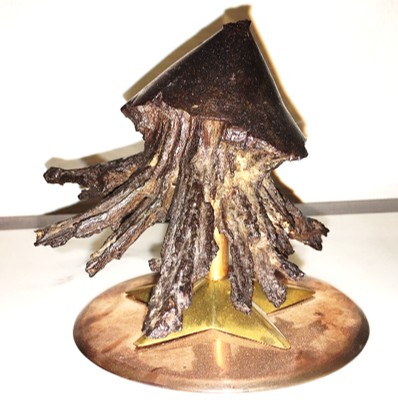
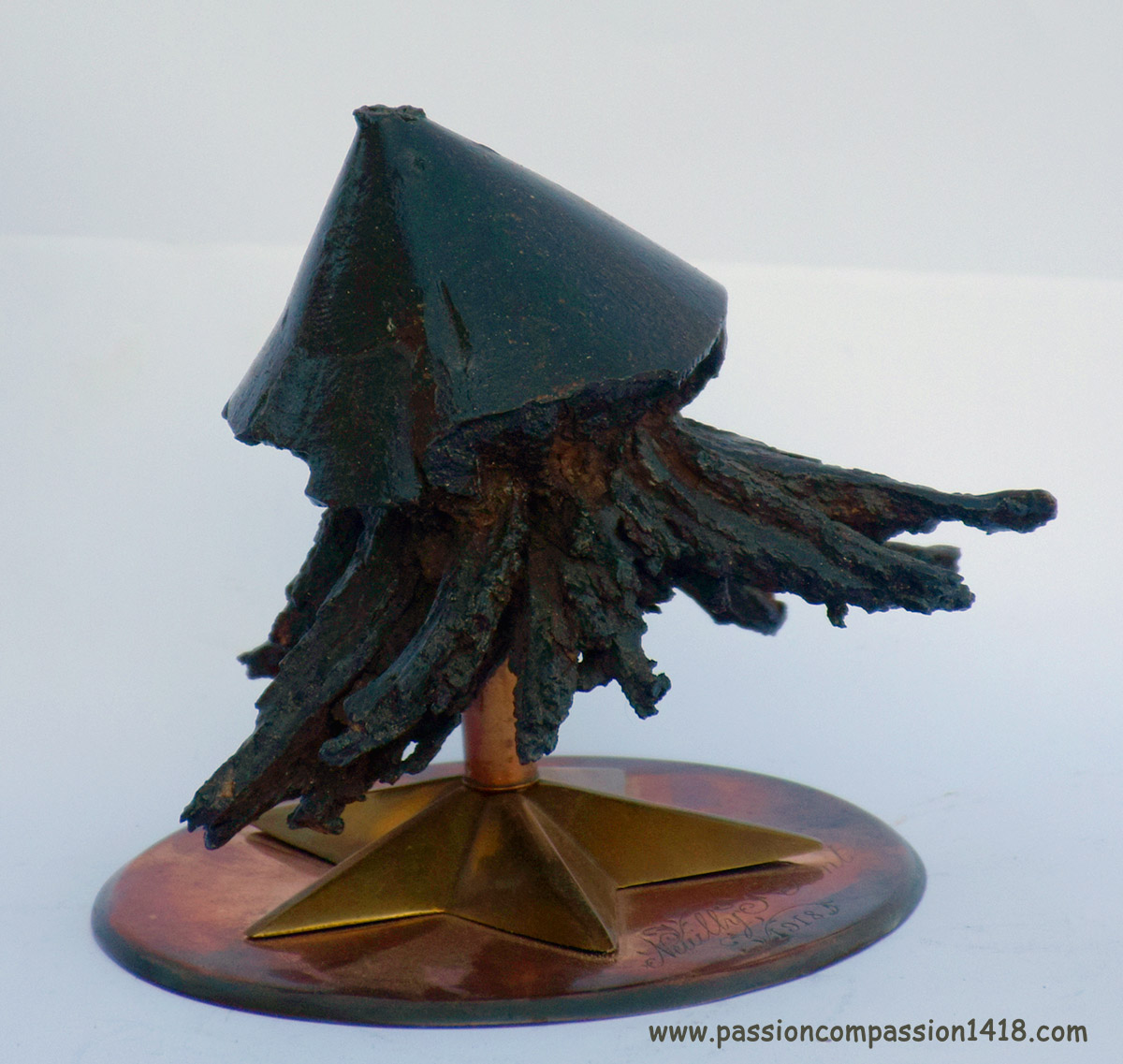
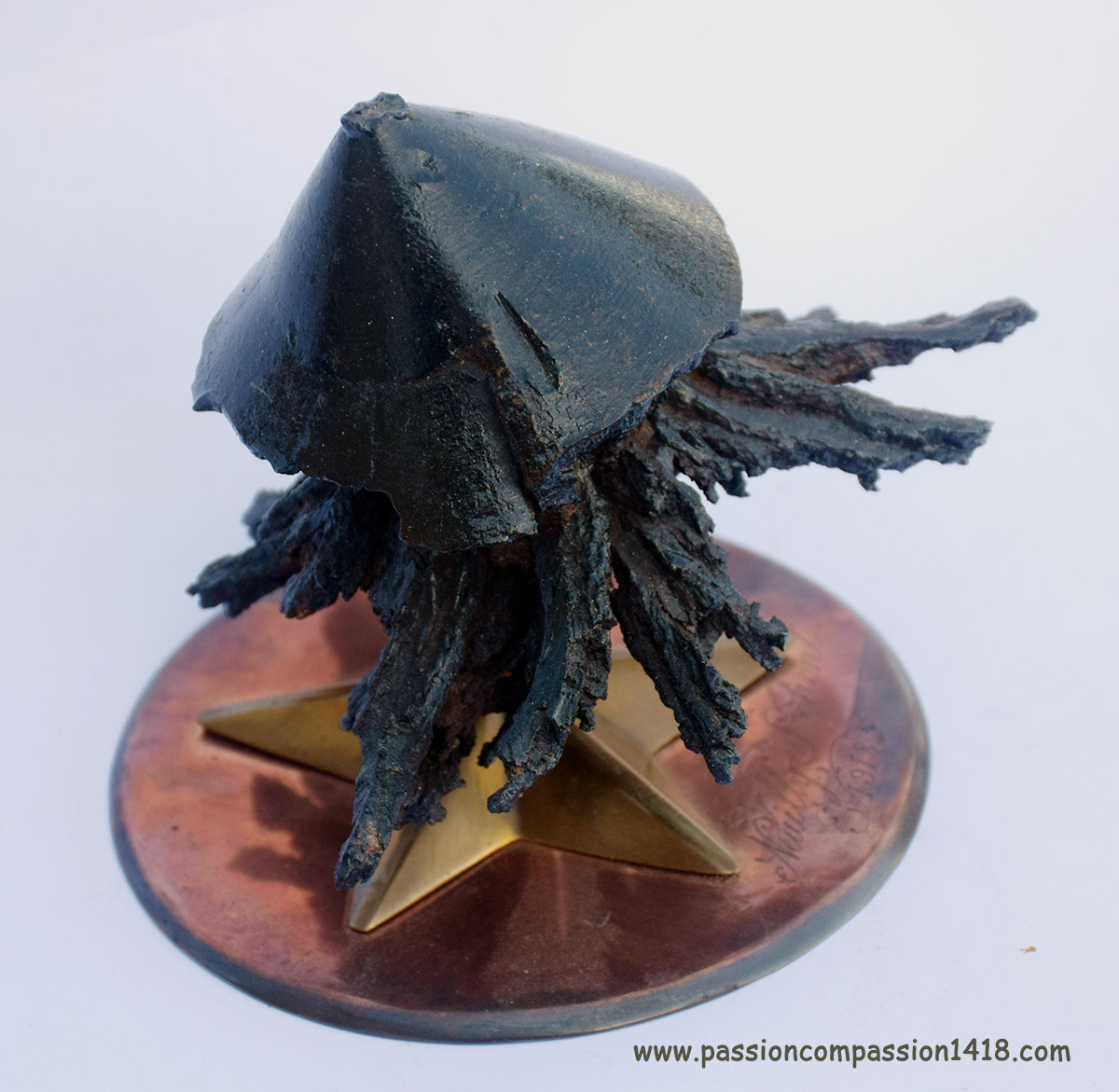
Let's try to briefly put ourselves in the shoes of the veteran who brought home the souvenir pictured on the left, dated 1918. Made from an exploded German artillery fuze, this object now took pride of place on the family mantelpiece. For his loved ones at the time, it probably had a certain emotional significance associated with the survival of their man, and perhaps aesthetic qualities. But the veteran himself, who had picked up this man-killing fuze, still warm perhaps, from a smoking and devastated battlefield after a violent bombardment intended to crush him, gas him, or bury him, amid the din of which he had been terrified and horrified, and during which several of his comrades may have been killed or horribly mutilated... What terrible images, sounds, smells, and cries came back to his memory and did he keep them carefully to himself when, in reverent silence, he looked at the barbs on this strange and elegant work of art, which were nothing more than terrible shards of steel designed to tear flesh apart ? When the grandfather or his widow died, these objects, suddenly deprived of their history and reduced to dust collectors, were often thrown away, scrapped, resold, or buried in attics. Let's examine a few examples. |
 |
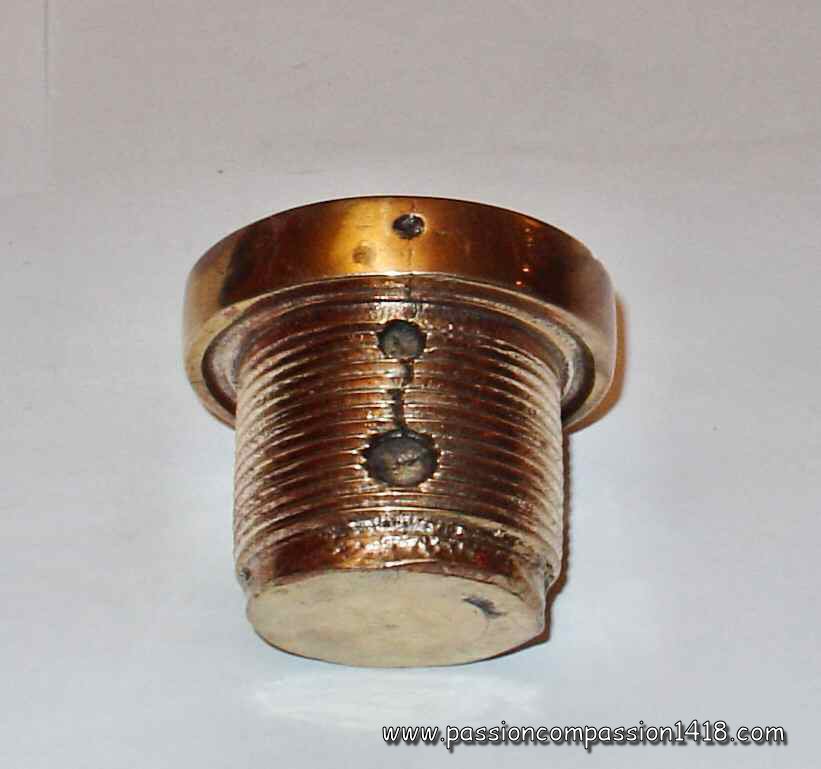 |
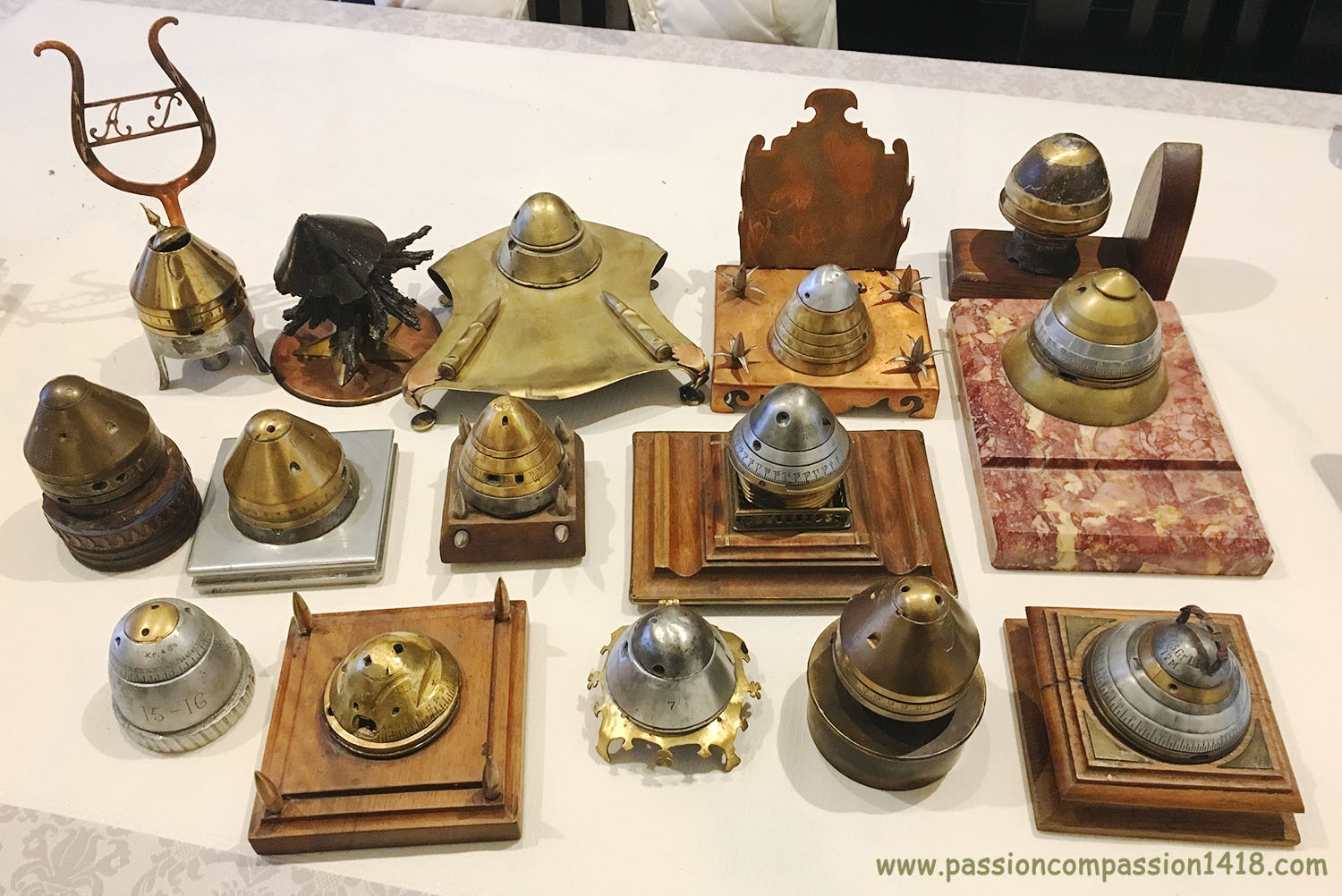
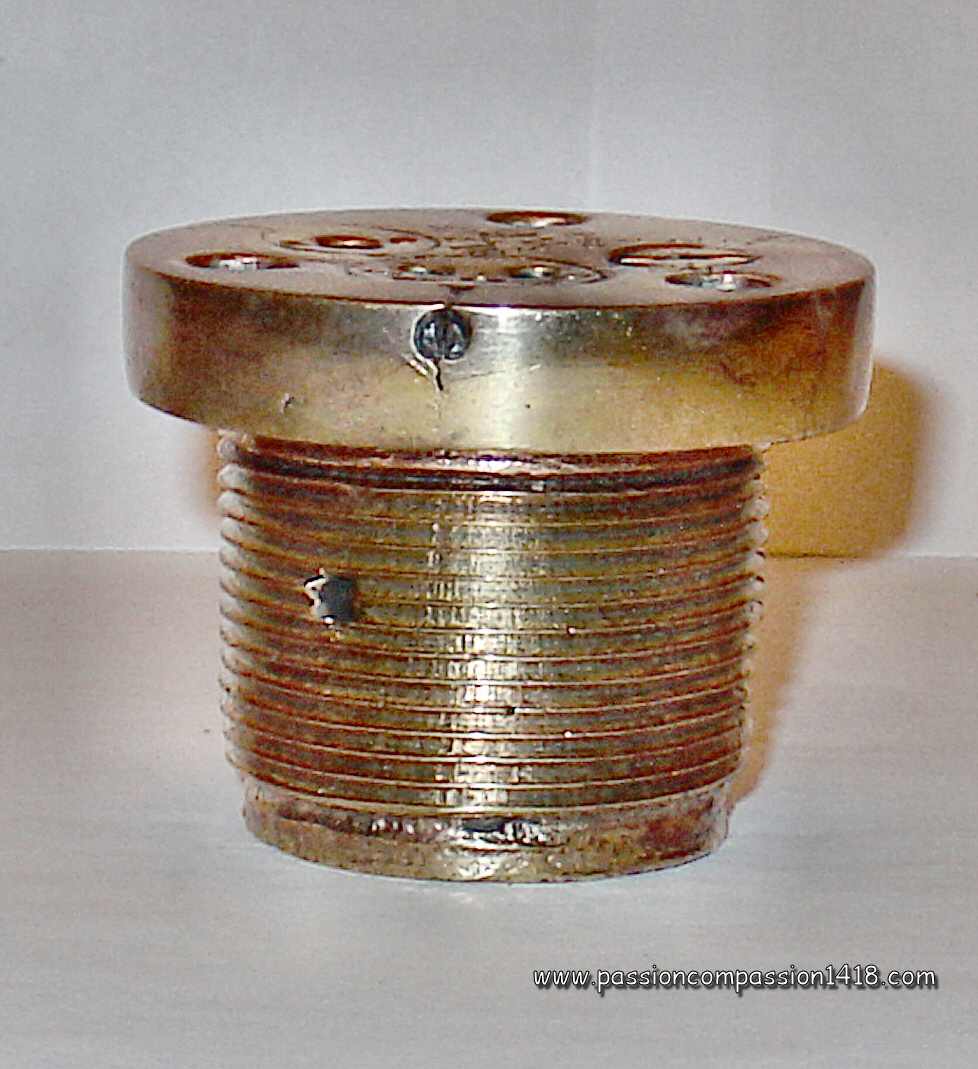
The sheer weight of a massive German fuze, even truncated, and the shine of its brass are enough to create an attractive paperweight steeped in memories. Here, this BdZ06 percussion fuze has been sawn below the 51.5mm screw thread to remove the detonator tail, and carefully polished. |
 |
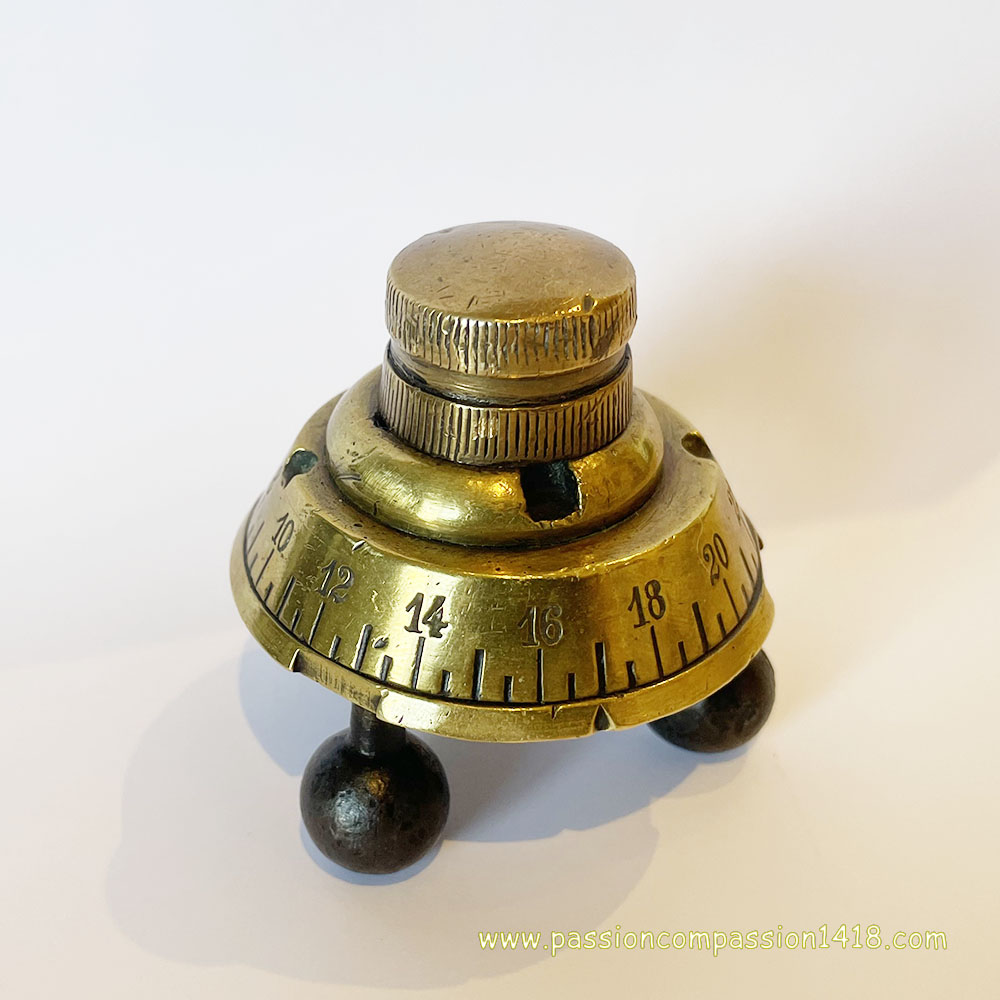 |
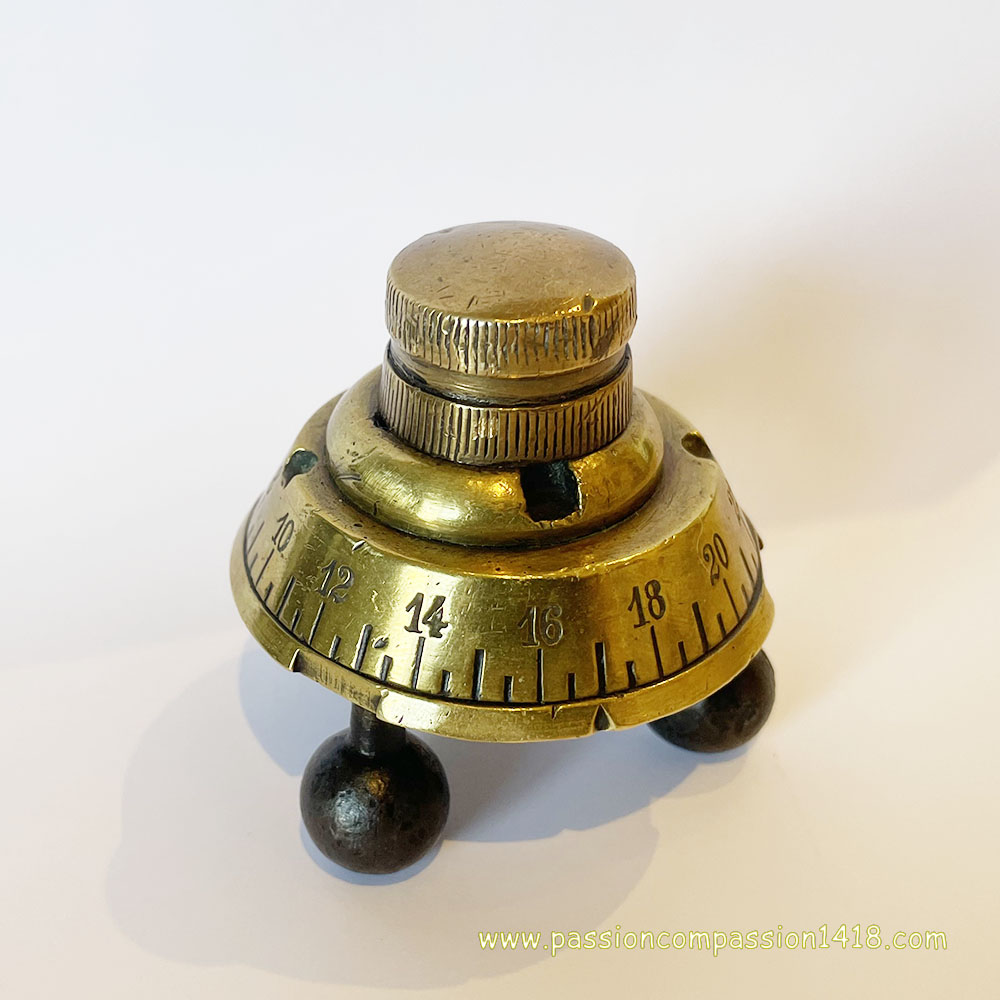
It is impossible for this trophy to date from the Franco-Prussian War of 1870-1871, since this antique German Schr Z c/73 fuze is a model designed in 1873 that was completely obsolete by 1914. Perhaps it was used in 1914-1918 with old shell stocks and picked up on a battlefield ? Or is it a pre-war souvenir ? |
 |
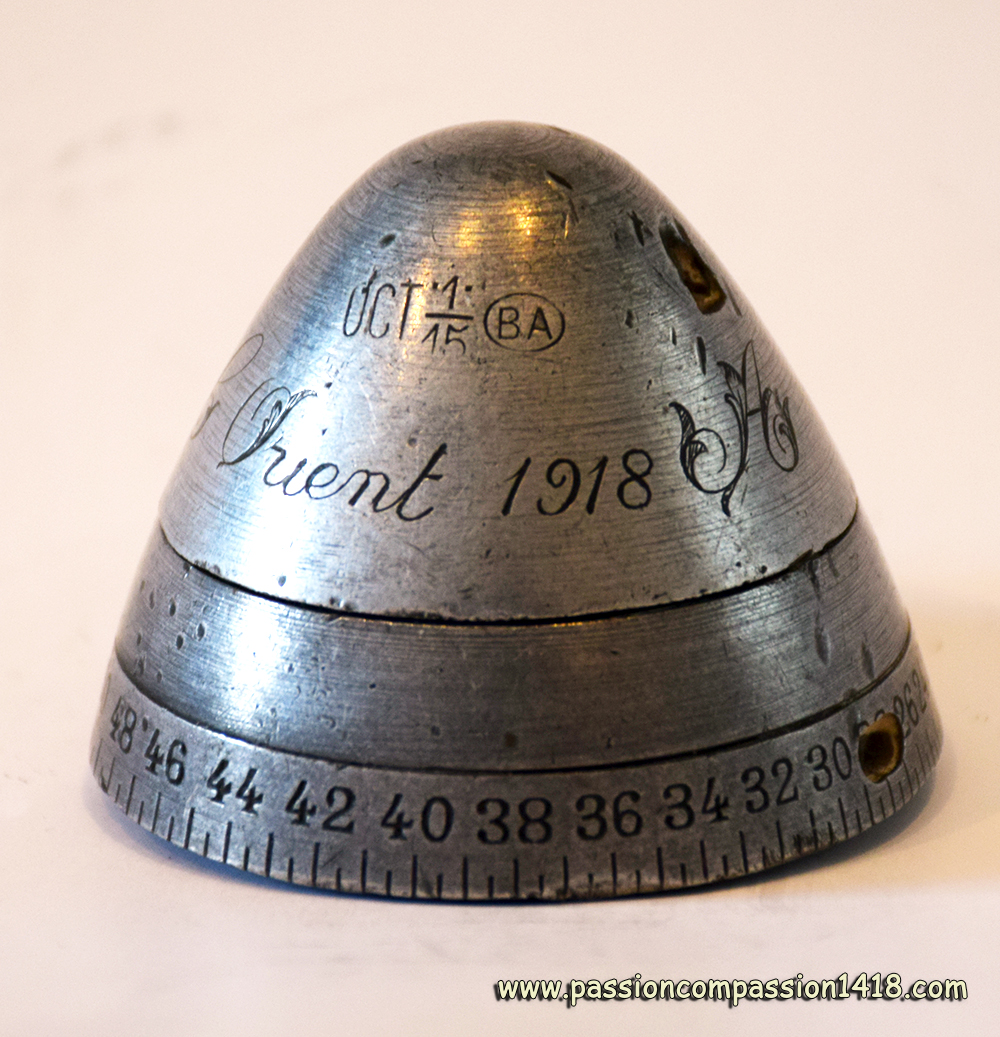 |
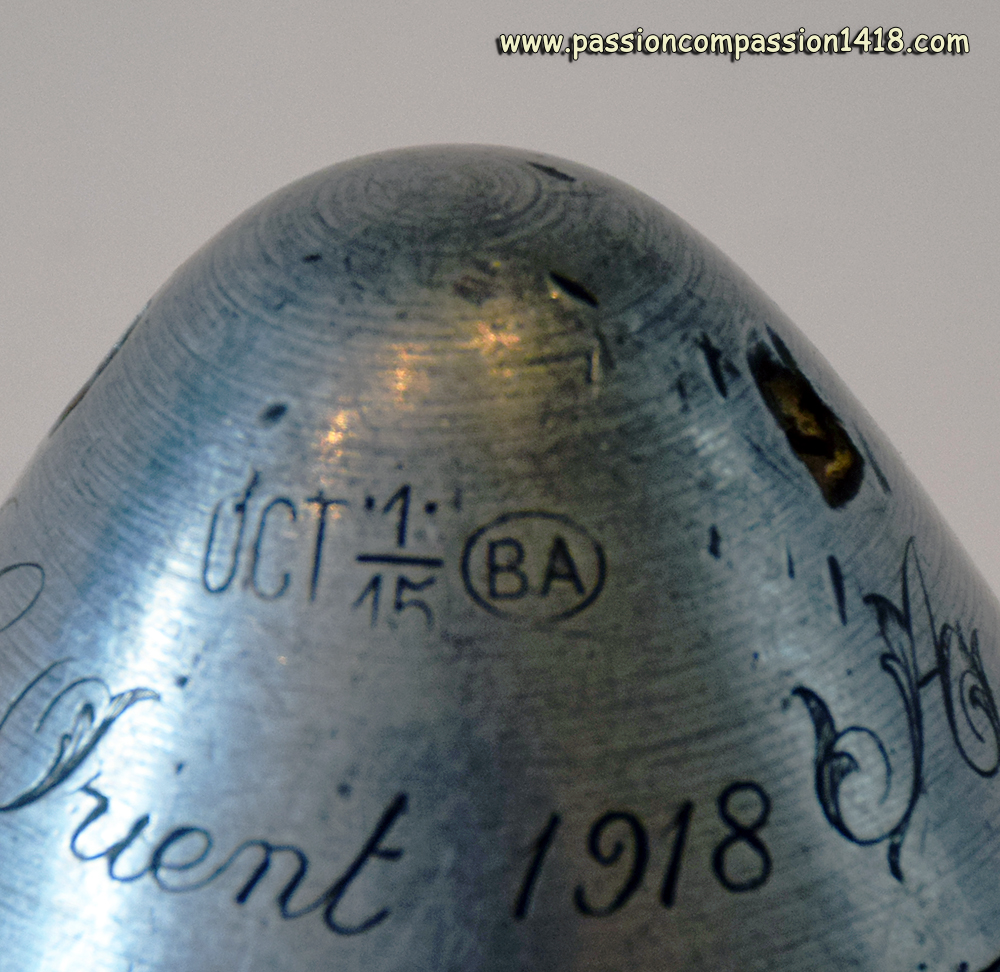
This paperweight is made from an Italian Mod 900 double-effect fuze for 65/11 mountain guns in excellent condition, truncated just above its fixed disc. |
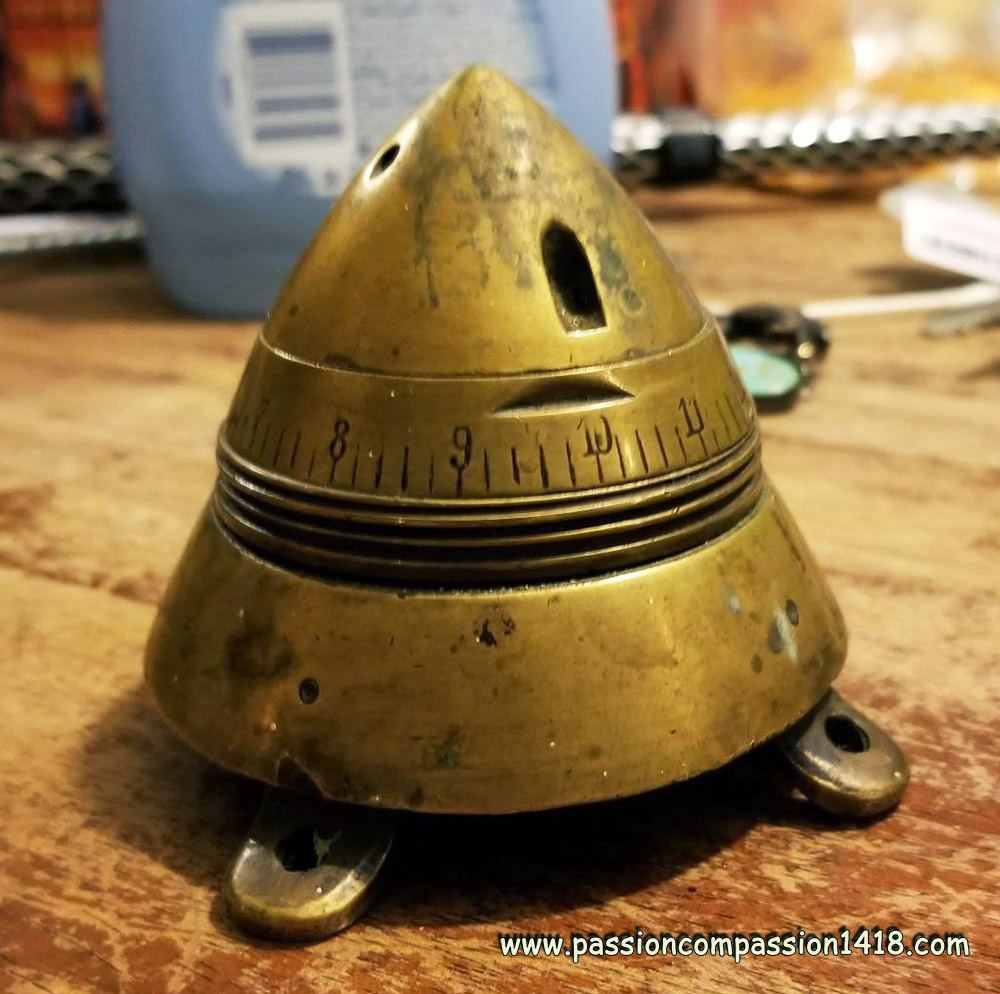 |
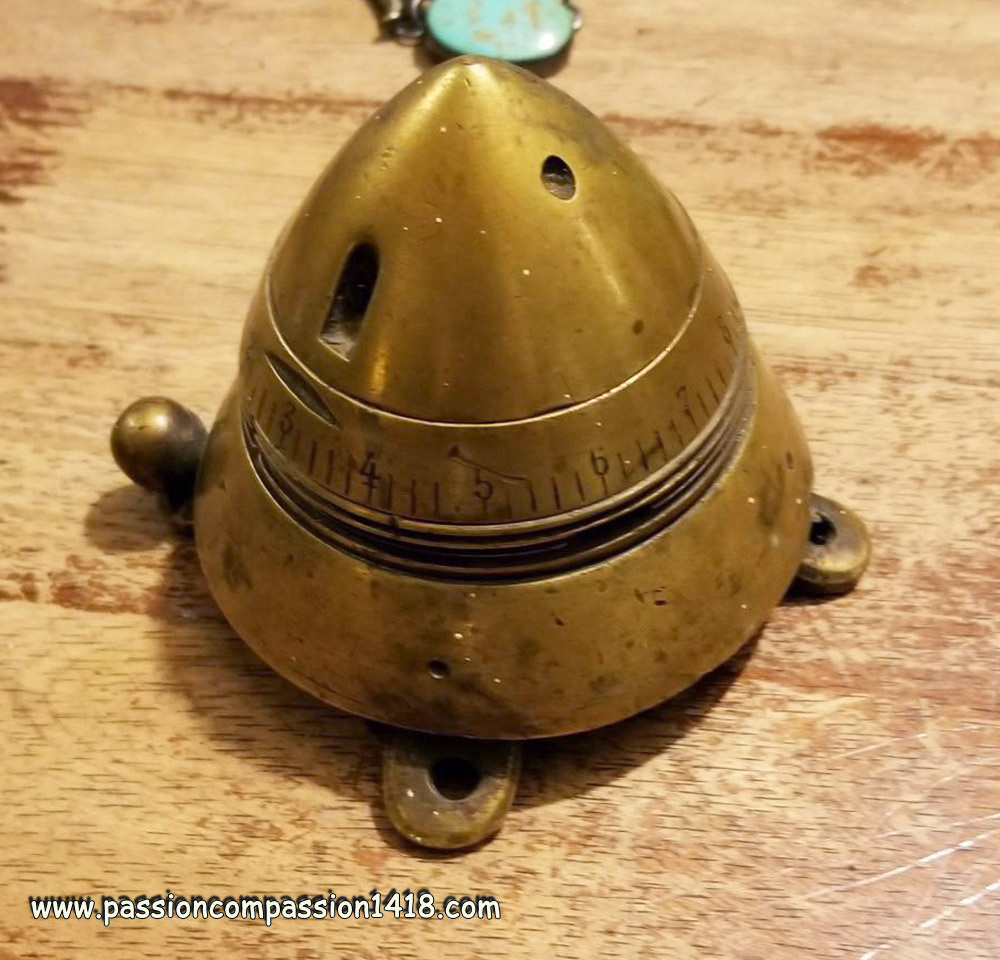 |
This is a 12-second double-effect Russian fuze, model 1891 , mounted on a section of a warhead and simply equipped with tabs, which makes up this simple paperweight. |
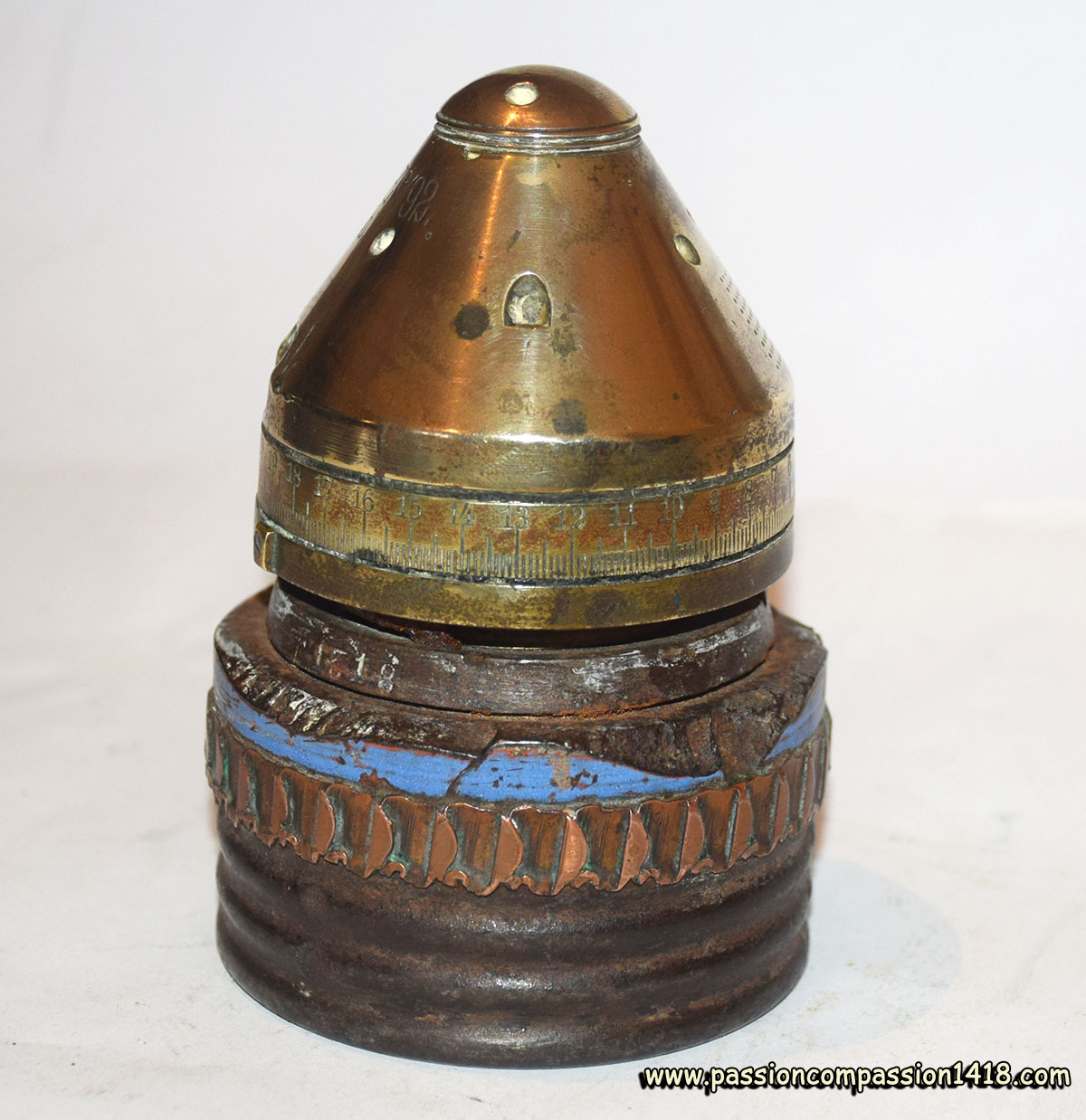 |
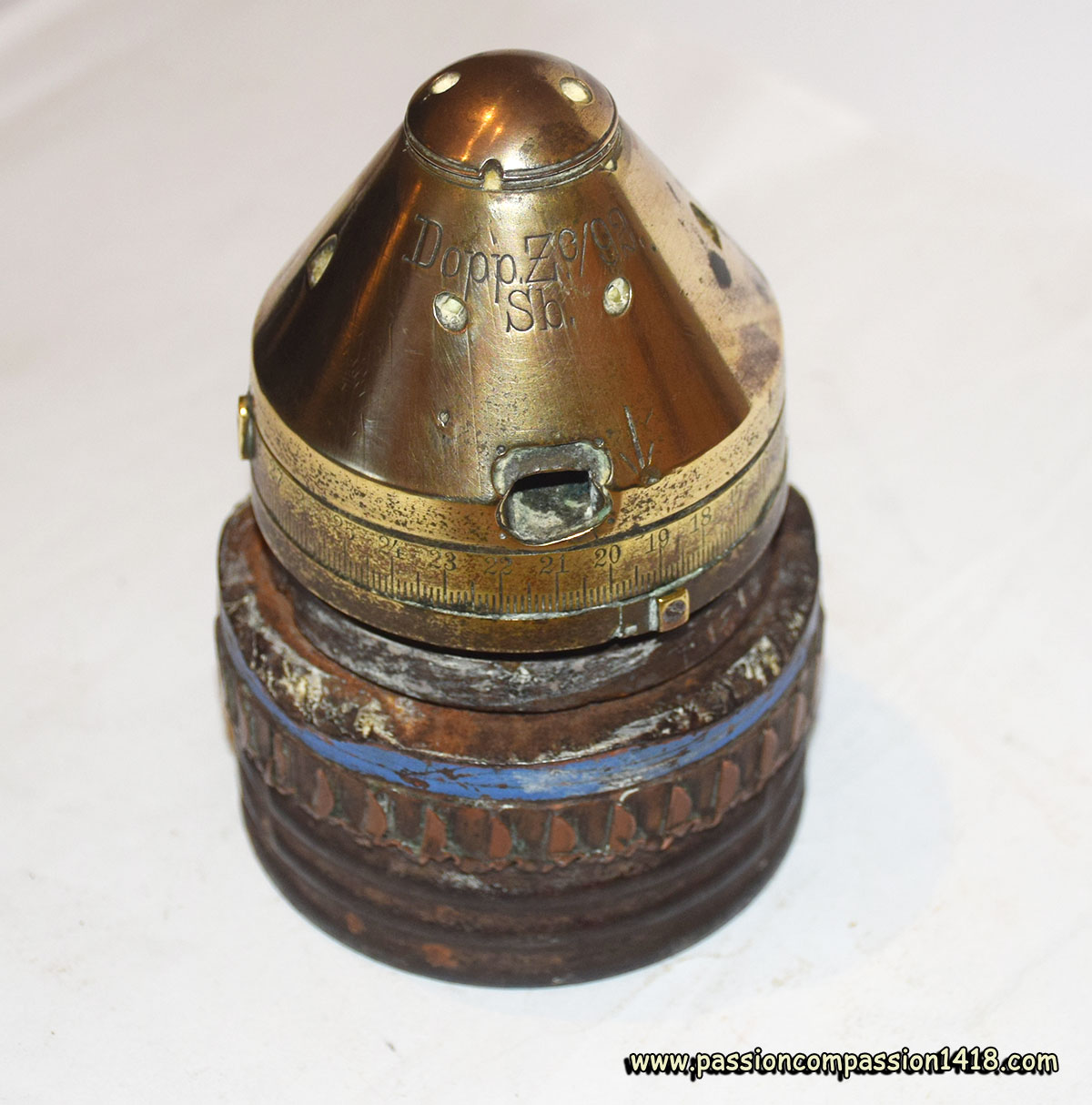 |
Slightly more sophisticated than a single fuze, this paperweight consists of a German Dopp Z 92 double-action fuze and the base of a 7.7 cm rear-charge shrapnel shell, also German, recognizable by its crimping grooves. There is no explanation for the blue band above the base's belt. |
 |
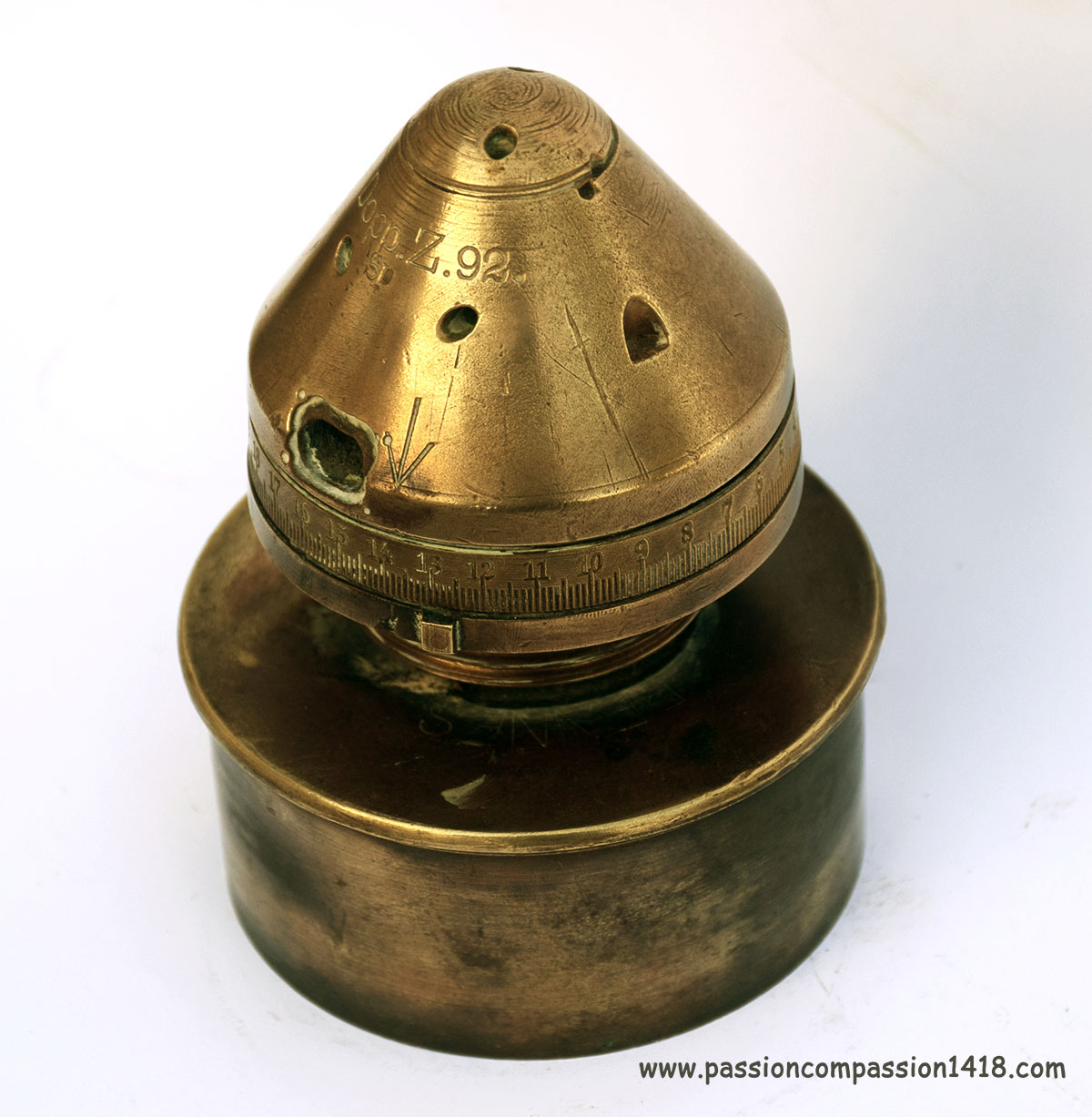 |
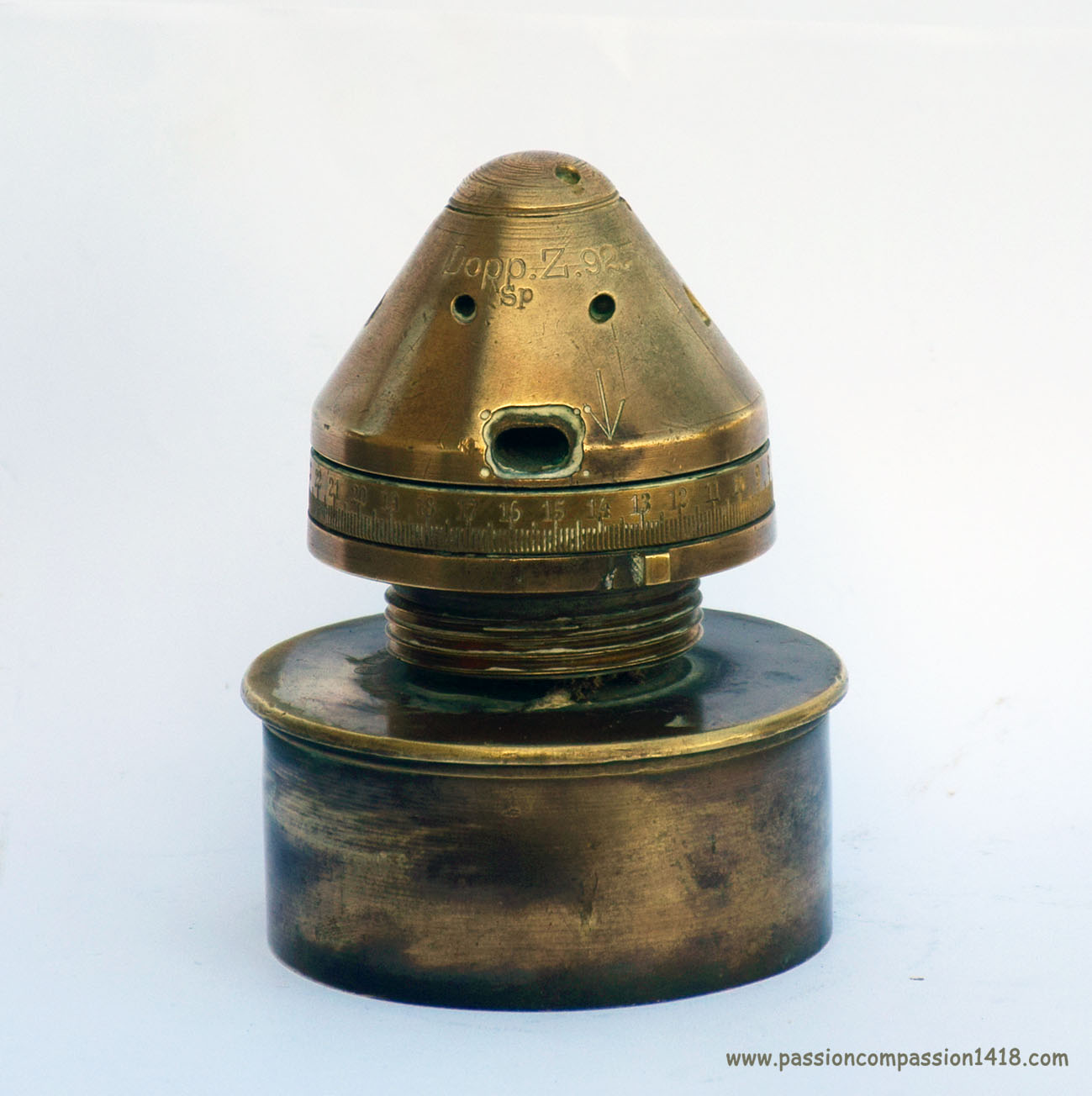
A variation on the previous paperweight, this one, still based on a German Dopp Z 92 double-effect fuze , this time mounted on the lower section of a 75mm shell casing, whose markings are largely obscured by the fuze and provide few clues ('L 1906 D - RENNES') |
 |
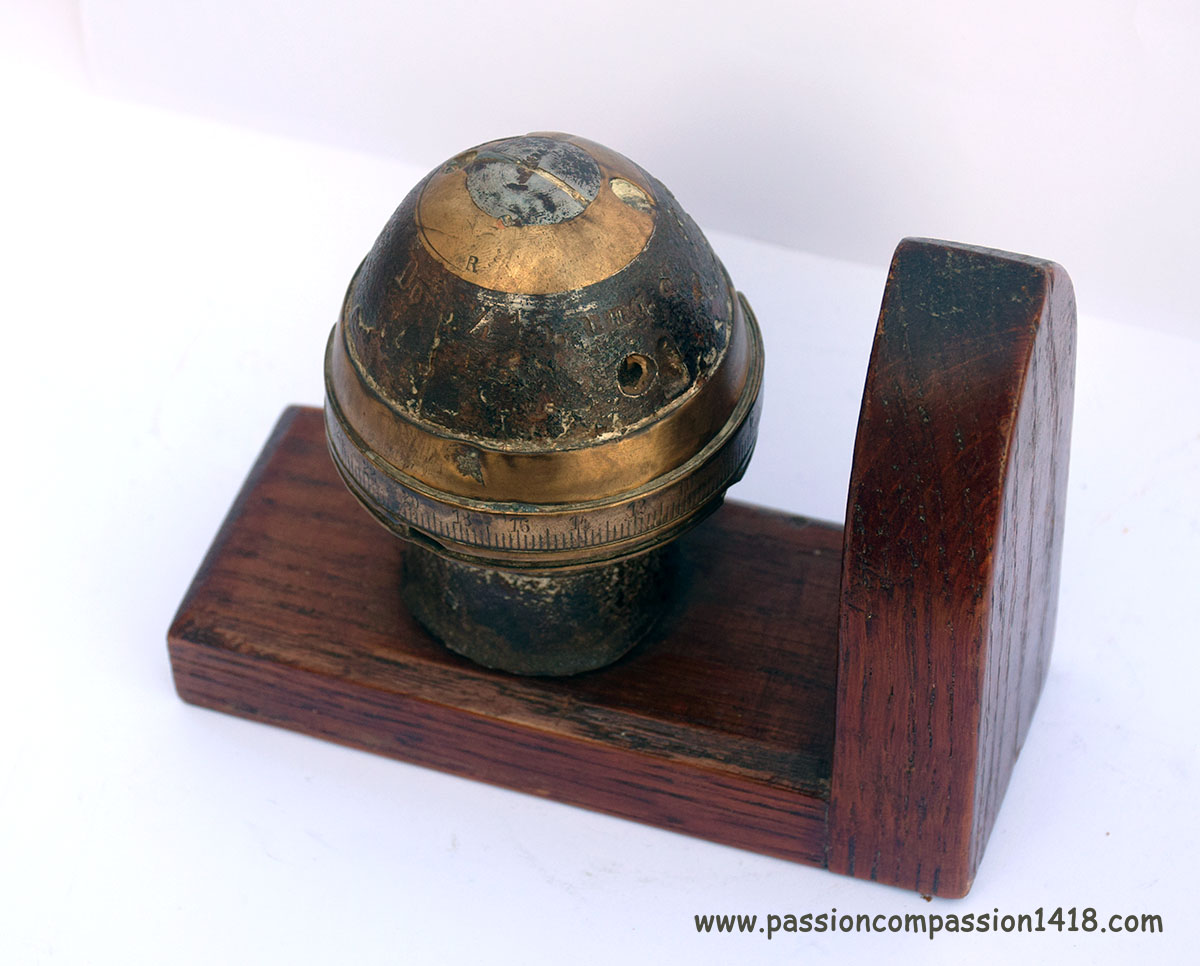 |
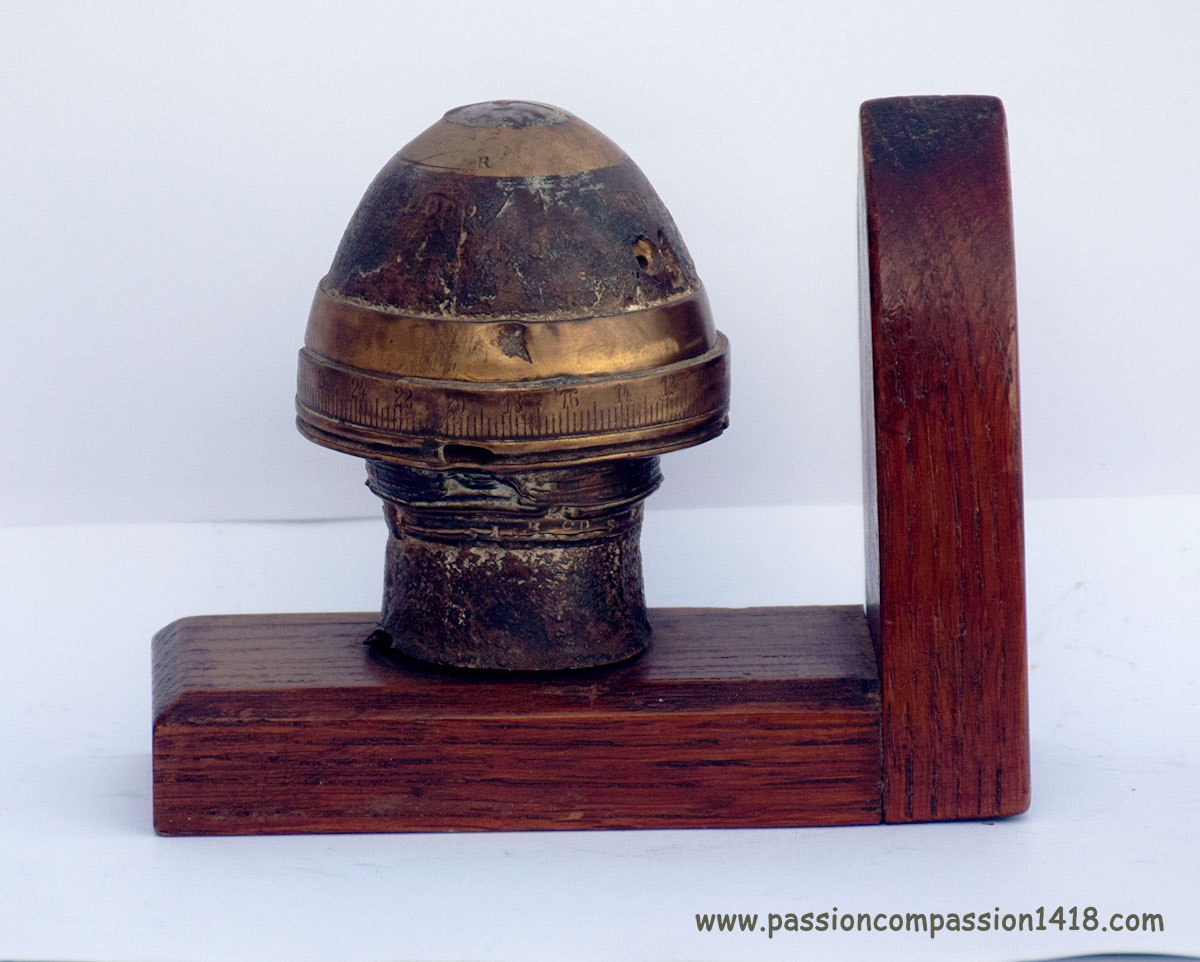
Another practical use for the heavy German fuzes converted into war souvenirs is to be converted as bookends ! Made with a German Dopp Z 15 double-effect fuze mounted on a rudimentary wooden base in the shape of a square, it is possible that this is one of two identical objects. |
 |
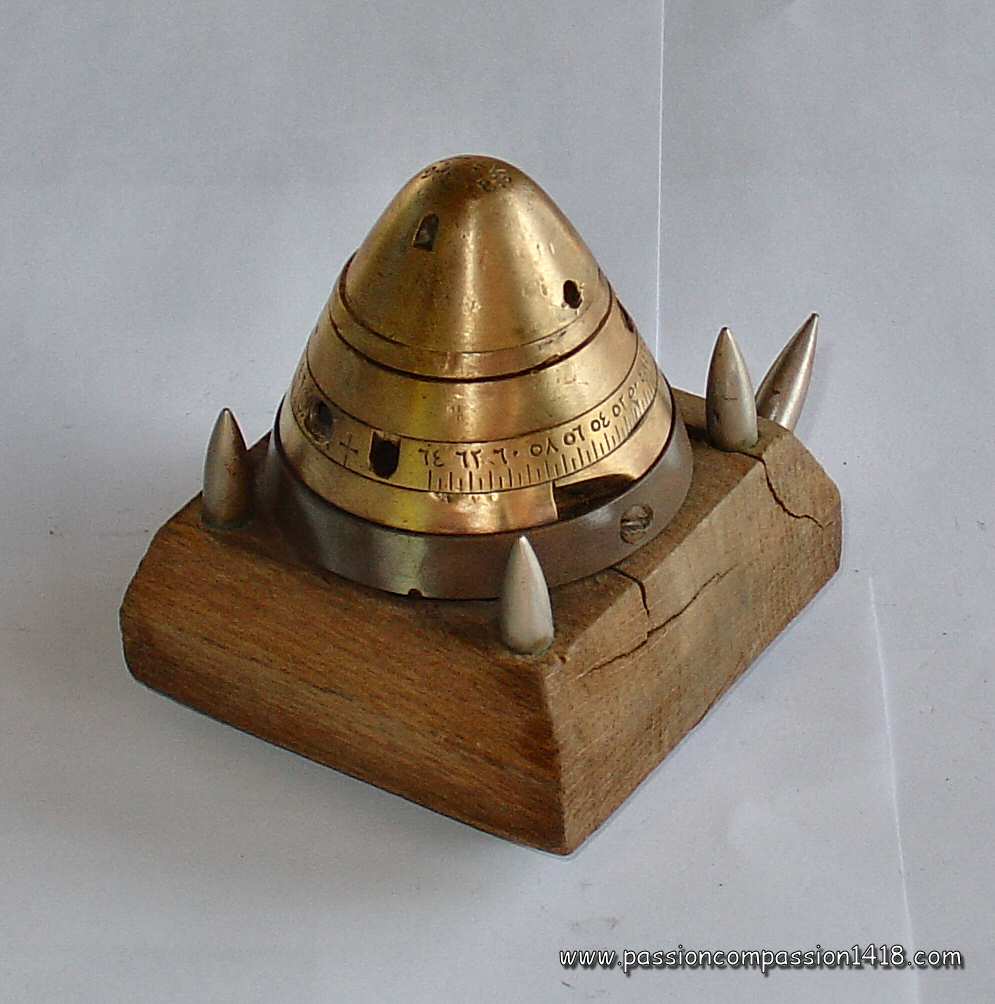 |
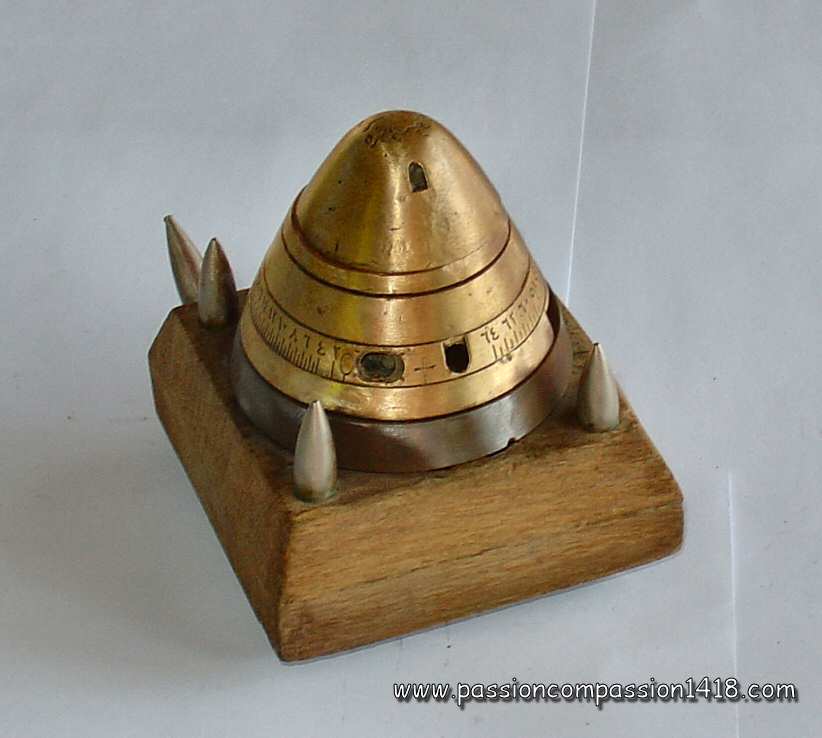
This paperweight is made from a German-made Turkish double-effect fuze for a 75mm M 1903 cannon . |
 |
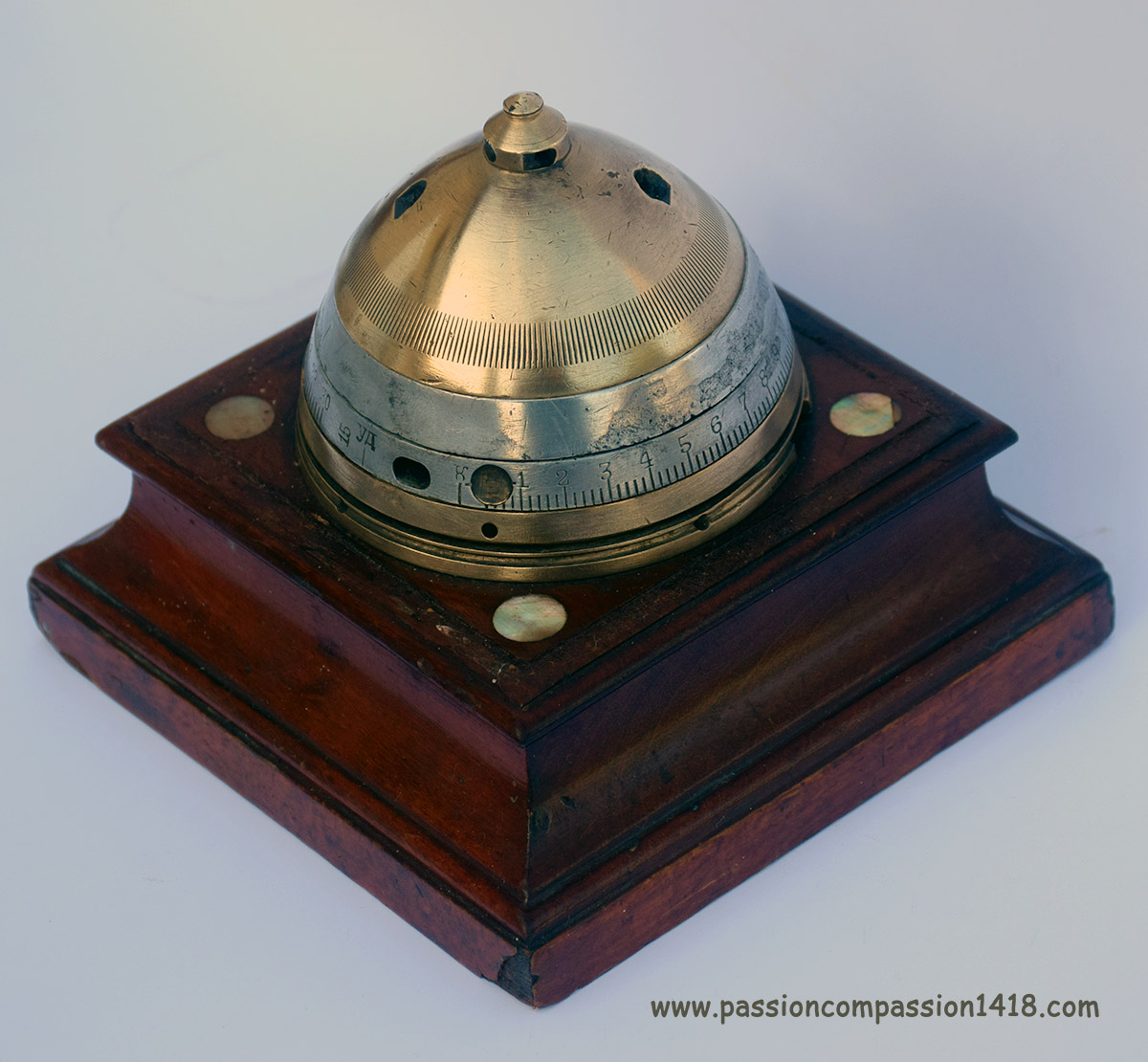 |
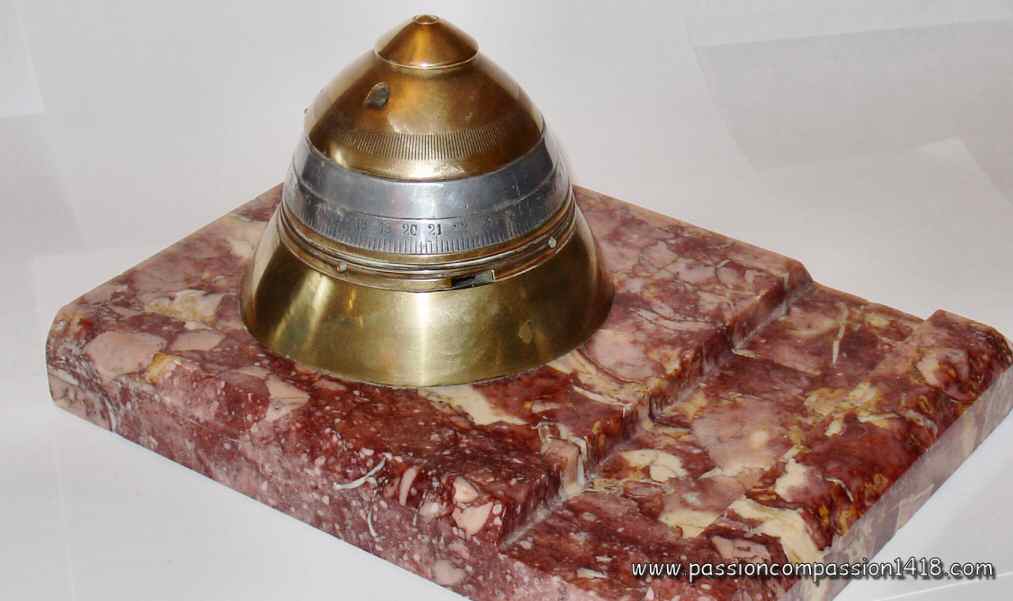
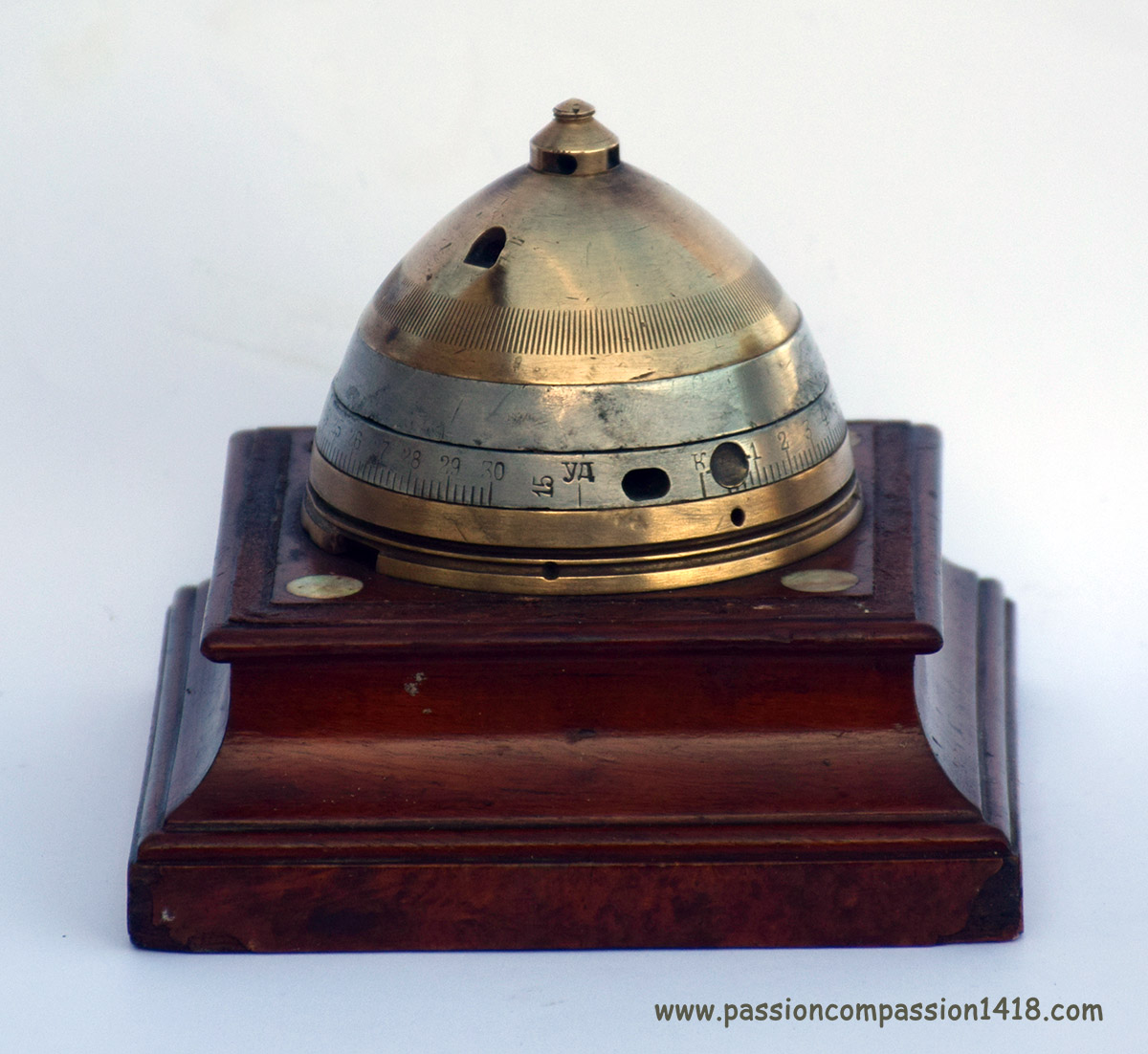
This attractive paperweight showcases the brilliance of copper and aluminum, which make up this elegant 30-second double-effect Russian fuze. The craftsman who made it has perfected his obvious affinity for materials with a base carved from high-quality wood and inlaid with mother-of-pearl. |
 |
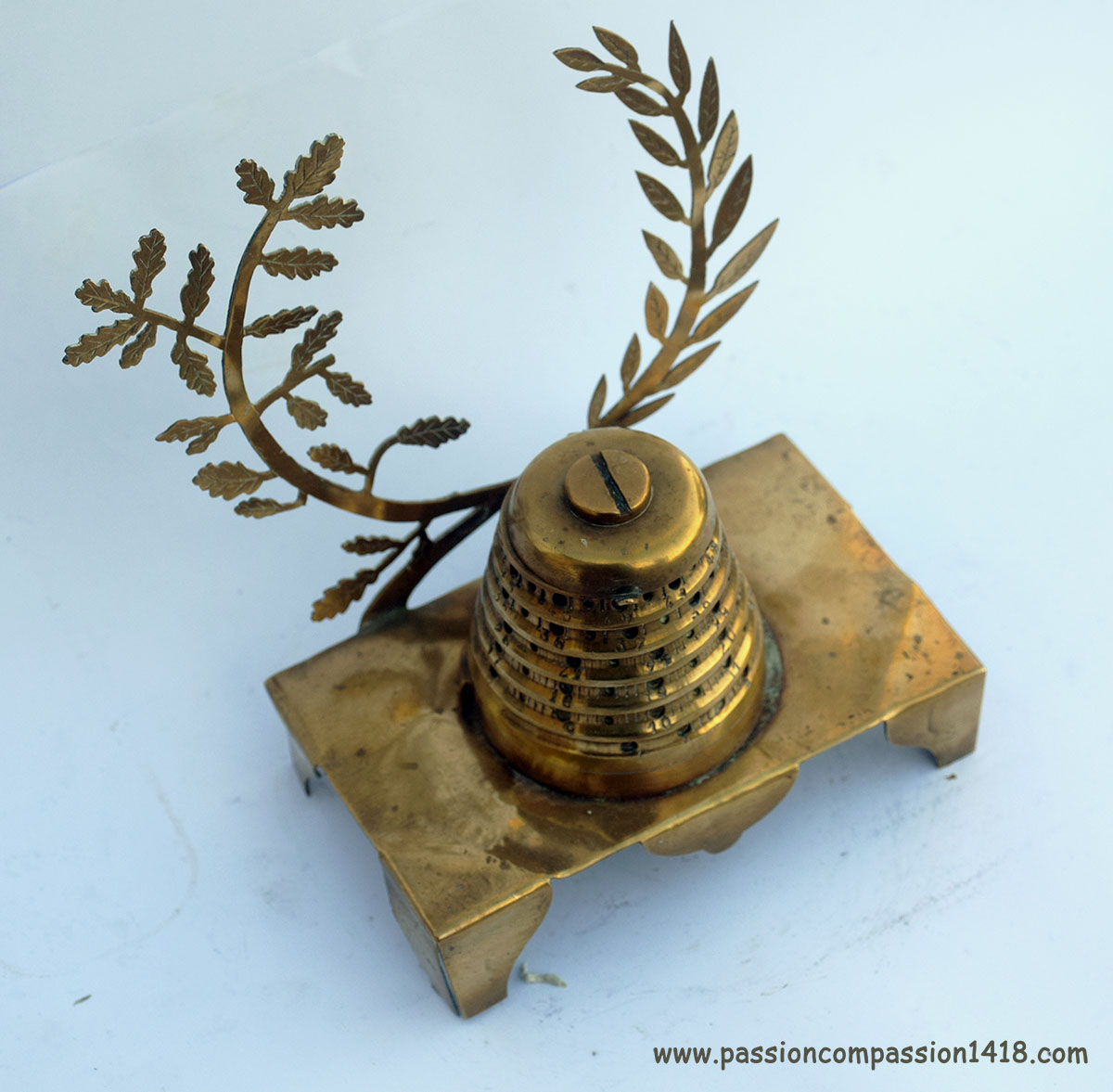 |
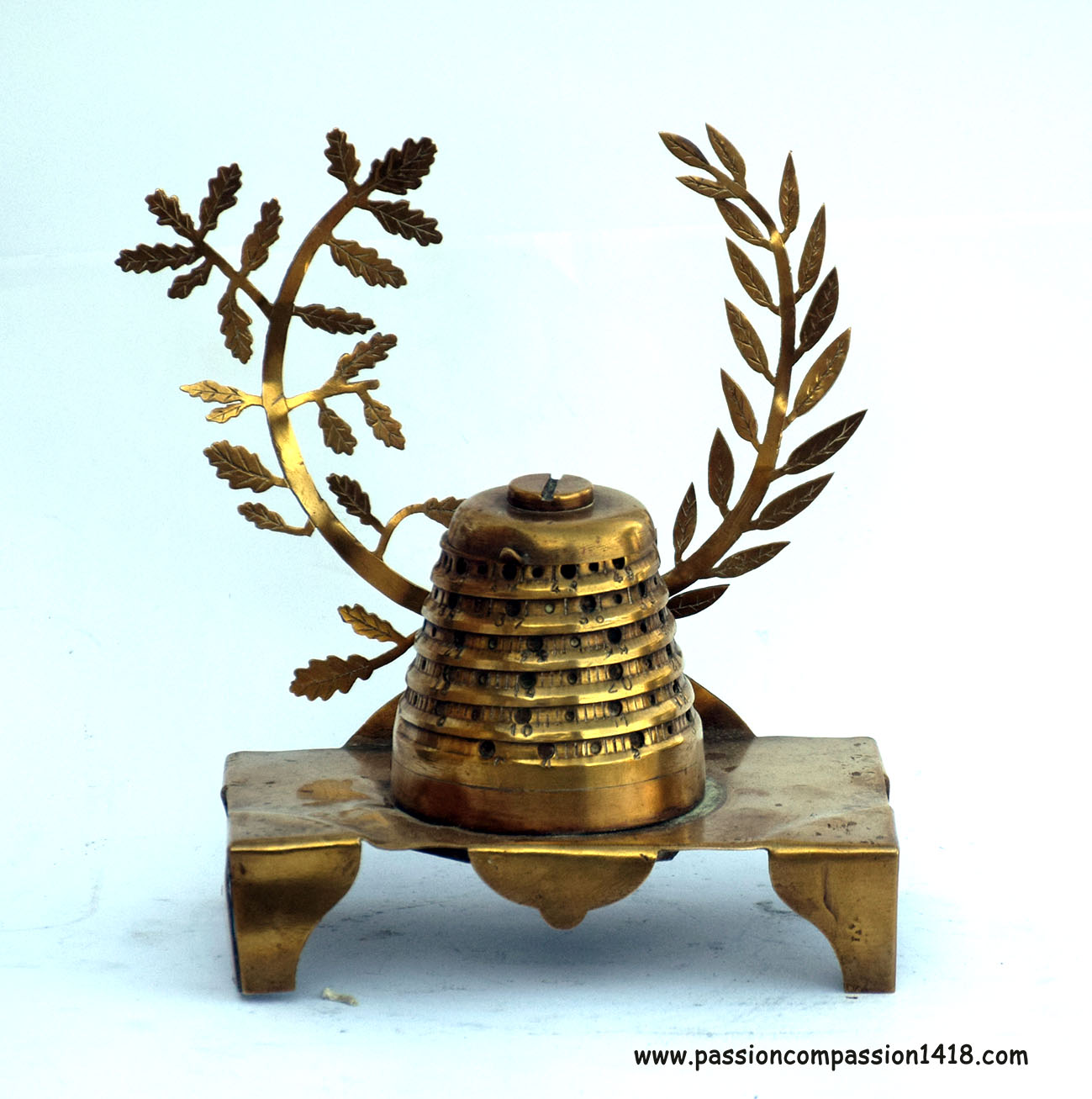
No other material than brass was used for this attractive paperweight: the main body is made from a French double-effect fuze 30/55 Mle 1889 as its main body, and shell cartridge material for the base and for the plant motif in the form of a laurel wreath. |
 |
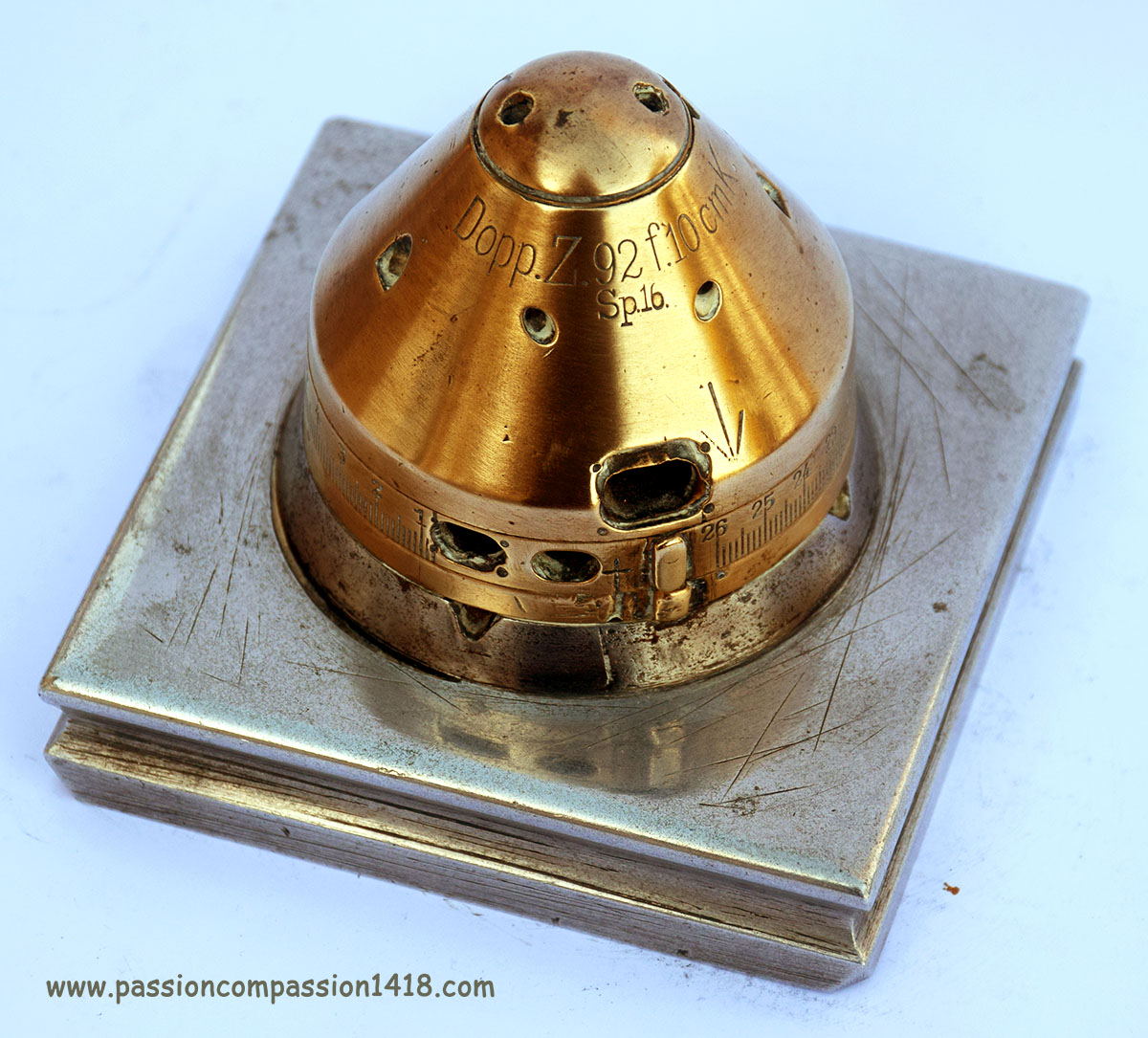 |
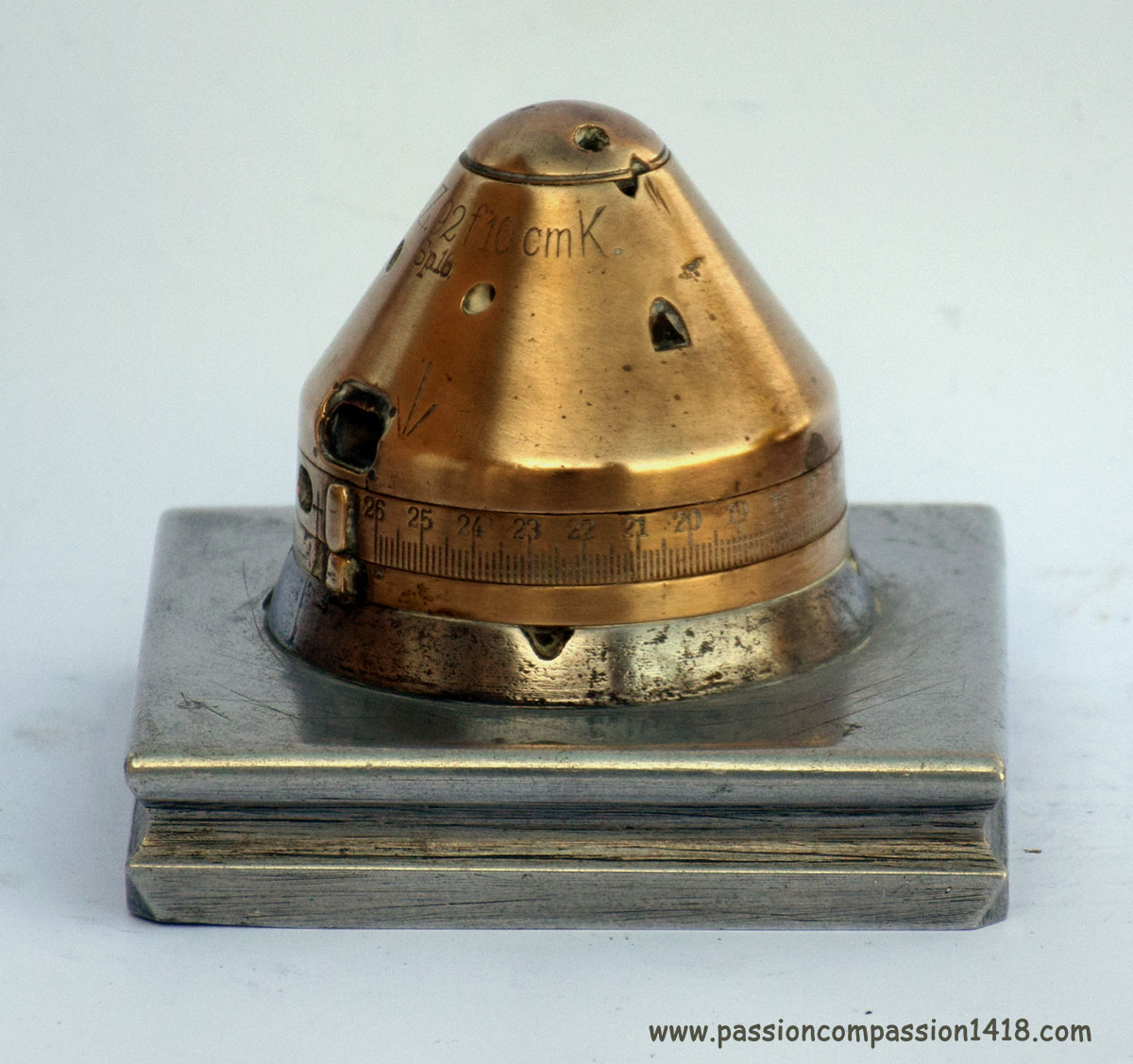
Once again, a German Dopp Z 92 double-effect fuze serves as the base for this paperweight, simply mounted on an equally simple aluminum base. This does not prevent the whole thing from looking rather smart. |
 |
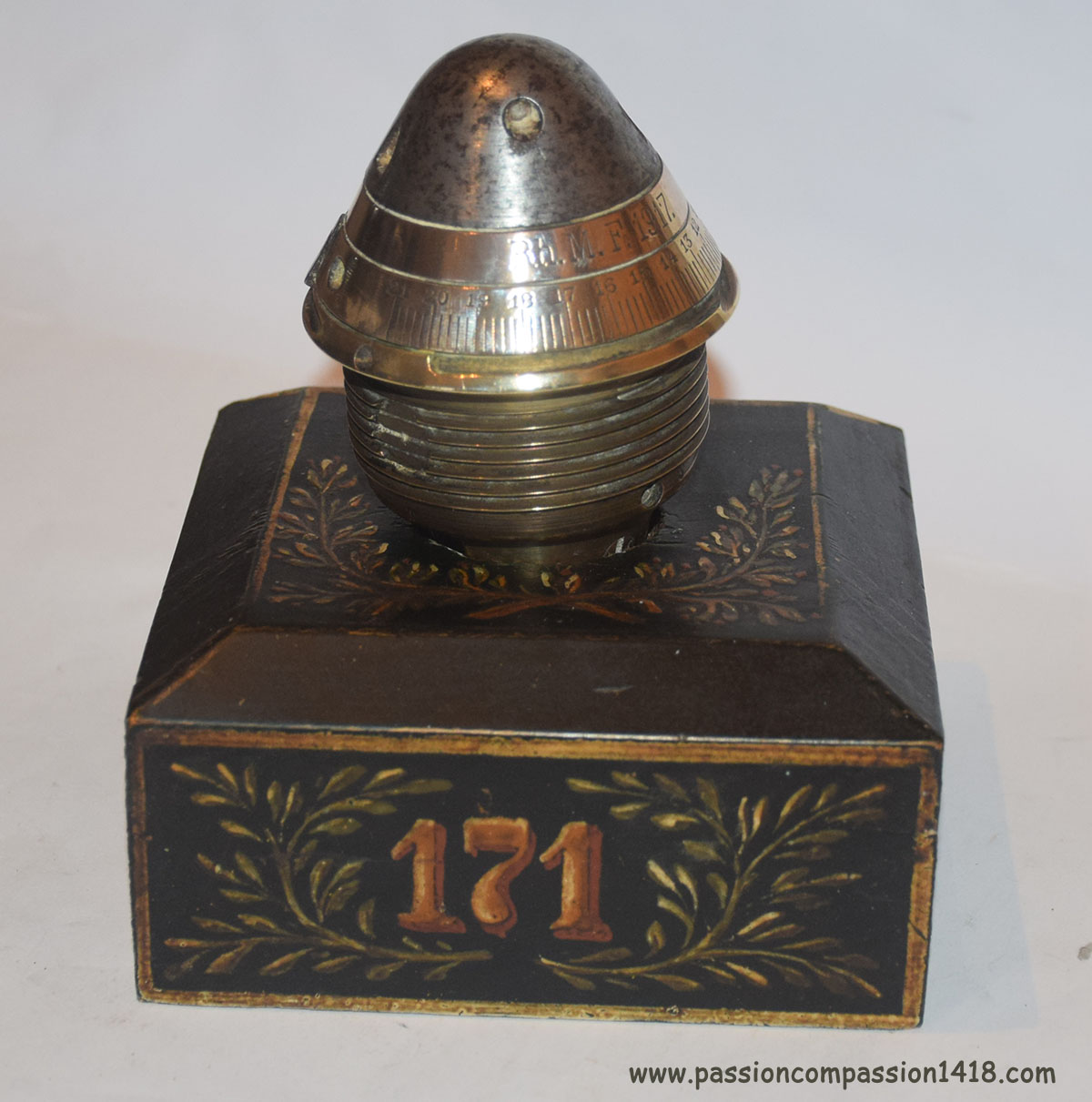 |
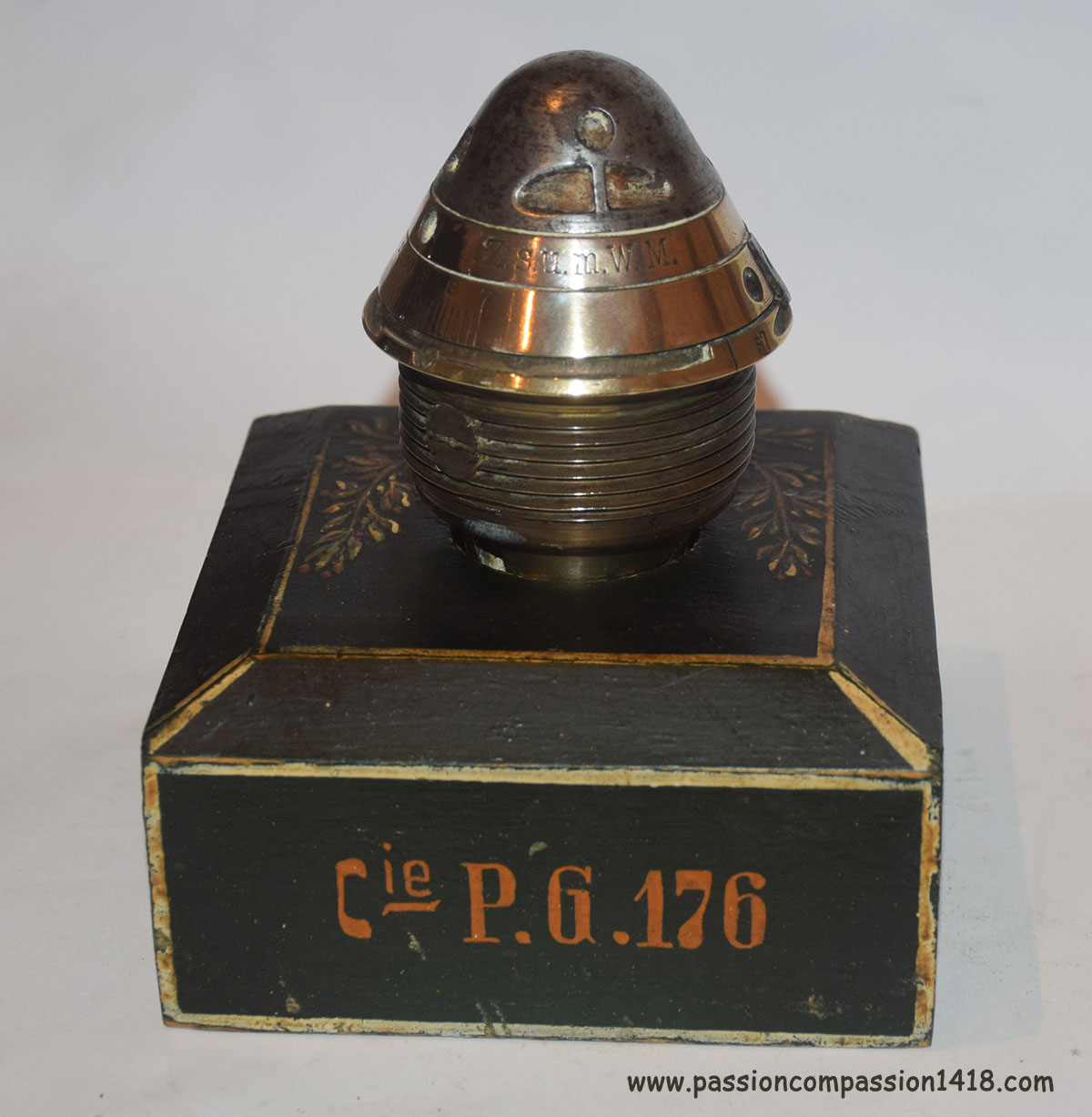
This imposing base made of light wood forms a beautiful display for this German ZsumWM fuze for heavy and medium minenwerfer , but while the markings on the fuze 'Z.s.u.m.W.M. - Rh.M.F.1917' are normal for this model used during the Great War, those on the base seem to tell an interesting and original story. |
 |
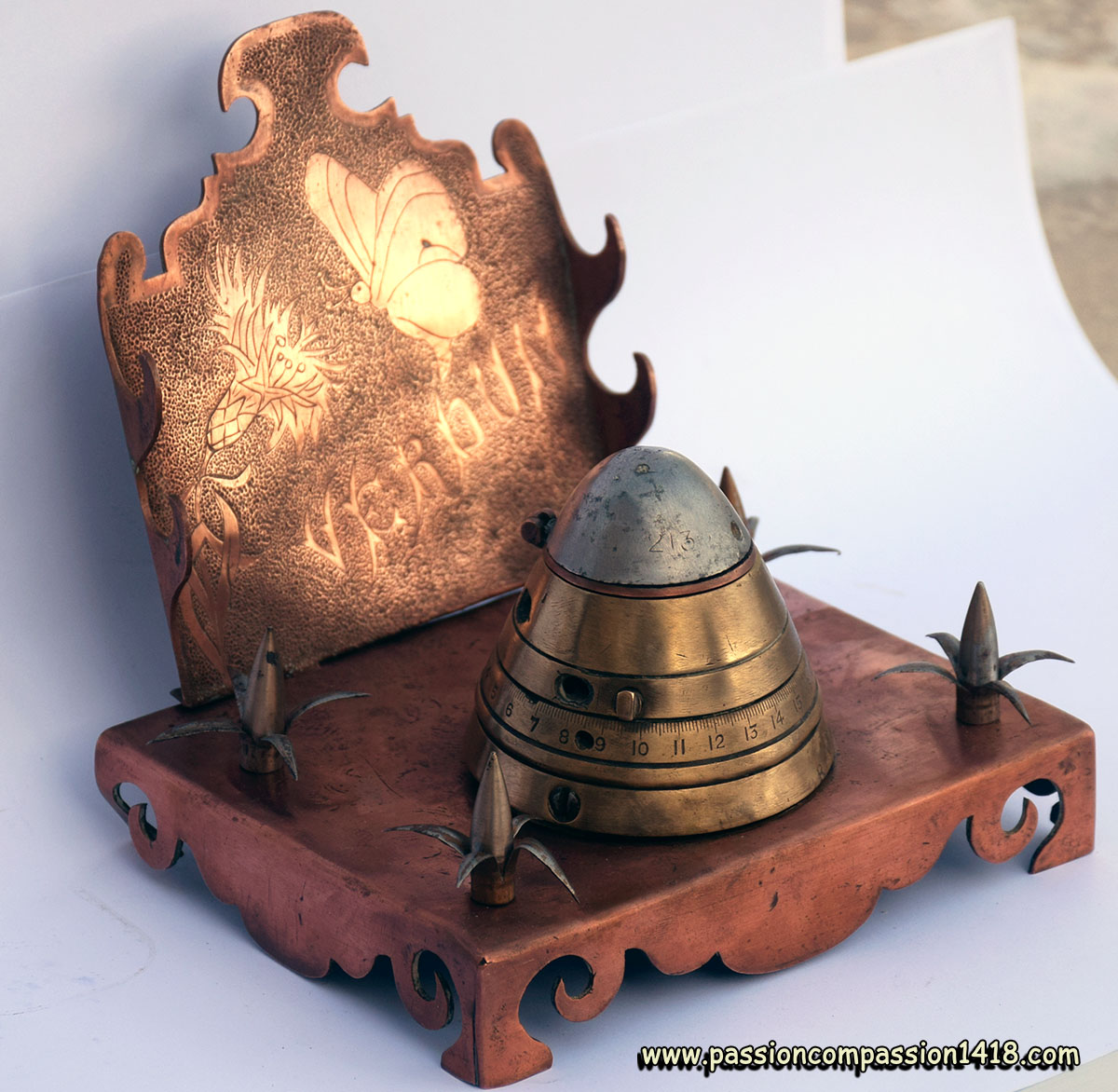 |
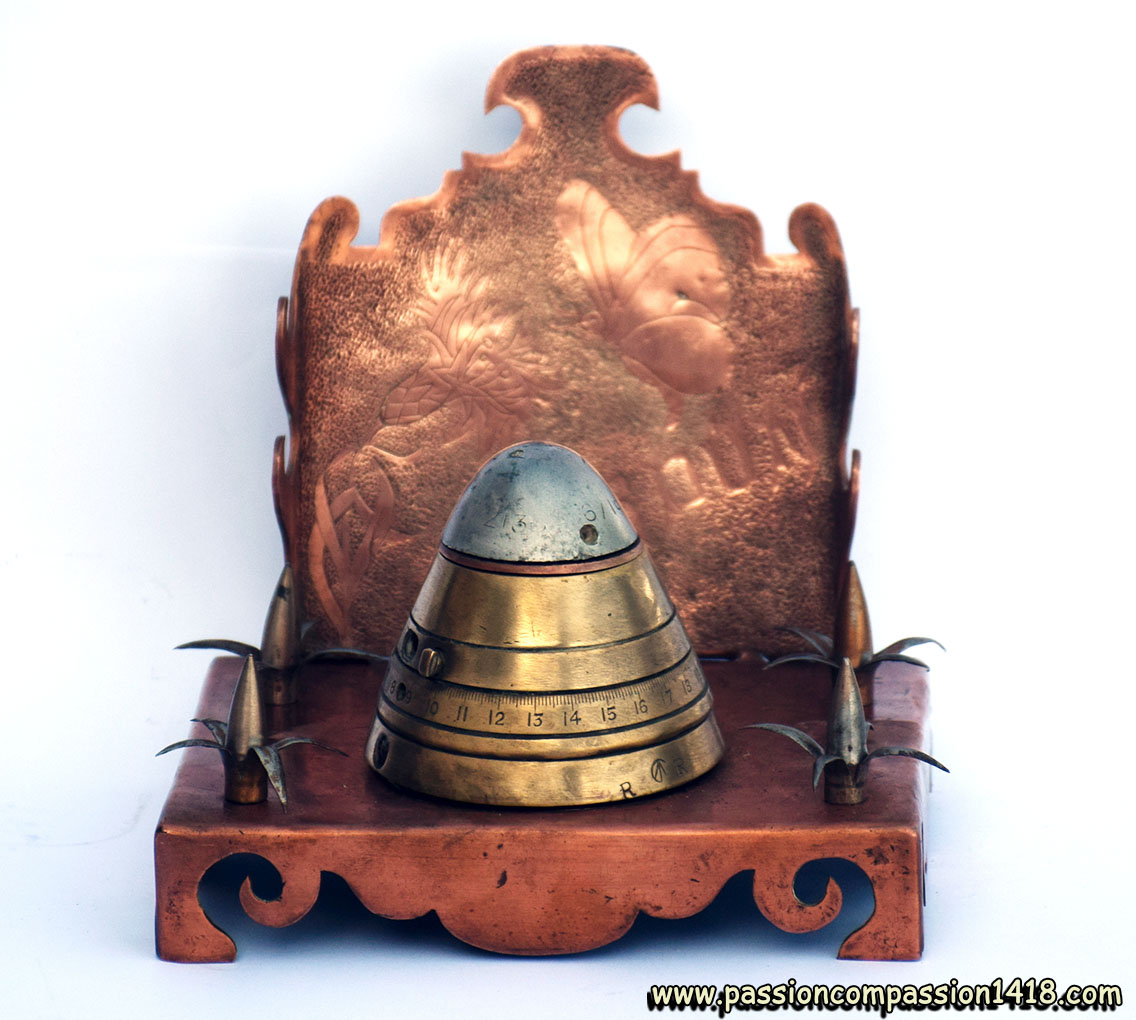
The distinctive feature of this rather elaborate set is that the nationality of the fuze at its center, a British double-effect fuze No. 80, does not quite evidently fit with the word 'Verdun' on the beautifully decorated copper back panel, embossed with a thistle motif and mounted on a base plate made of the same material, also engraved with thistles and decorated with four German bullets whose jackets have been opened like bananas.
The back panel bears the inscription 'Verdun' and the fuse has its original markings, which are unfortunately too faded to provide any clues. |
 |
 |
This piece is one of the most impressive in my collection because of the emotional charge it carries. |
 |
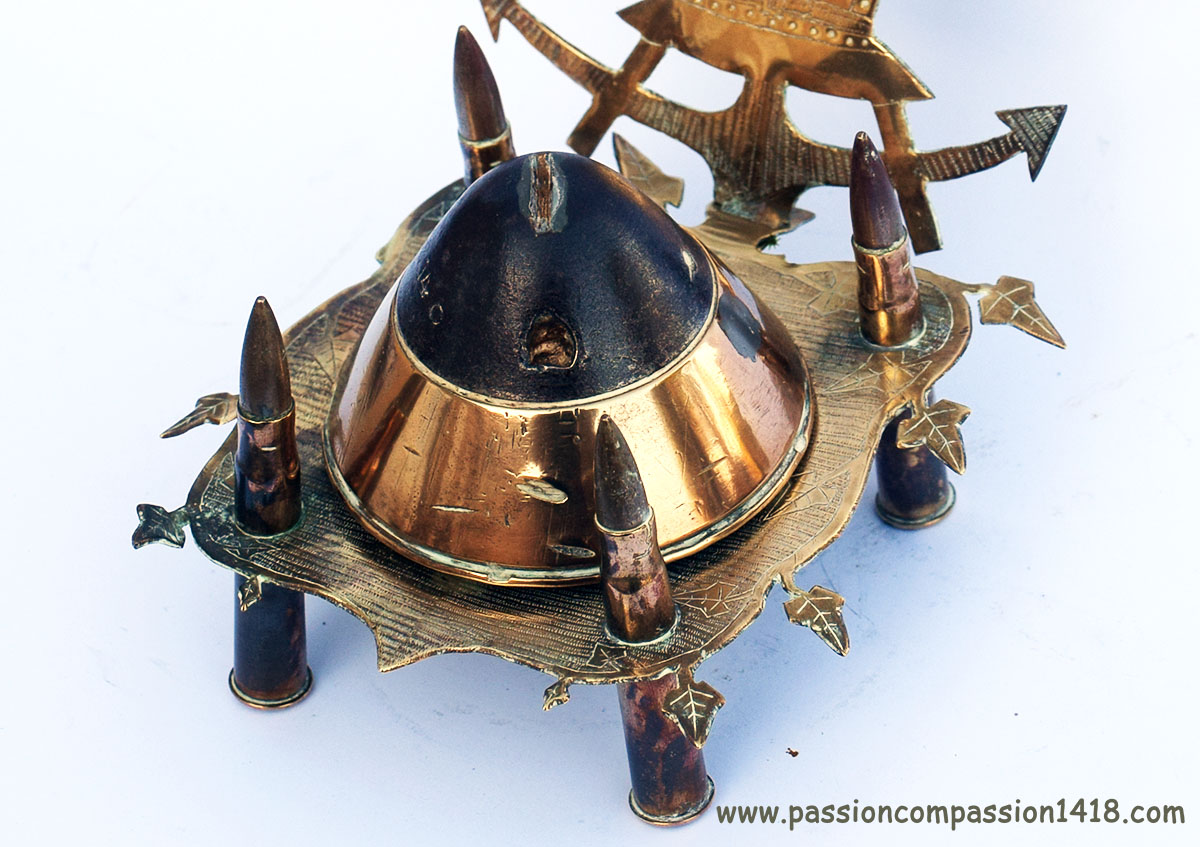 |
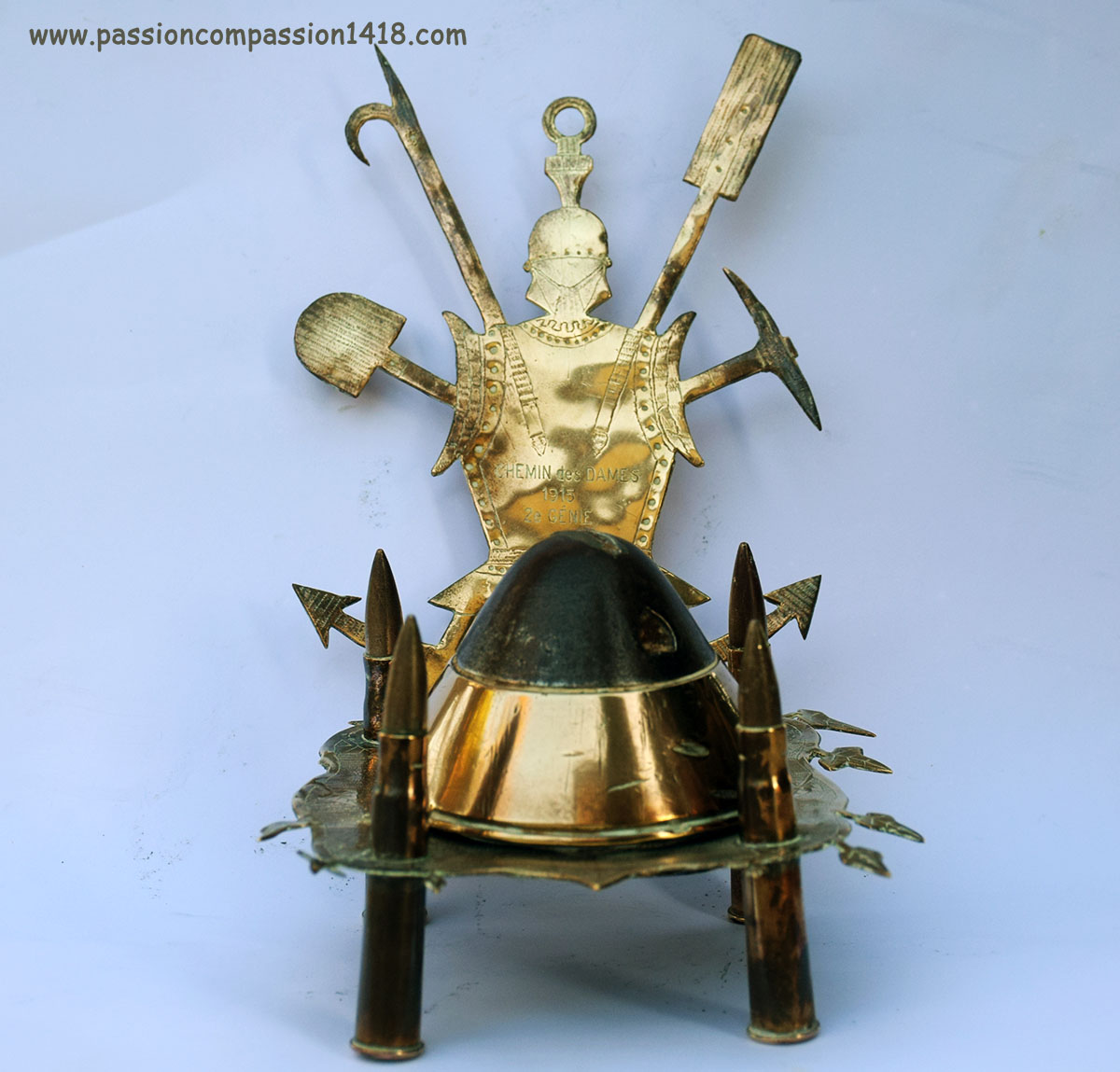
Here is another very attractive display piece, built around a German HZ 14 percussion fuze encased in thin brass sheet metal decorated with ivy leaves and held in place by four German Mauser rifle bullets. But this already attractive ensemble is complemented by an impressive and very martial rear panel featuring the symbol of the engineers troops cut out of thin brass sheet and surrounded by various tools typical of the weapon: shovel, pickaxe, beater, gaff, anchor. |
 |
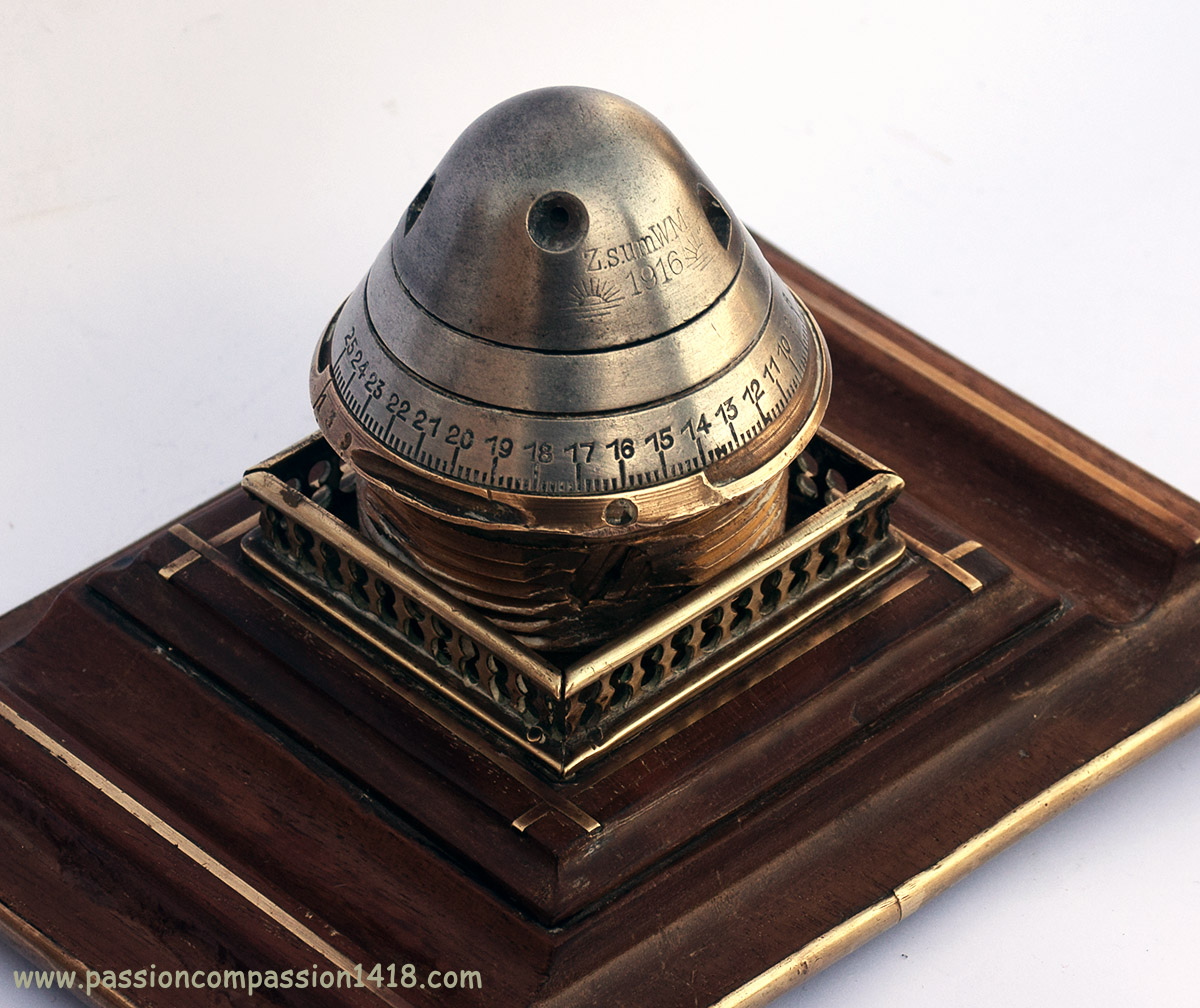 |
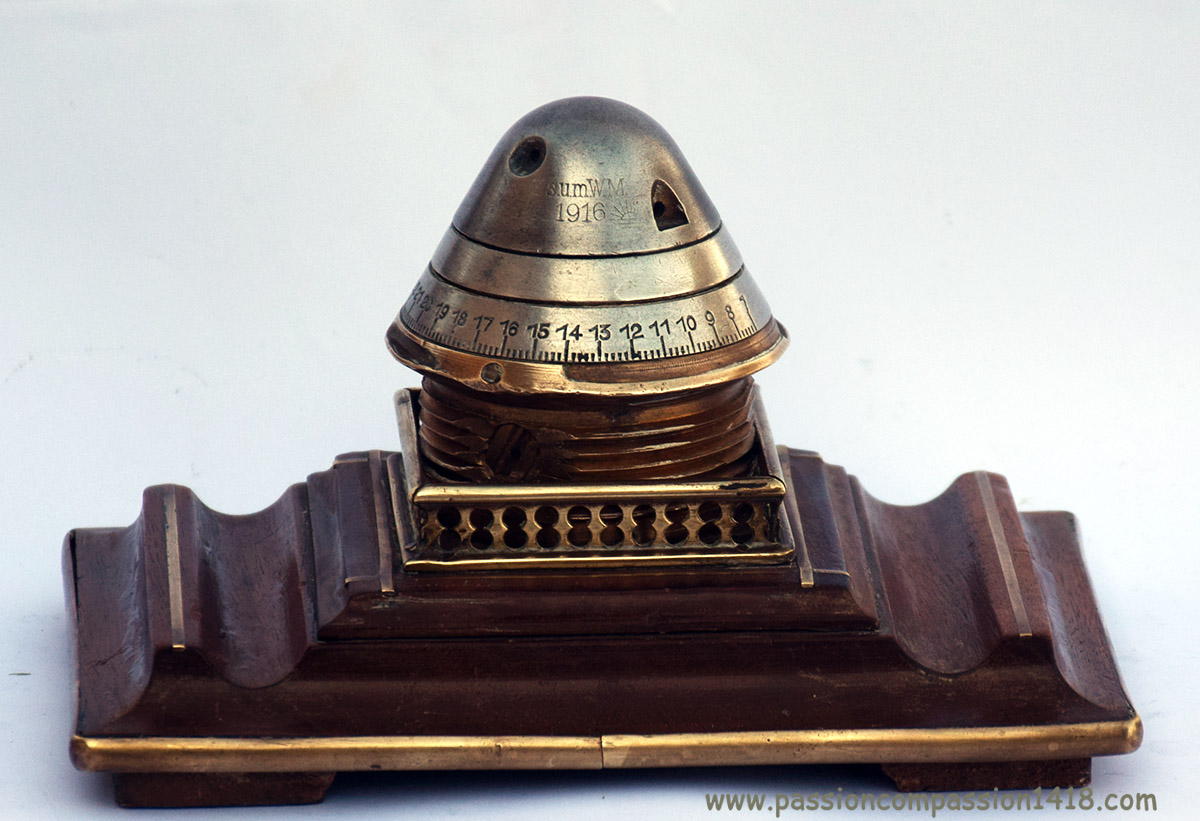
The German ZsumWM percussion fuze for medium and heavy trench bombs , which sits proudly atop this elegant display stand, is in impeccable condition: no oxidation, few scratches, and the rotating plates still work. |
 |
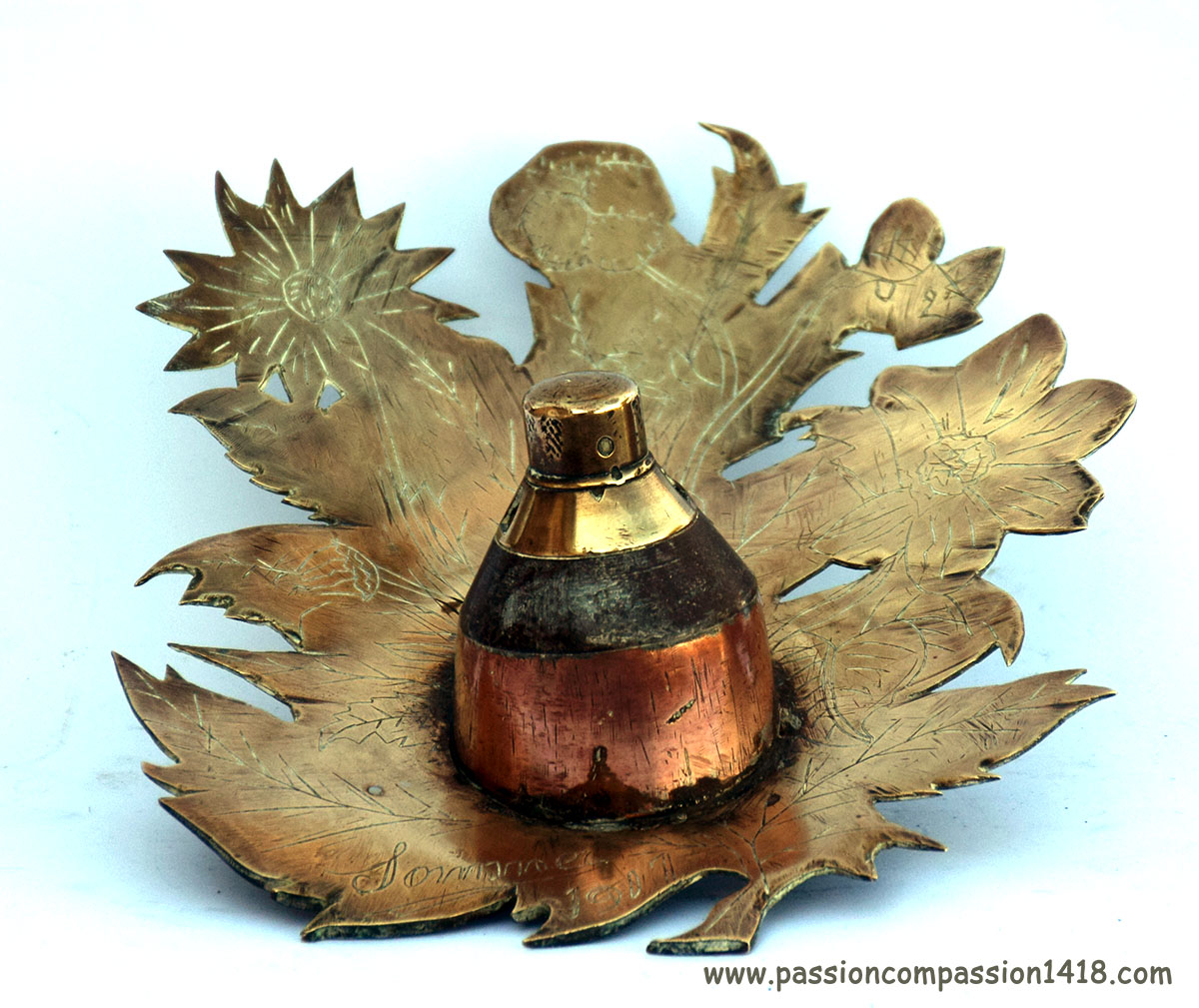 |
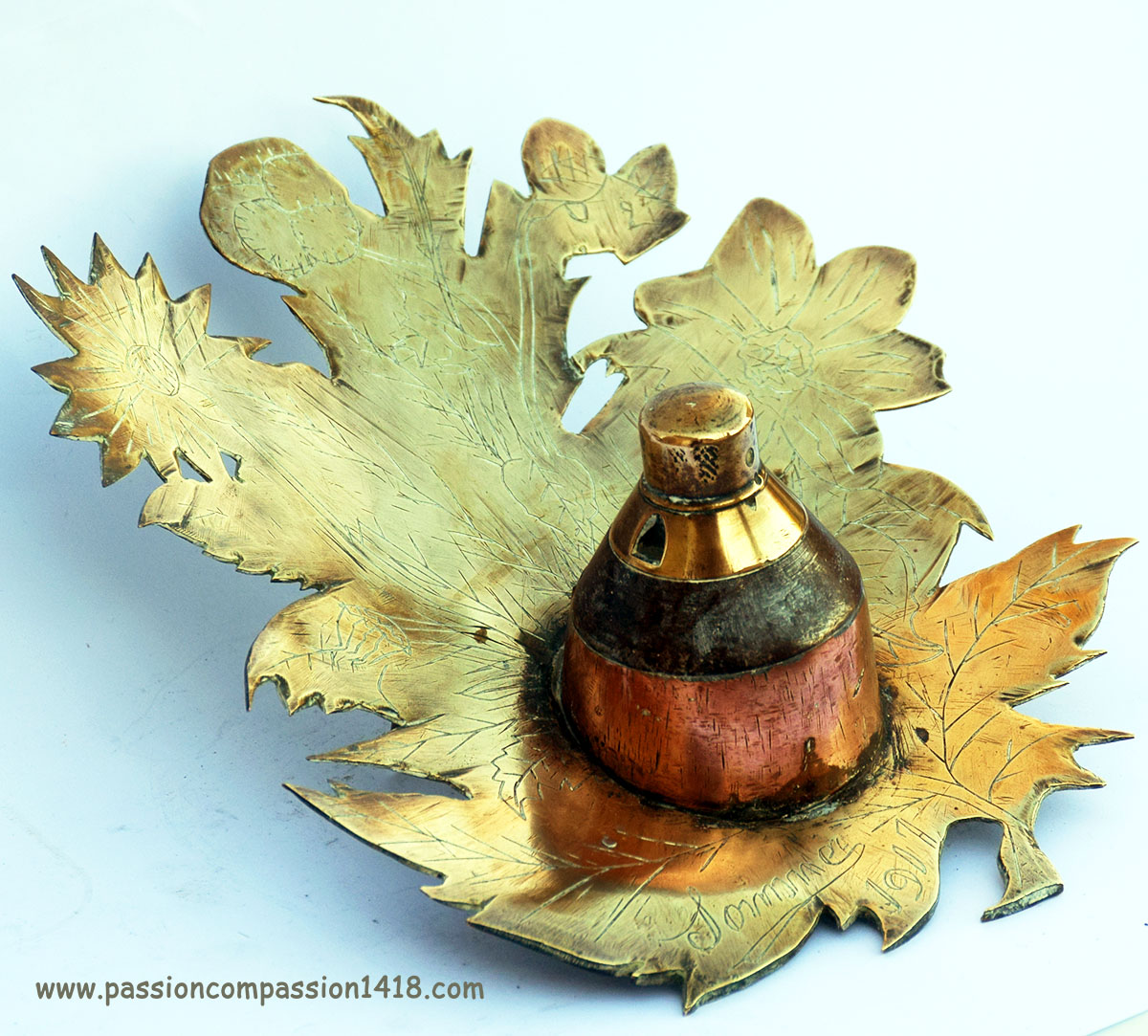
Although the small French percussion fuze 24/31 Schneider displayed on this stand is much smaller than the massive German fuzes usually used in trench warfare, this allows for an impressive display of the stylized brass sheet with plant and floral motifs in which it is housed. |
 |
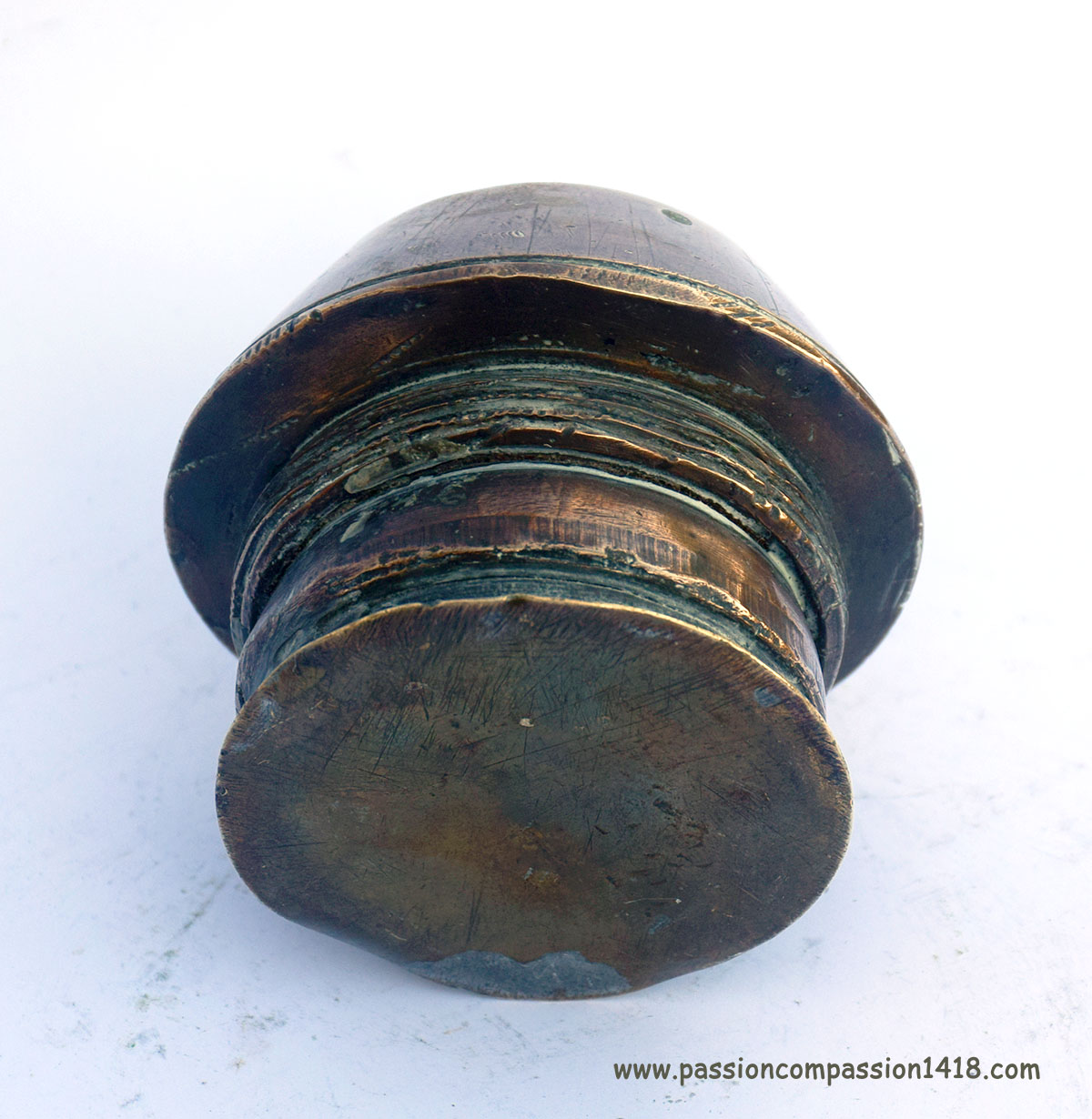 |
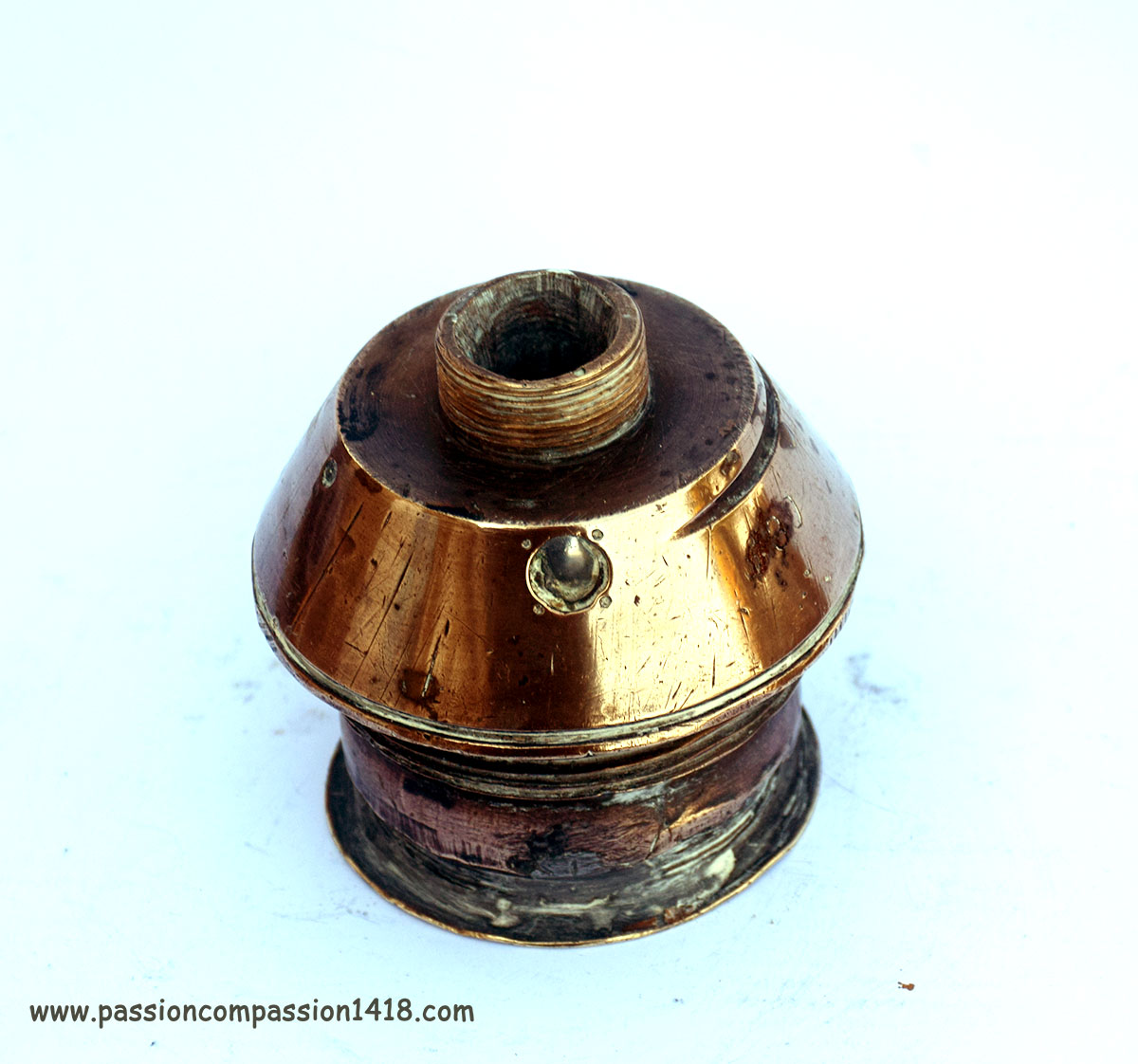
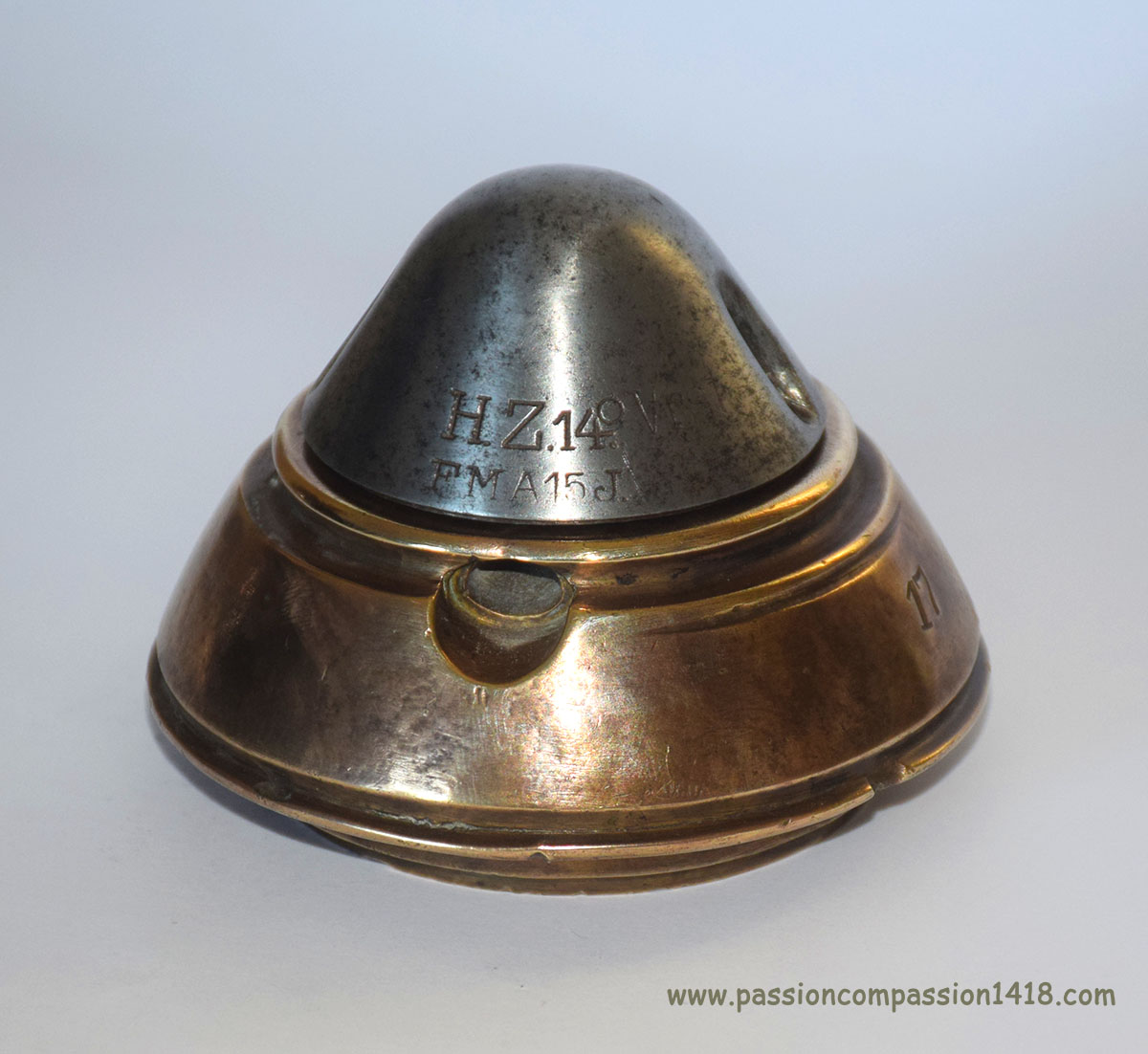
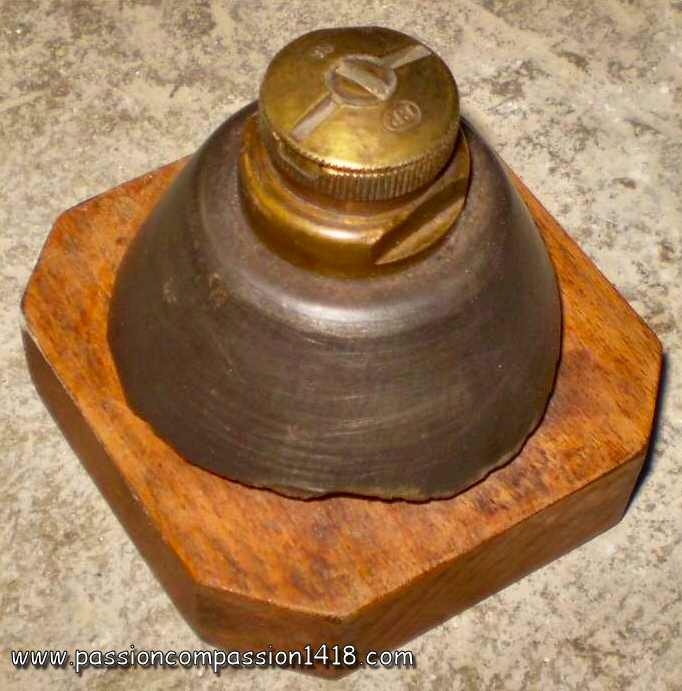
This German HZ 14 percussion rocket has been transformed into an inkwell in the most rudimentary way possible: the cap has been removed to access the central housing of the missing percussion system, and the tail has been sawn off and replaced with a welded brass base. |
 |
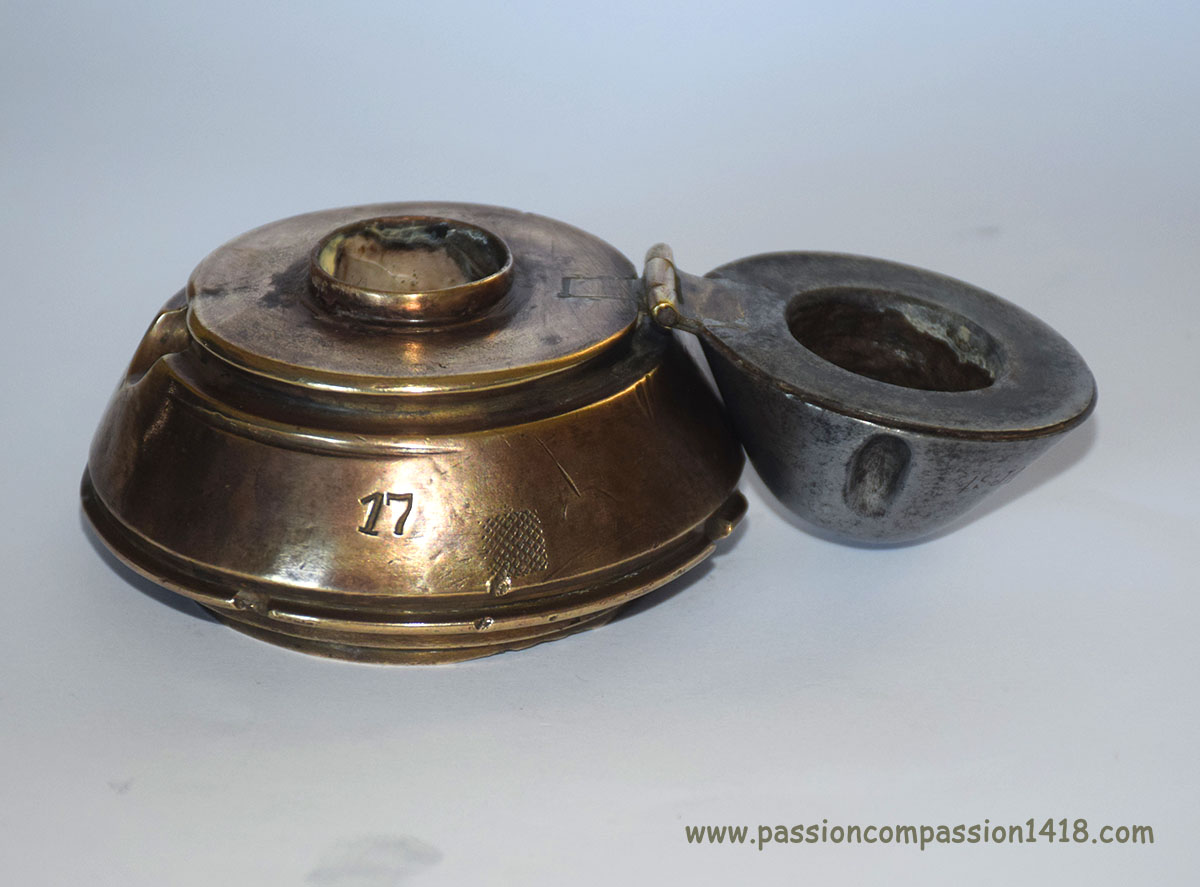 |
Inkwell simply consisting of a German HZ 14 percussion fuze sawn at its base, with its percussion mechanism removed and its cap fitted with a hinge, but without any base. |
 |
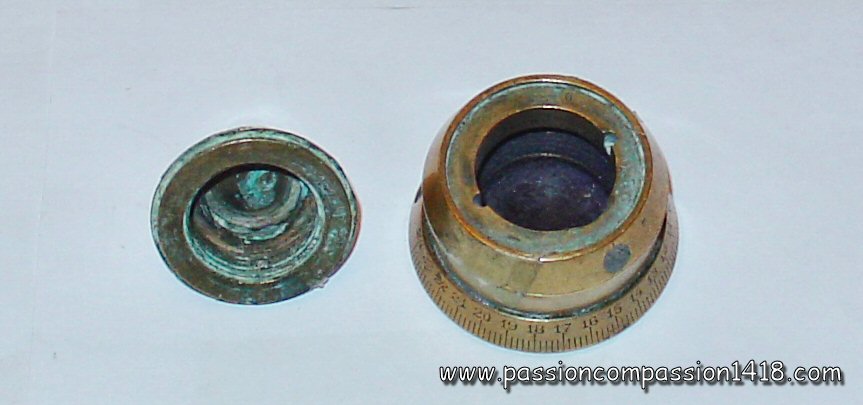 |
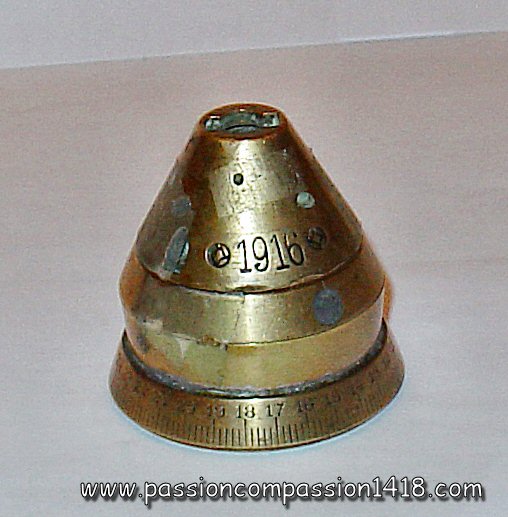
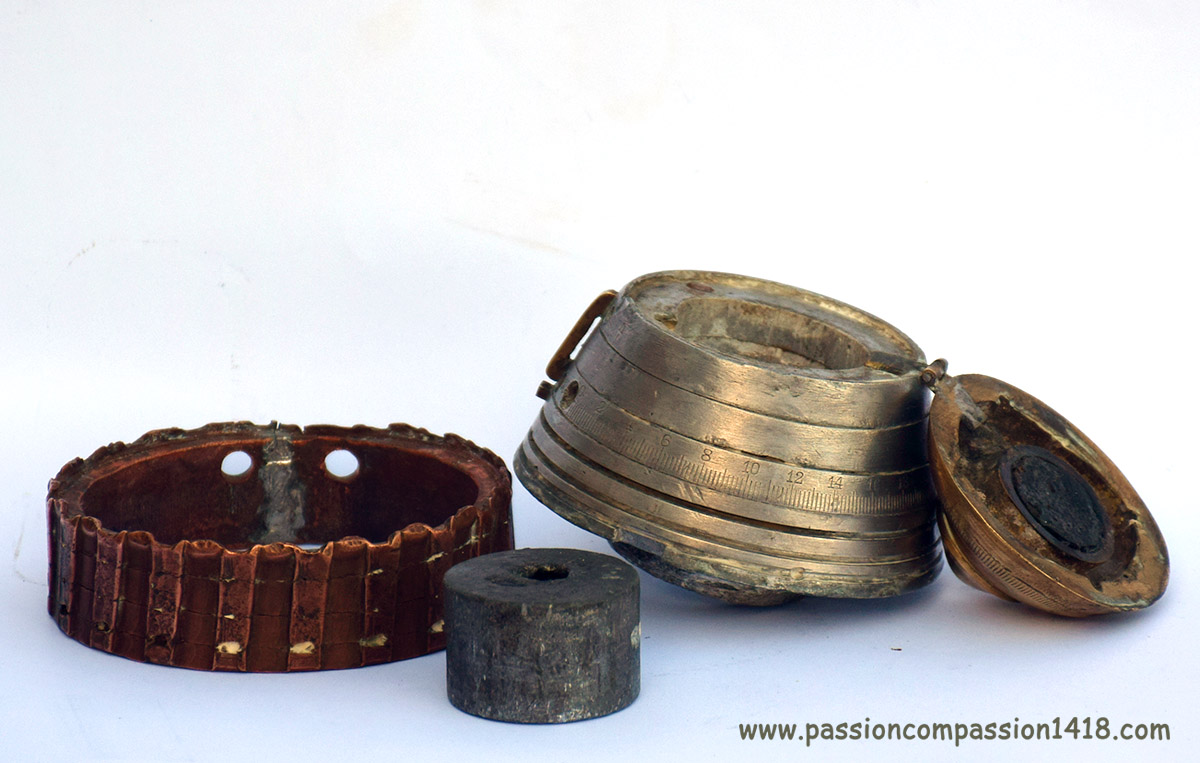
This German lWMZdr2 fuze for light minenwerfer underwent only minor modifications to become this very simple inkwell. As in most cases, the percussion mechanism housing was hollowed out to make room for the ink reservoir, the cap was made removable to serve as a lid, and the tail was sawn off. The originality lies in the insertion of an additional brass disc above the fuze's graduated disc to create enough height to accommodate the reservoir. |
 |
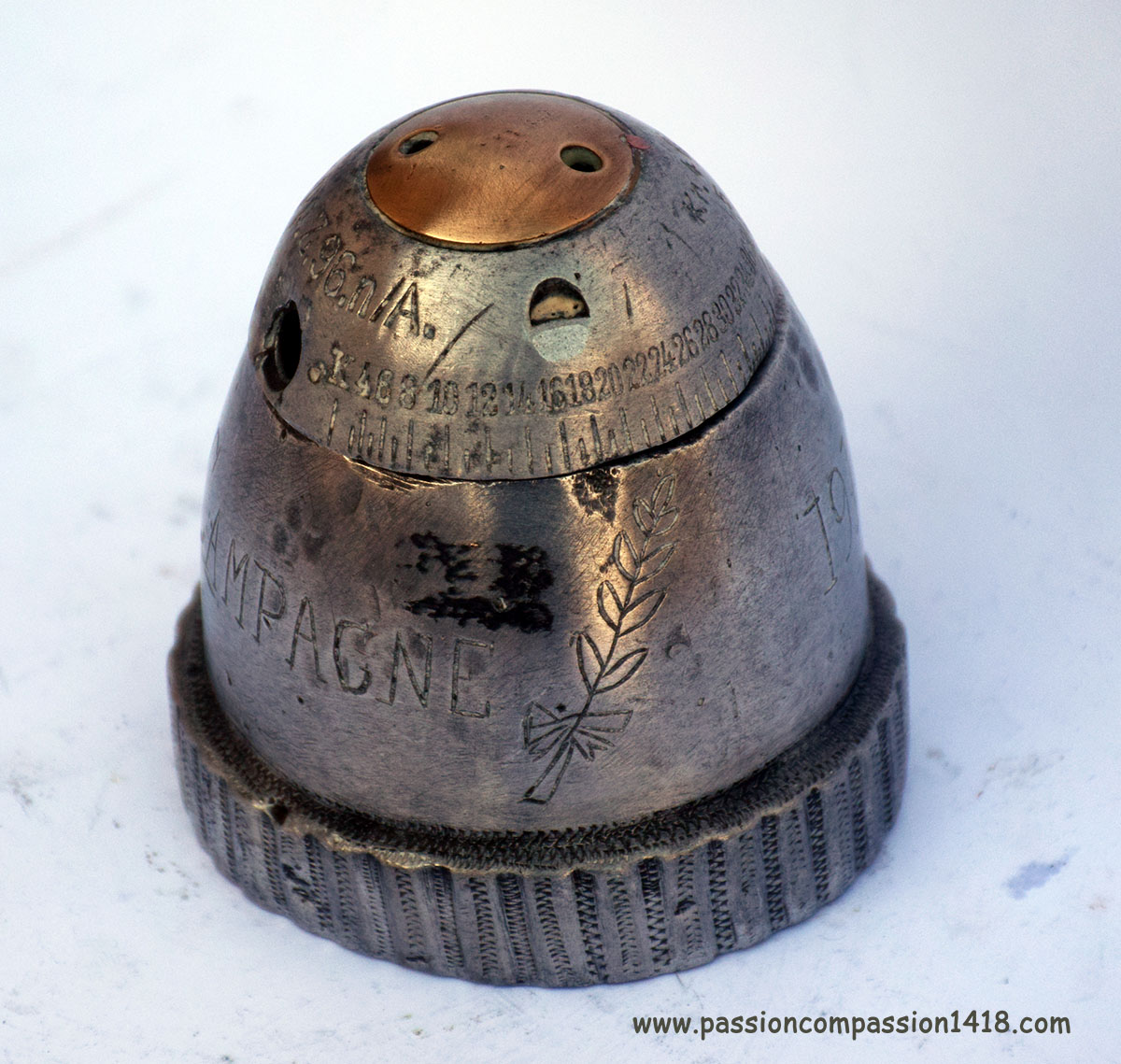 |
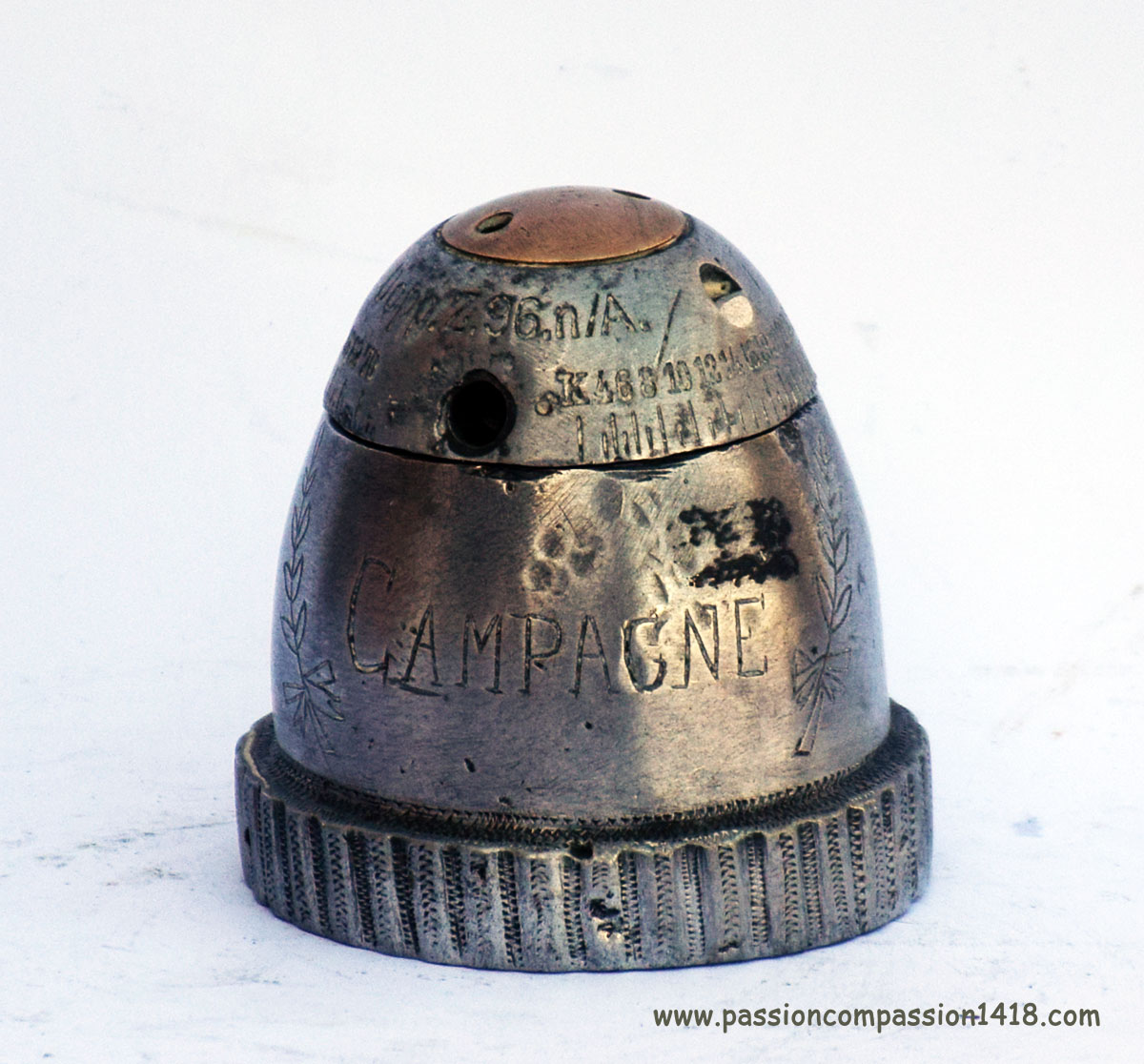
The soldier who made this inkwell had to improvise a little, as he was only able to recover the upper part of a German Dopp Z 96 n/A double-effect fuse to build his work. He therefore reconstructed the missing part with a roughly molded aluminum piece whose shape only vaguely resembles the shape of the bottom of the fuze and of a guiding belt. |
 |
 |
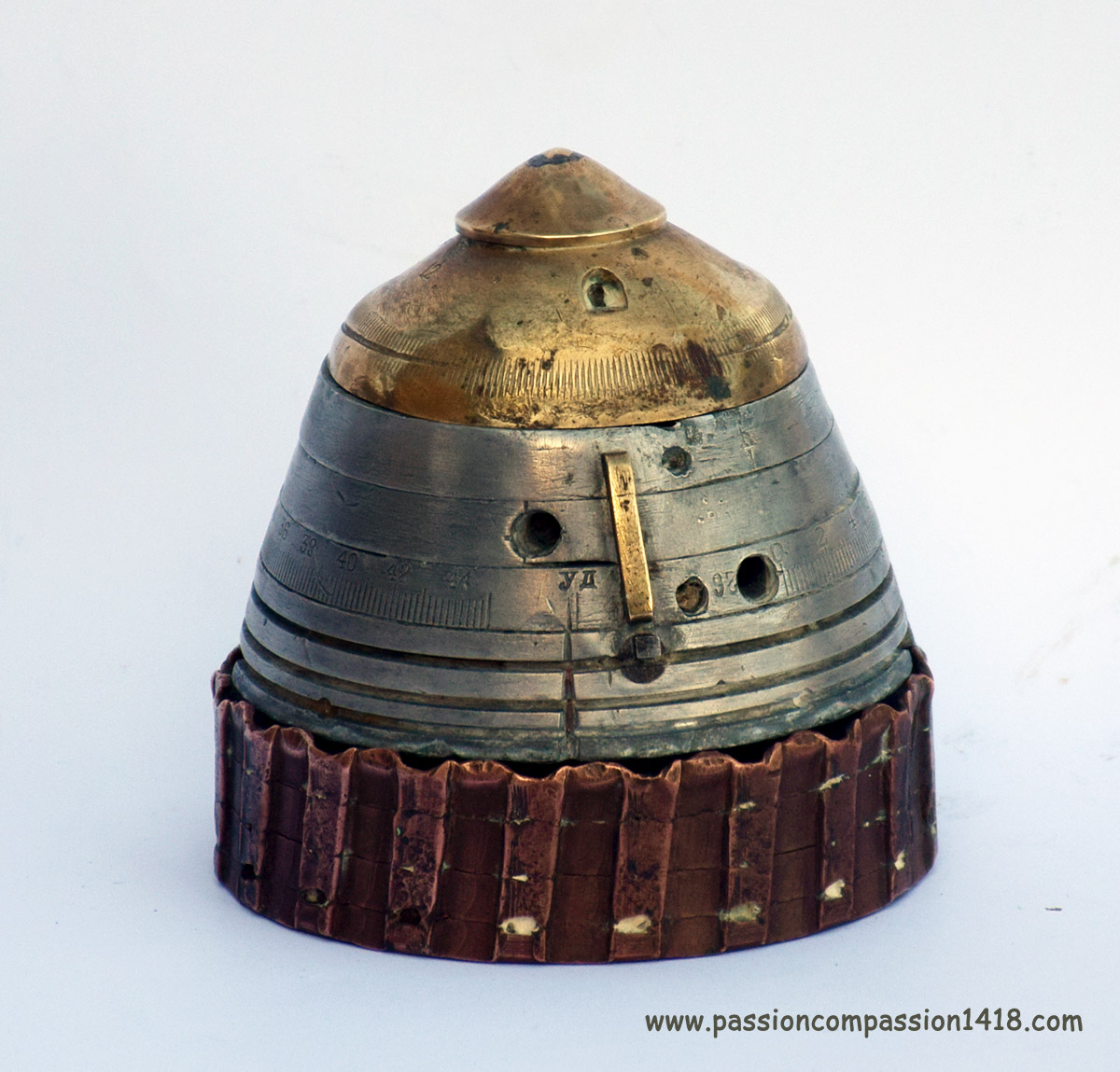
The person who made this simple inkwell was very fortunate to have access to a large 45-second double-effect Russian fuze in very good condition and rather rare, whose considerable weight and noble materials (aluminum and brass) seemed sufficient in themselves for his work. |
 |
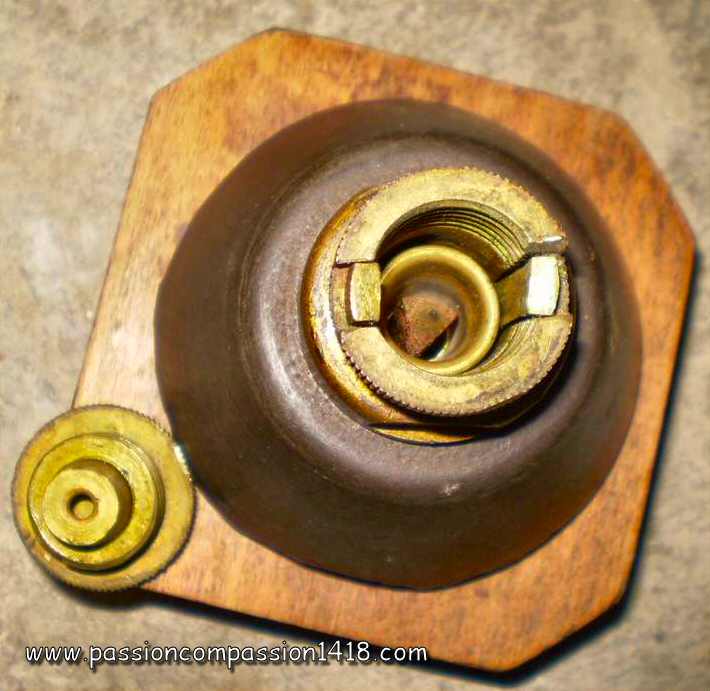 |
Inkwell made from a Belgian percussion fuze for 7.5 cm and 8.7 cm field guns , still screwed onto the warhead of an explosive shell. The percussion mechanism has been removed and the head can be opened. |
 |
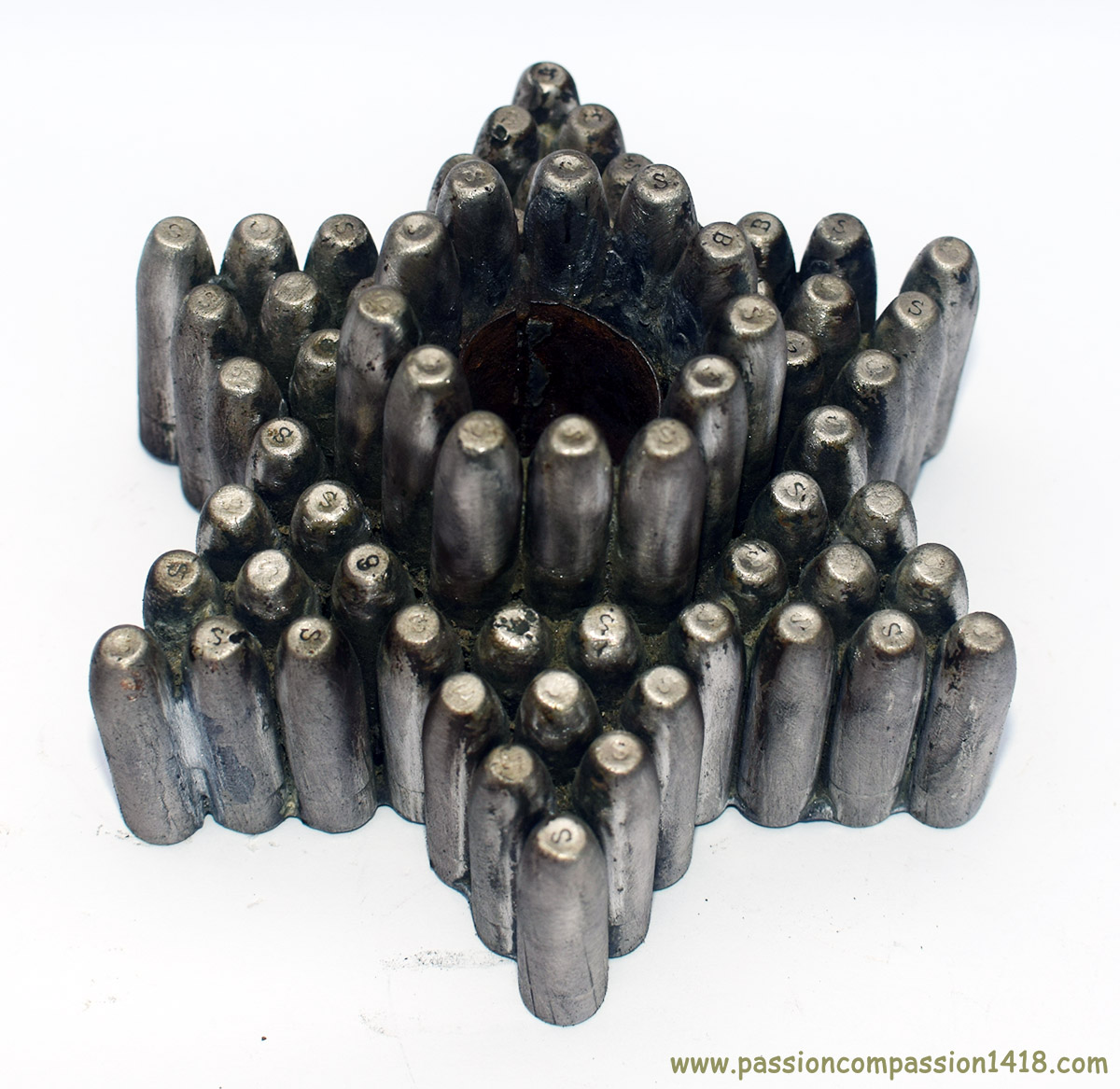 |
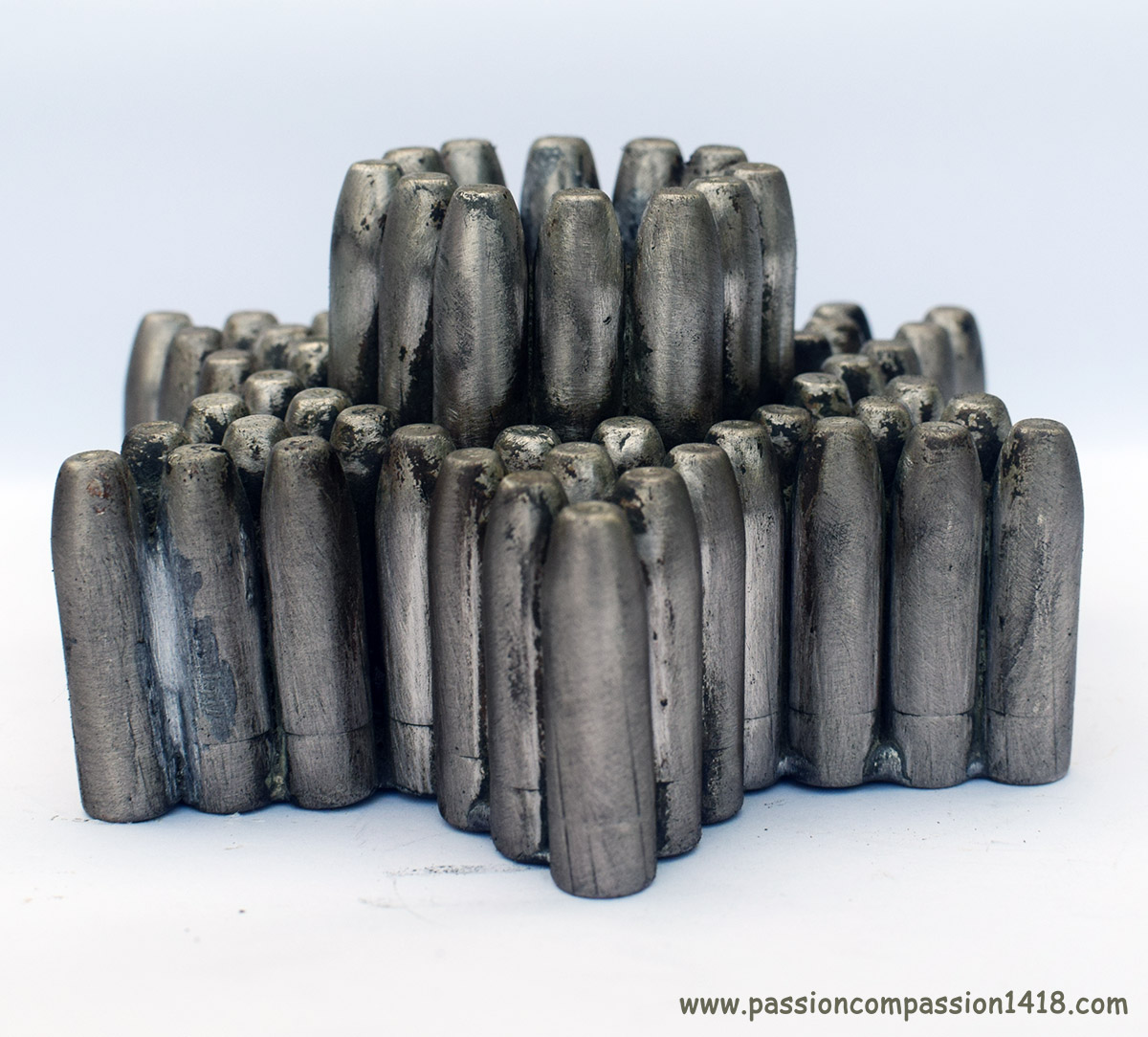
Artillery shells weren't the only battlefield artifacts used as the basis for inkwells. This one was made from no fewer than 66 French Lebel 8mm rifle bullets, welded together in a pattern based on a six-pointed star, with a second hexagonal tier built around a central ink reservoir. |
 |
 |
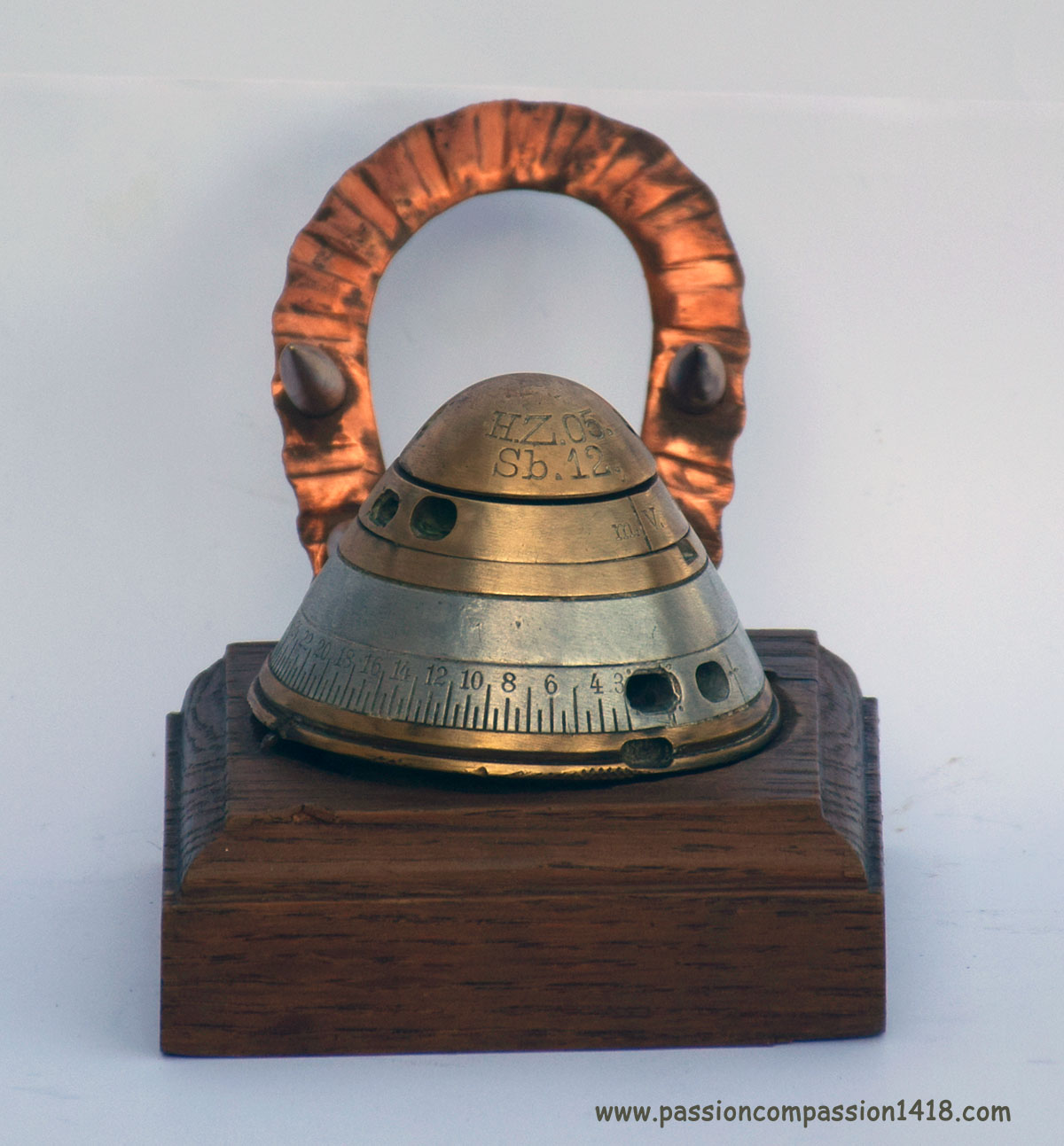
Inkwell made from a beautiful German HZ05 double-action fuze made of aluminum and brass. It is placed on a relatively simple wooden base and the head has been fitted with a hinge to access the ink reservoir located in the hollow housing of the striking system. |
 |
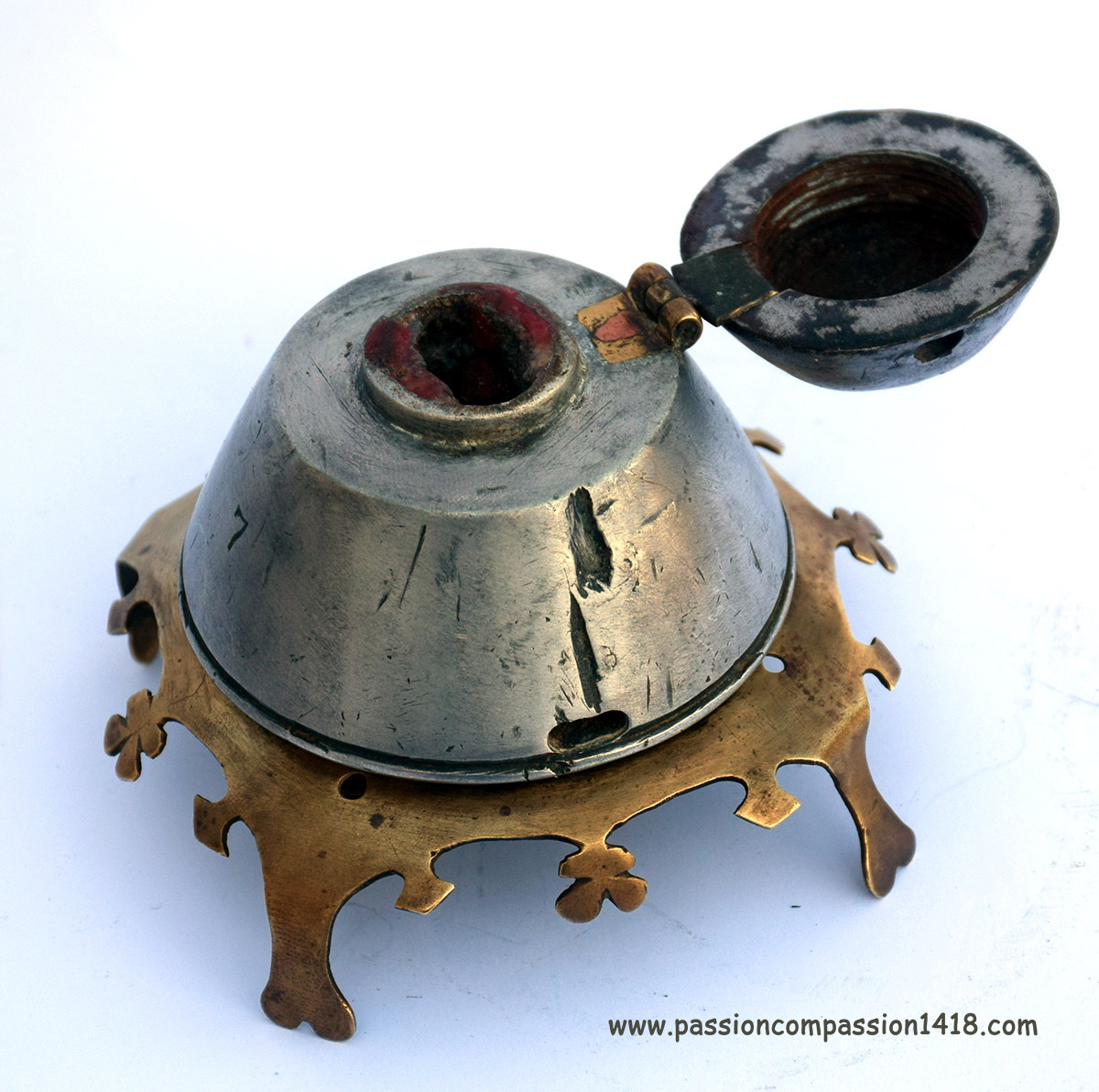 |
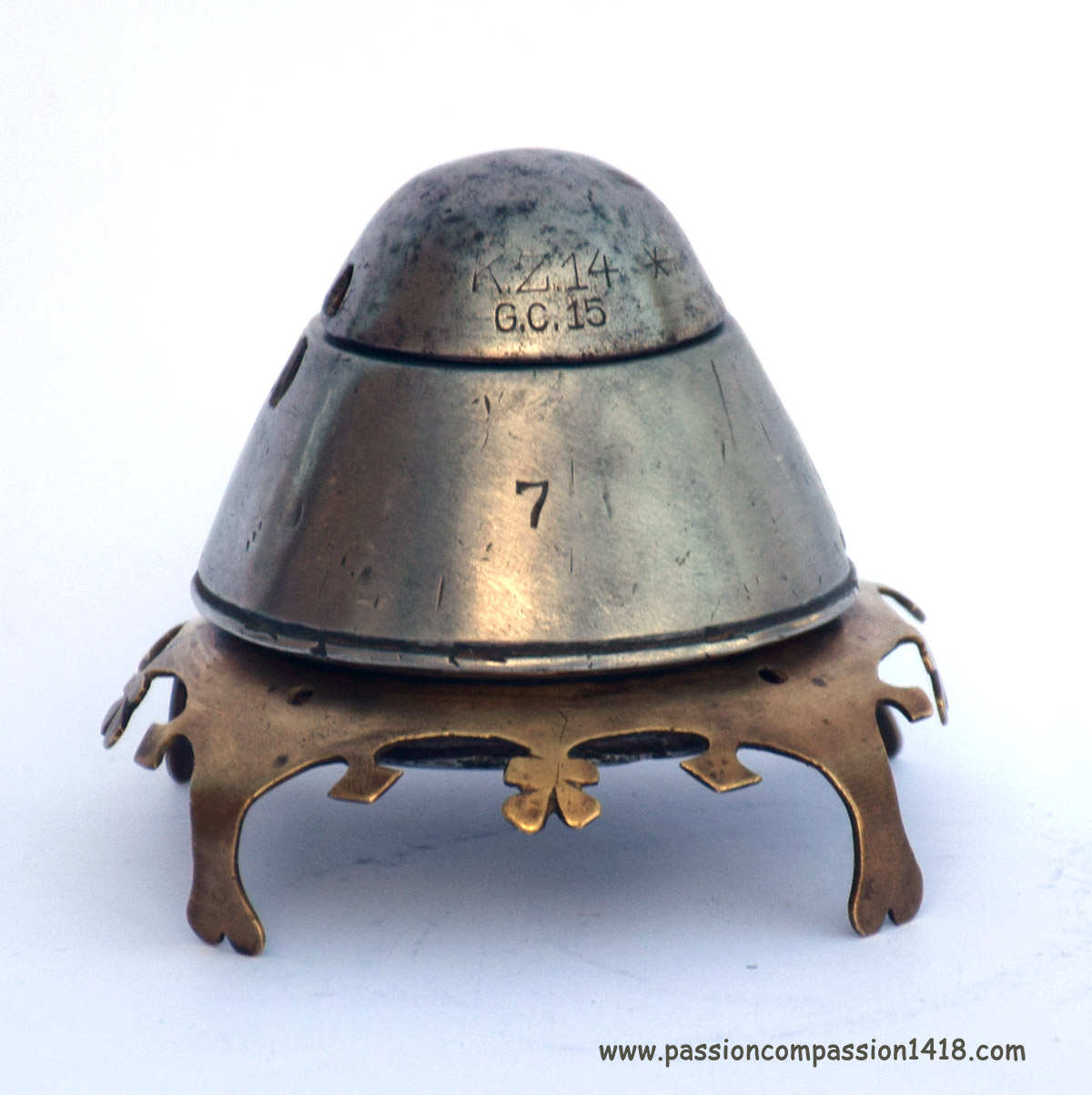
There is a certain artistic flair to this simple inkwell, which is based on a German KZ 14 percussion fuze made of aluminum and steel, with a hinge on the head to access the ink reservoir. |
 |
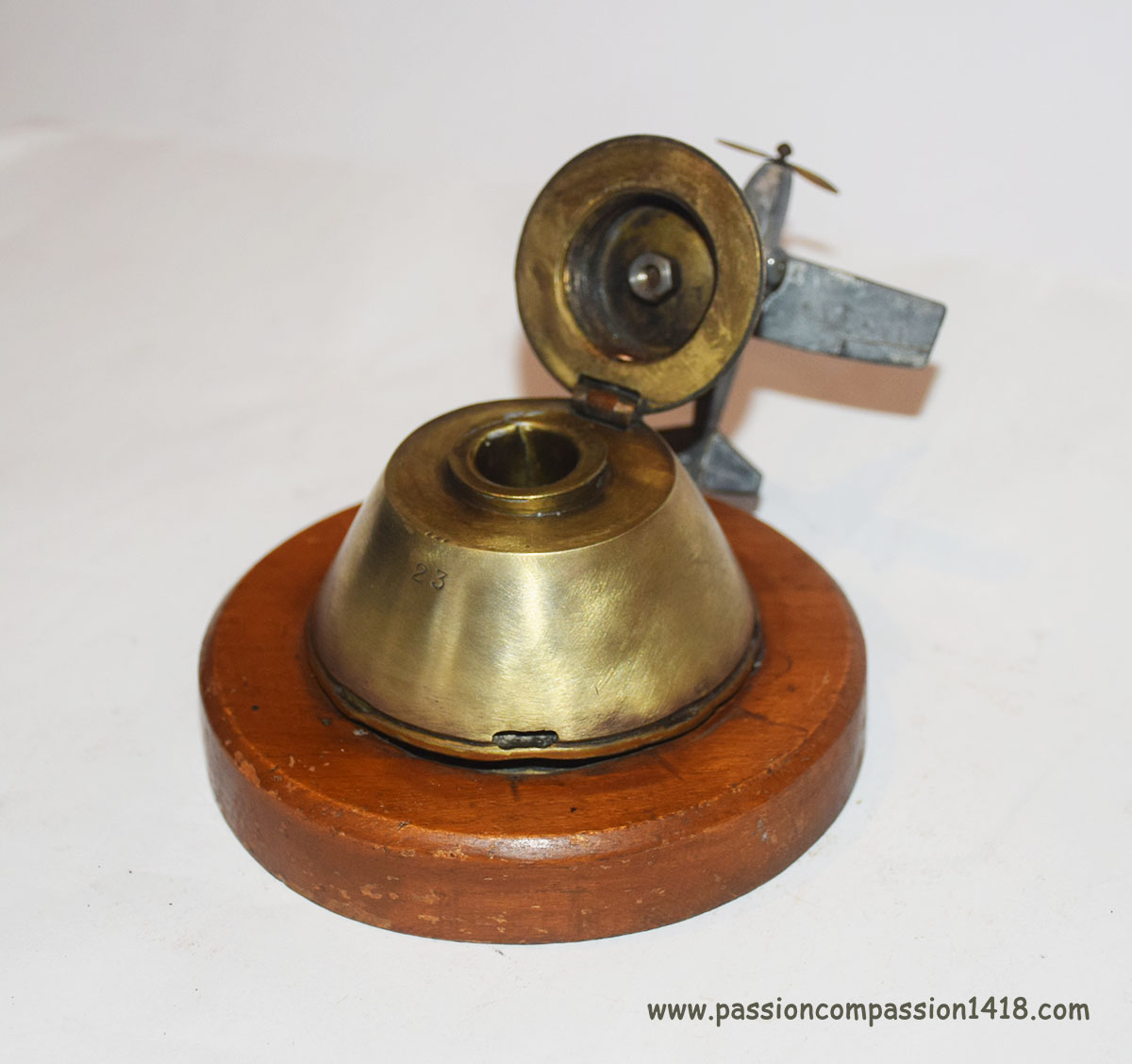 |
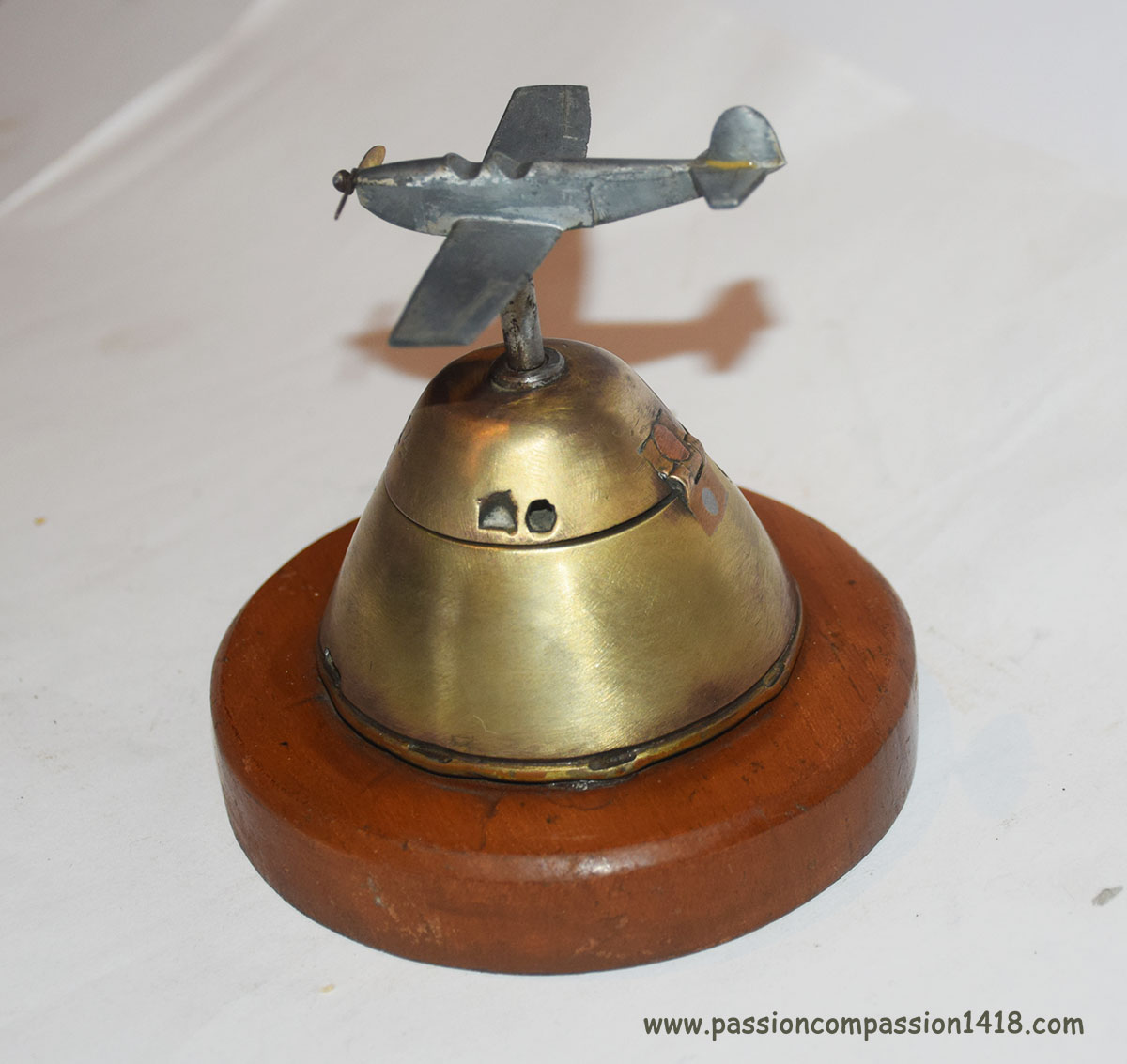
This interesting inkwell uses the body of a German KZ 14 percussion fuze, the head of which has been fitted with a hinge to house an inkwell in the compartment reserved for the percussion system. The fuze is attached to a simple wooden base. |
 |
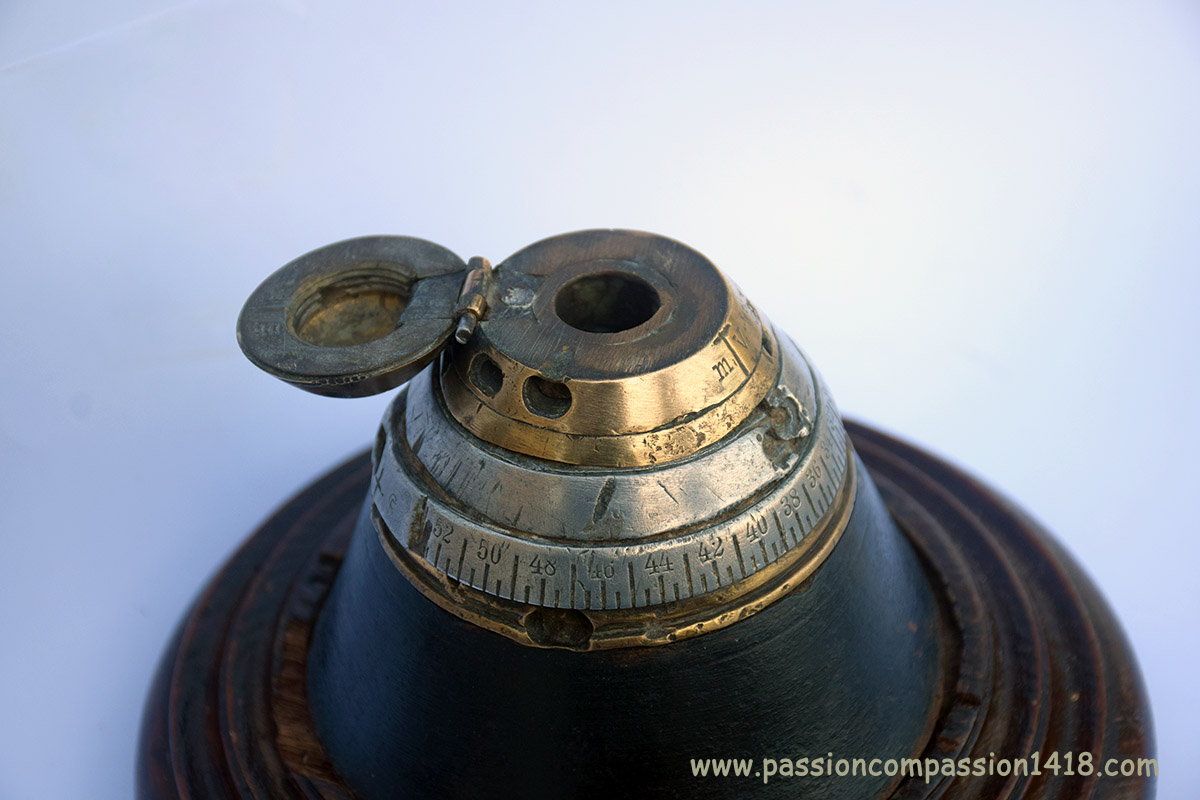 |
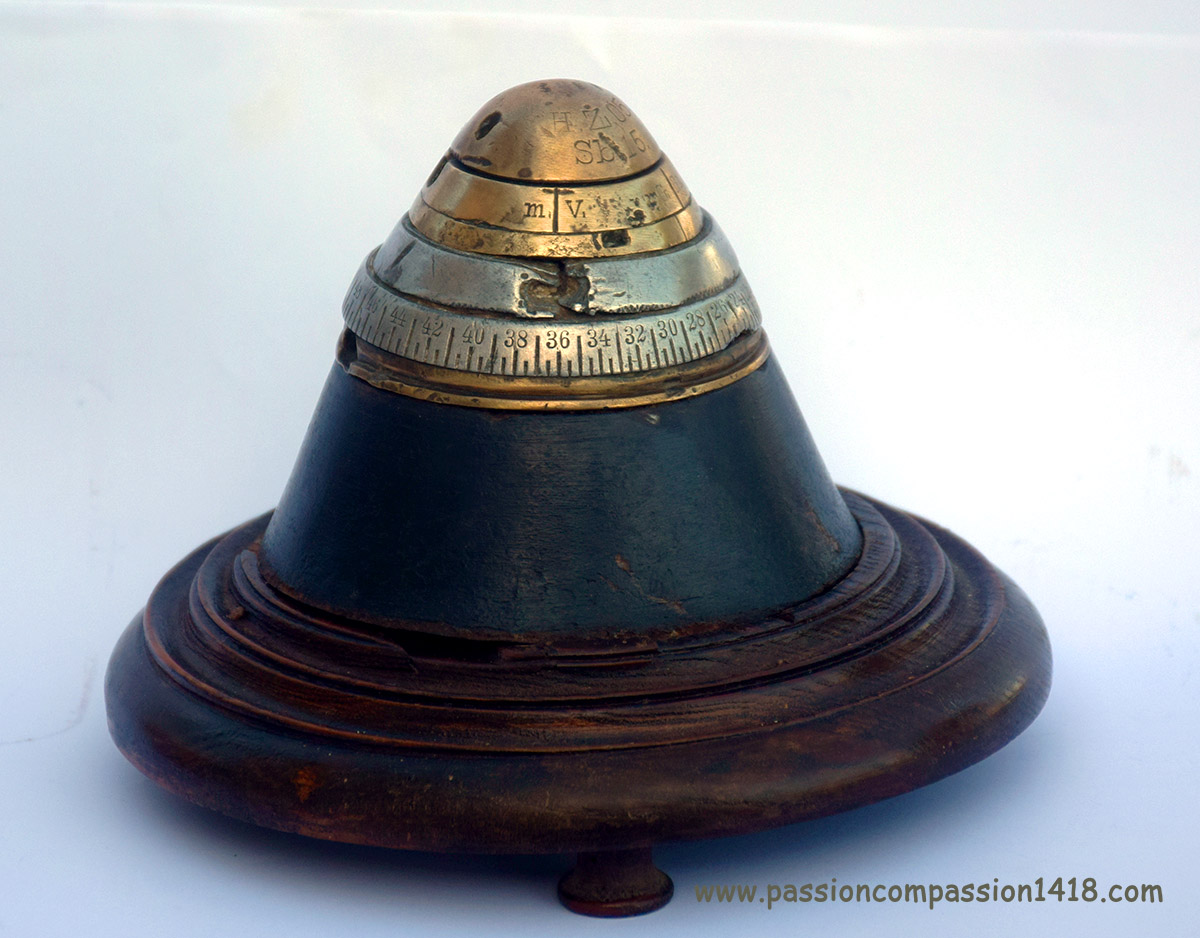
This work is particularly impressive due to its size and well-designed proportions, and the use of a beautiful German HZ05 double-effect fuze still mounted on a shell warhead, placed on a large round carved wooden base. |
 |
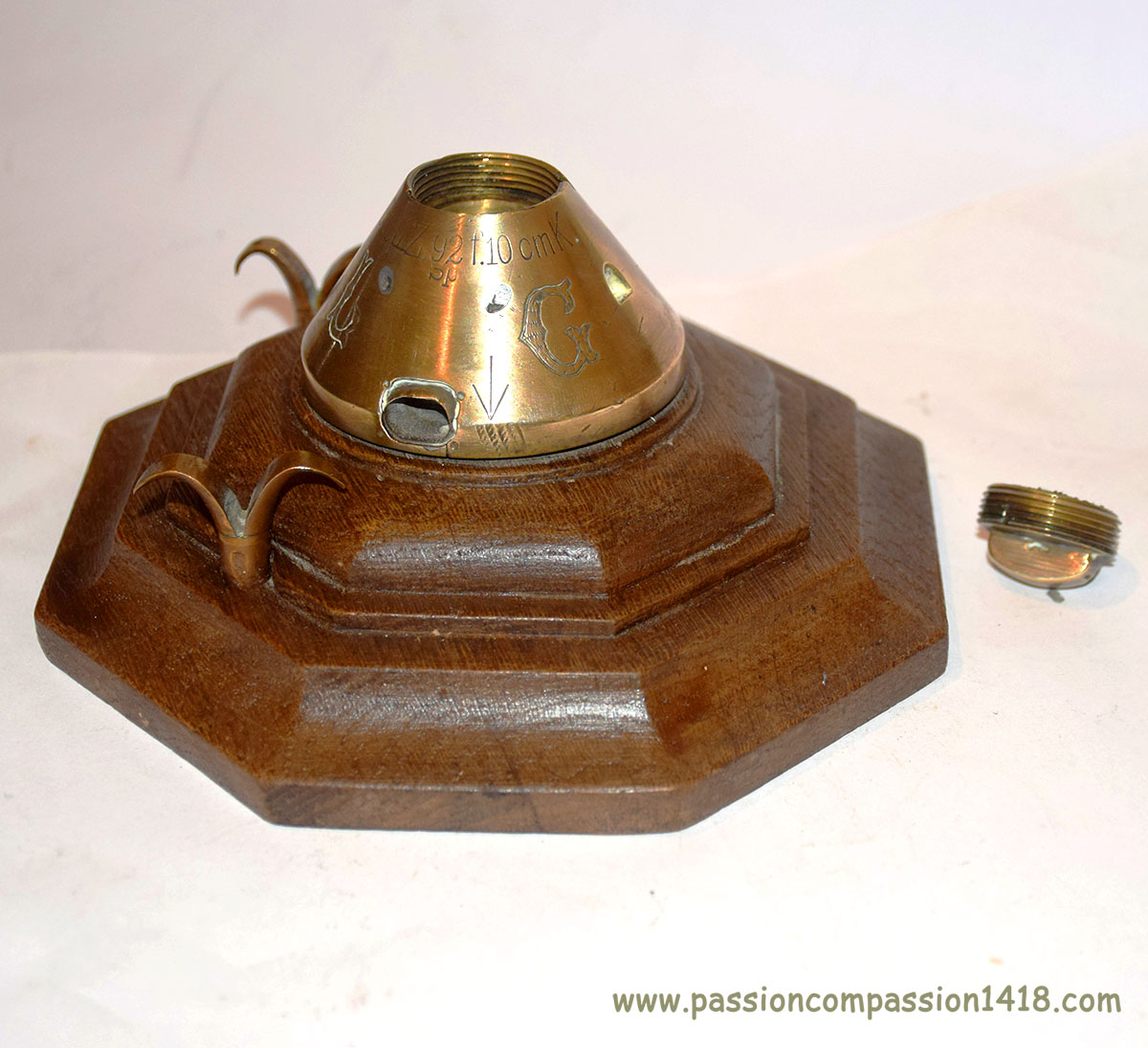 |
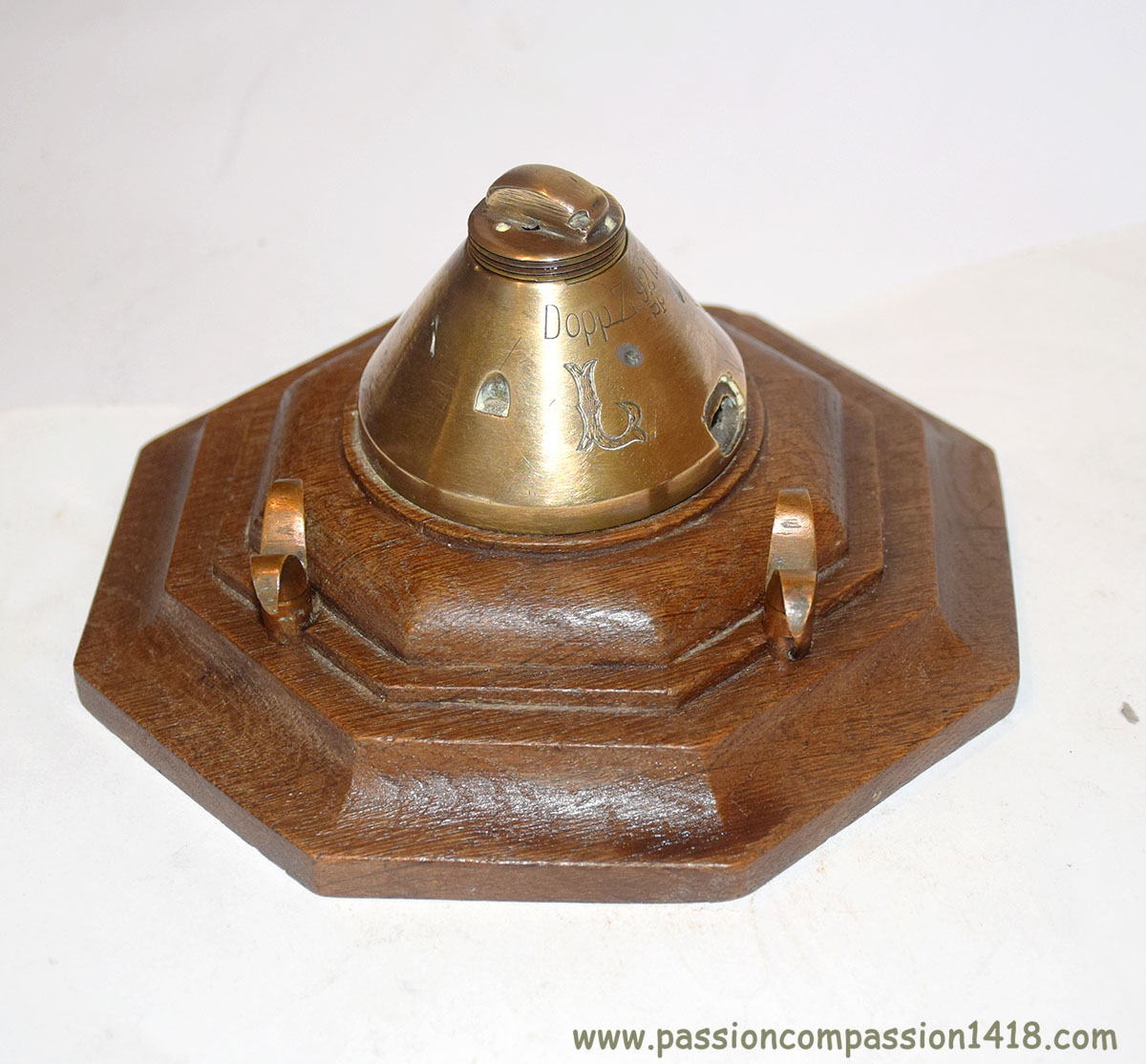
Inkwell made from a German Dopp Z 92 double-effect fuze , whose head cap has been modified to unscrew more easily and access the ink reservoir. The wooden base is decorated with two open bullets that can be used to hold a pen. |
 |
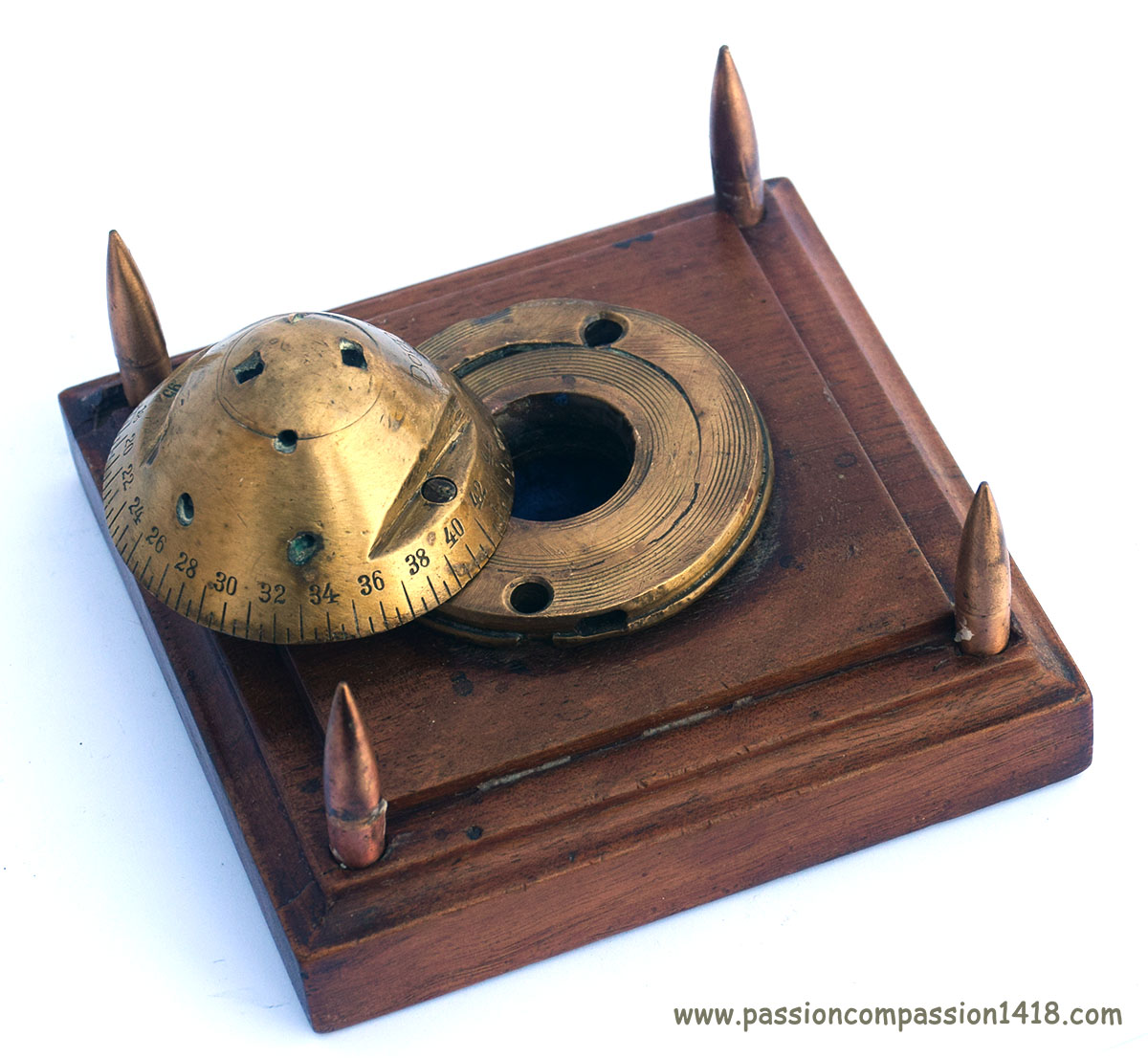 |
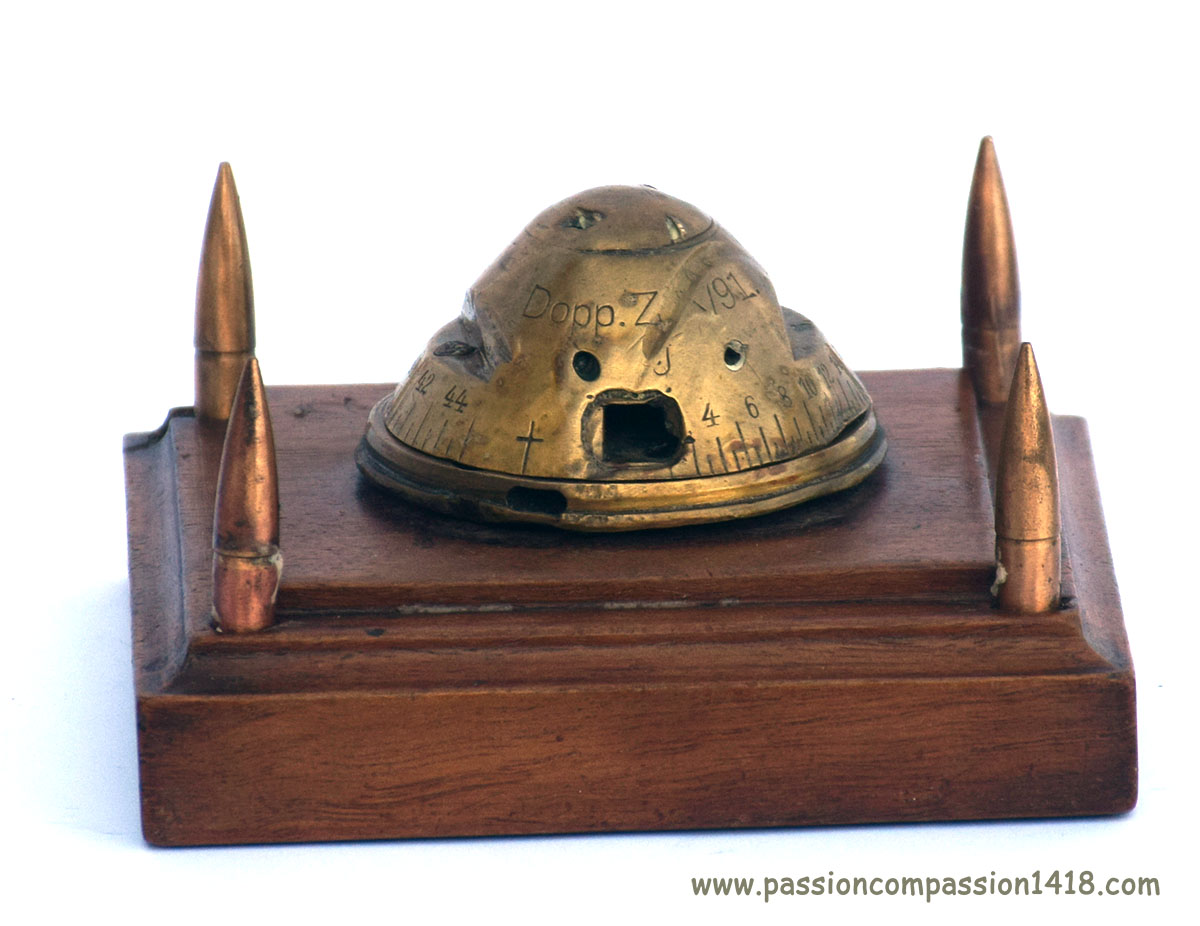
This other inkwell somewhat resembles a large mosque, with a dome modeled after a German Dopp Z 91 double-action fuze , whose cap pivots to give access to the ink reservoir, and four rifle bullets, probably French, as towers at the four corners of the wooden base. |
 |
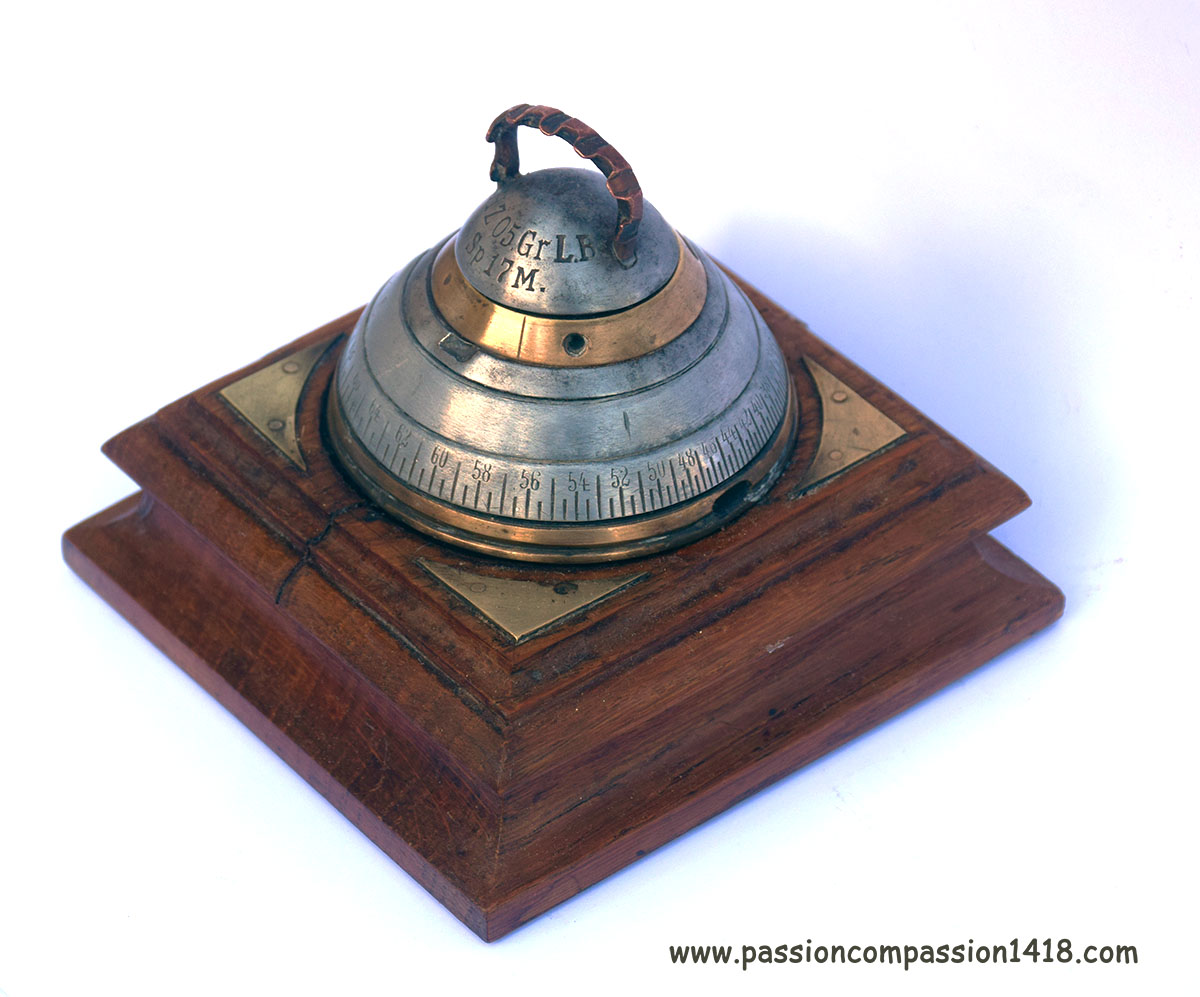 |
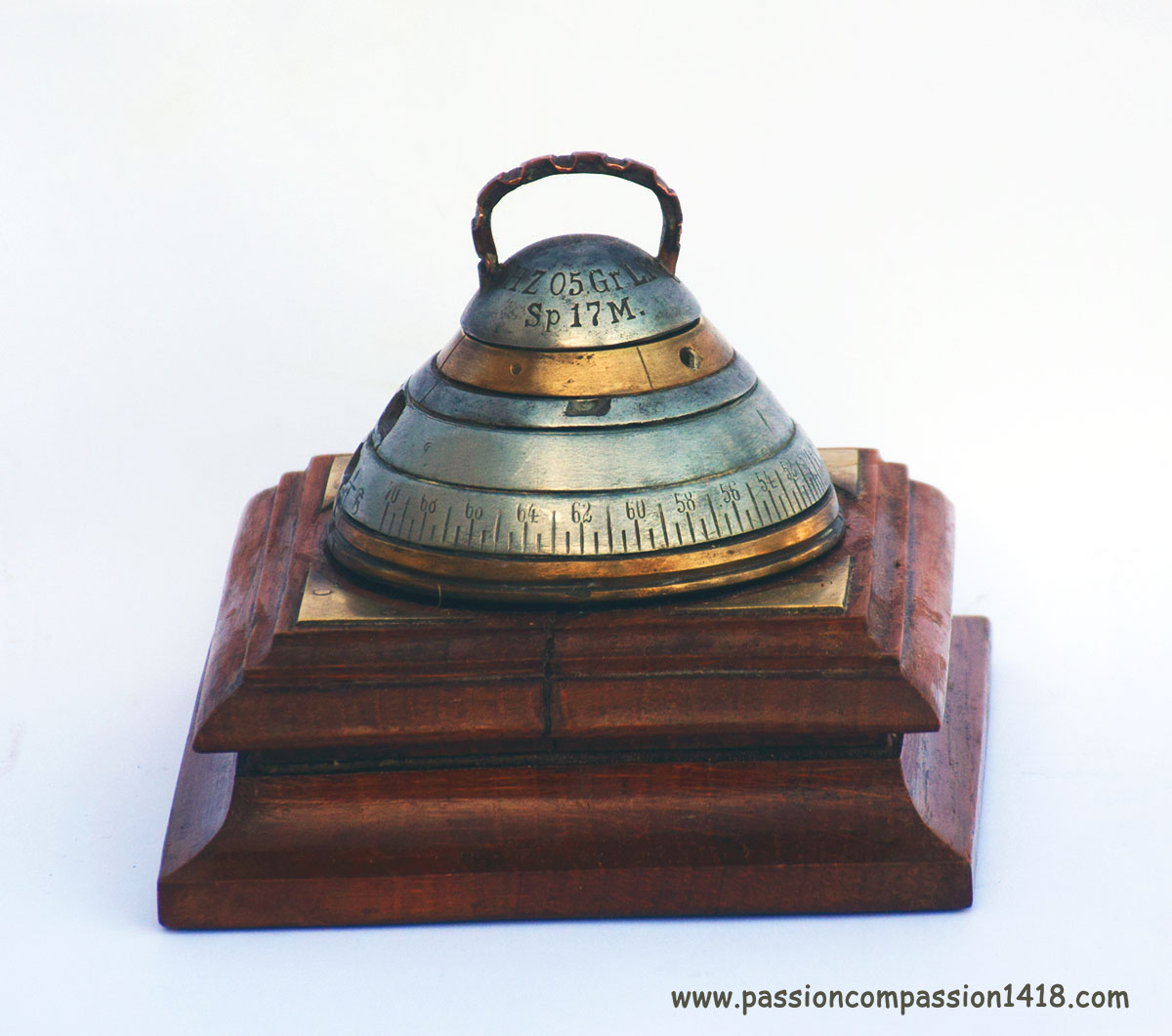
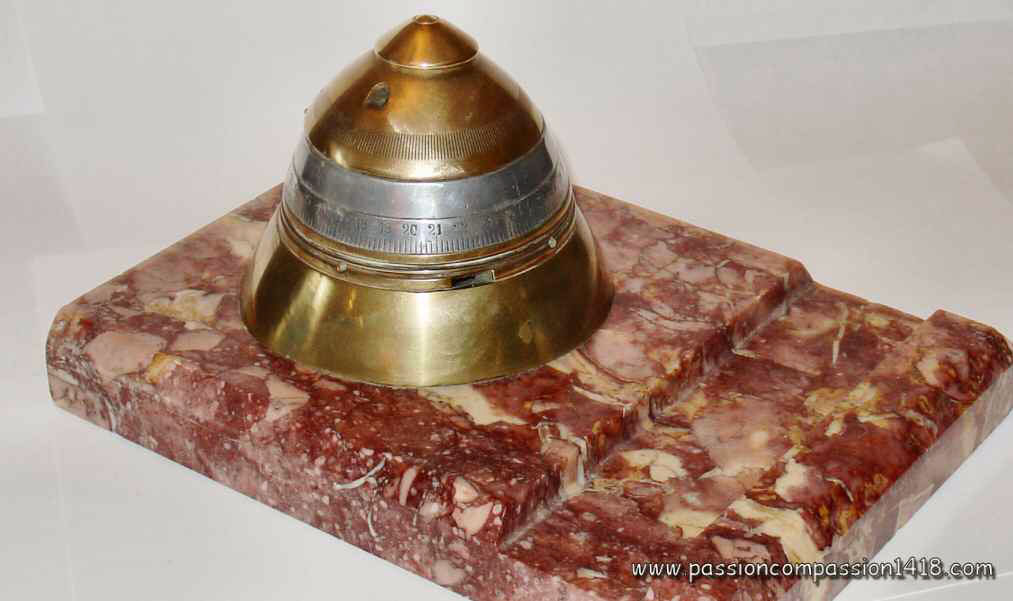
I would describe this work, based on a slightly damaged German HZ05 Gr double-effect fuze, as simple, were it not for the following noteworthy points:
The fuze has the following markings: 'H.Z.05 Gr LB - Sp 17 M.', graduations from 3 to 70, and adjustment marks; there are no visible annotations. |
 |
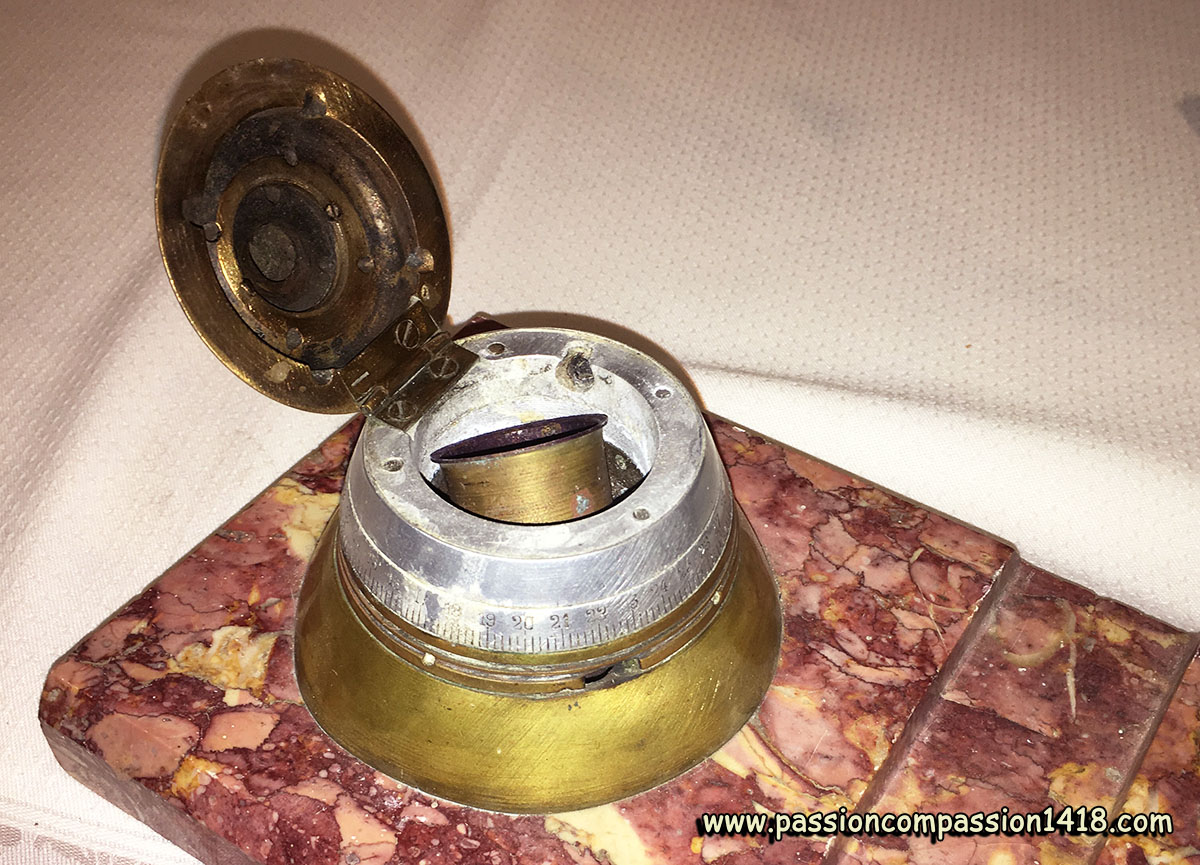 |
Inkwell made from a 30-second double-effect Russian fuze whose central striking mechanism has been removed to make room for an ink container. The male screw thread on the fuze cap has been sawn off and a hinge has been added. |
 |
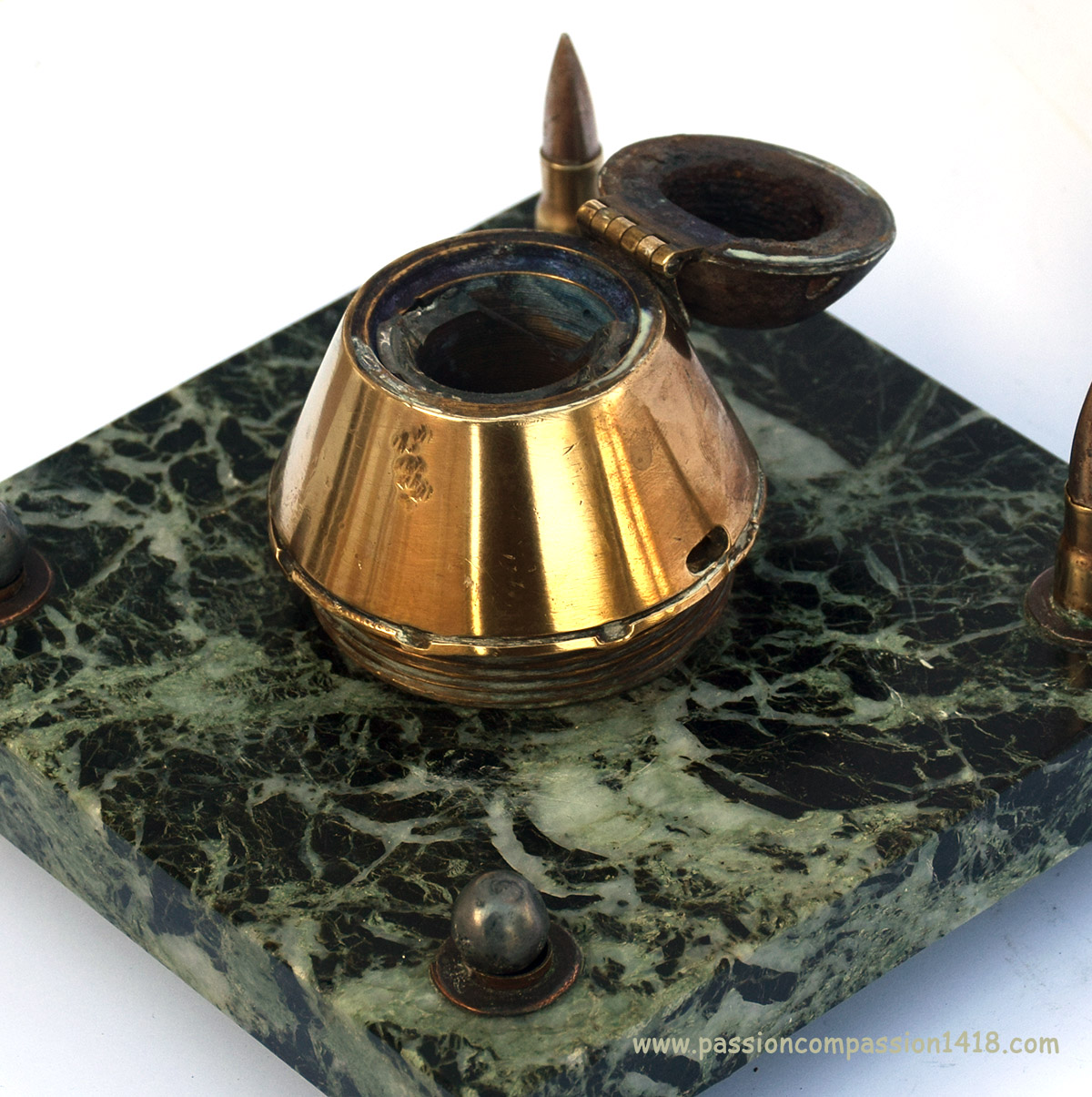 |
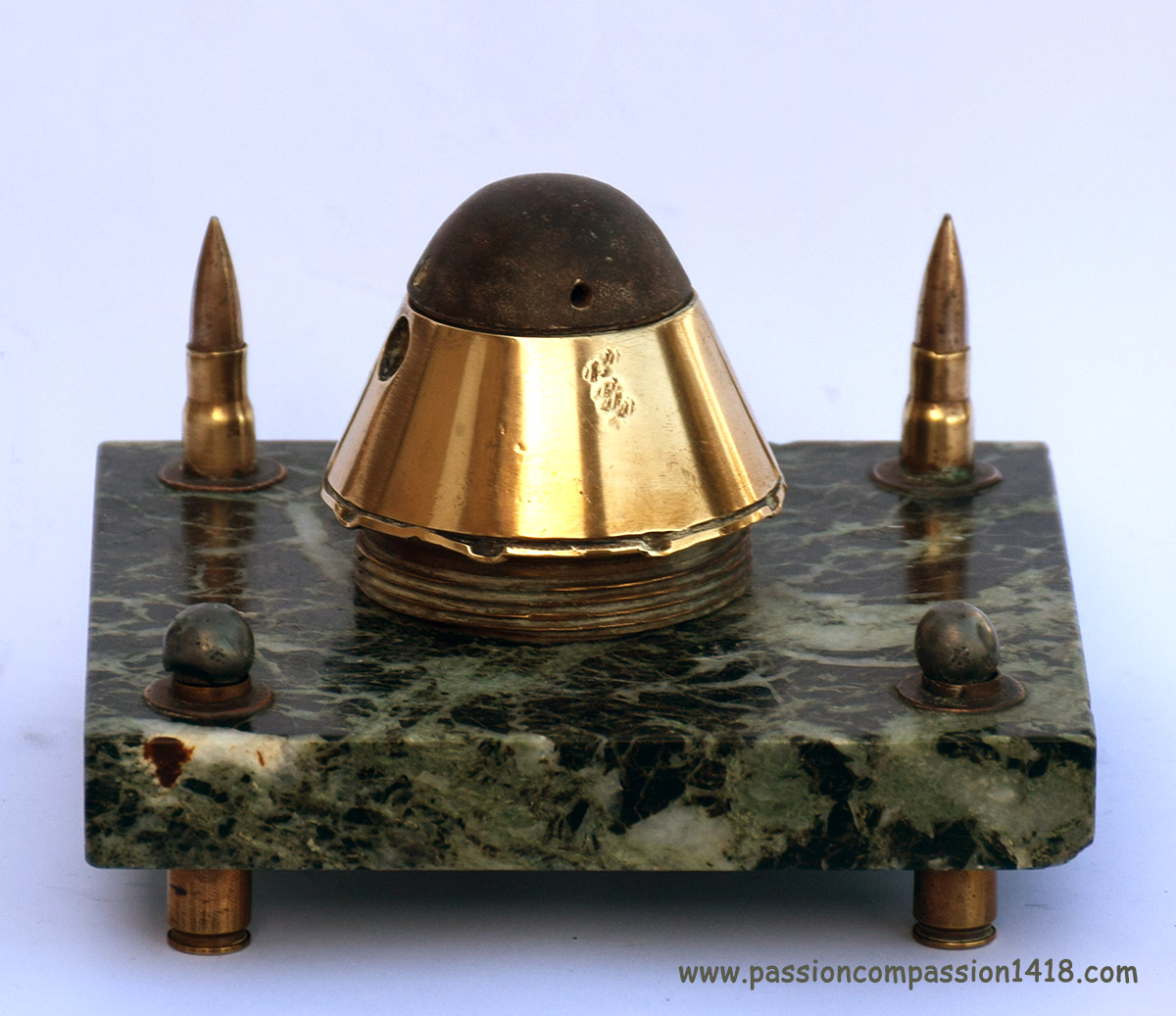
Marble is rarely used as a material in Trench Art, as it is less readily available than wood. In this case, a green marble slab was chosen as the base for a German KZ 14 percussion fuze made of brass and steel. The cap opens onto the internal inkwell thanks to a hinge. |
 |
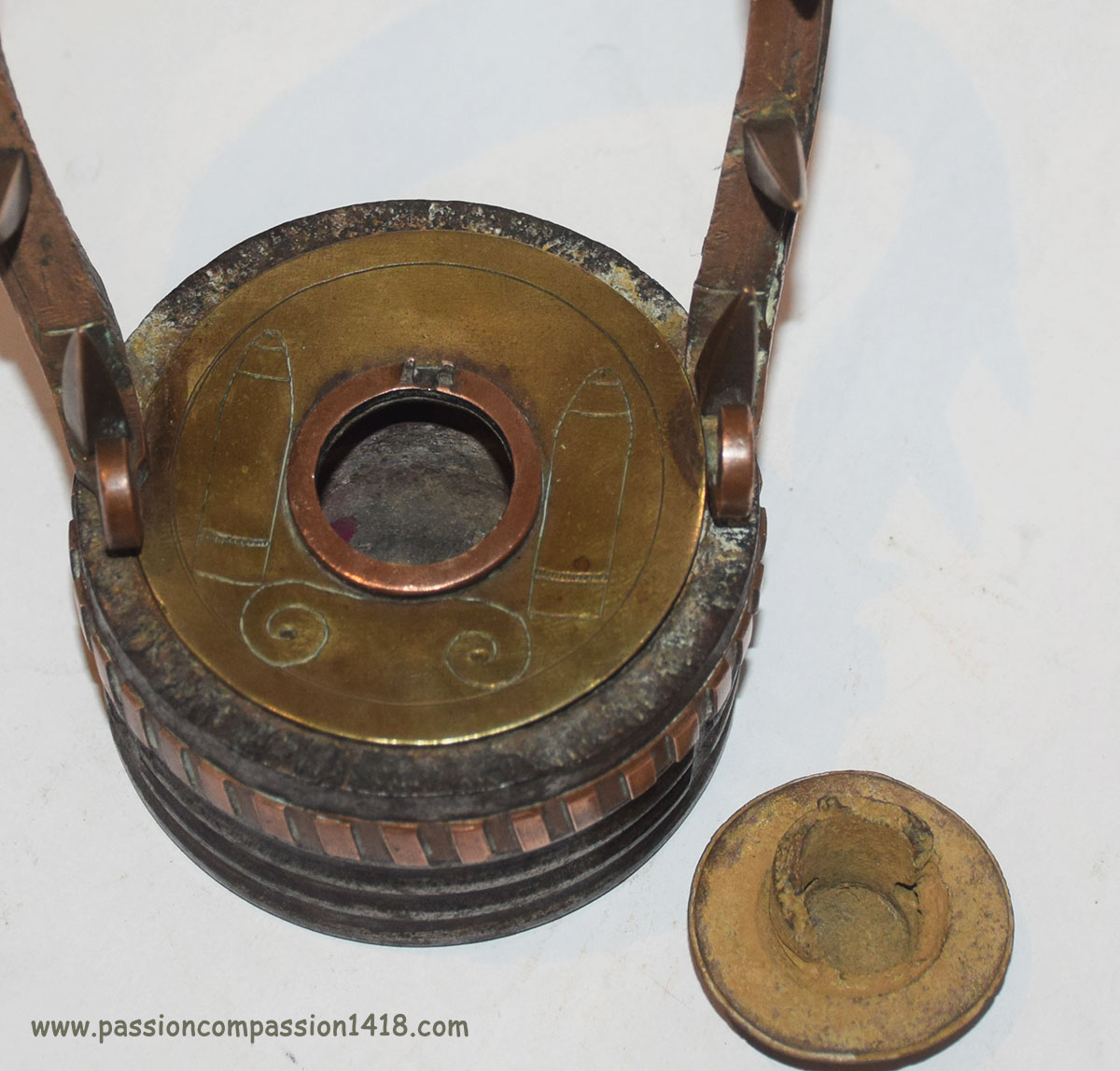 |
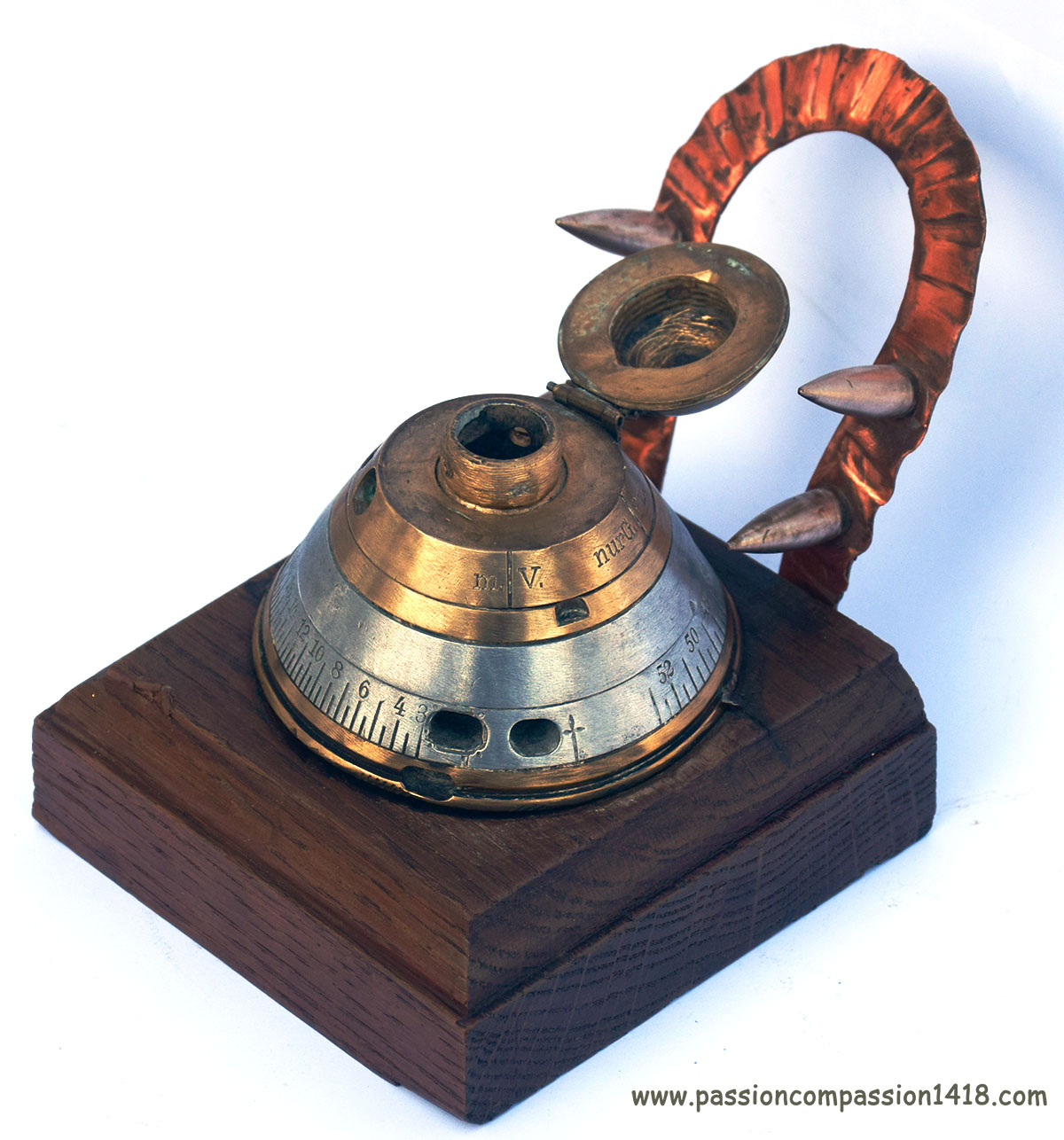
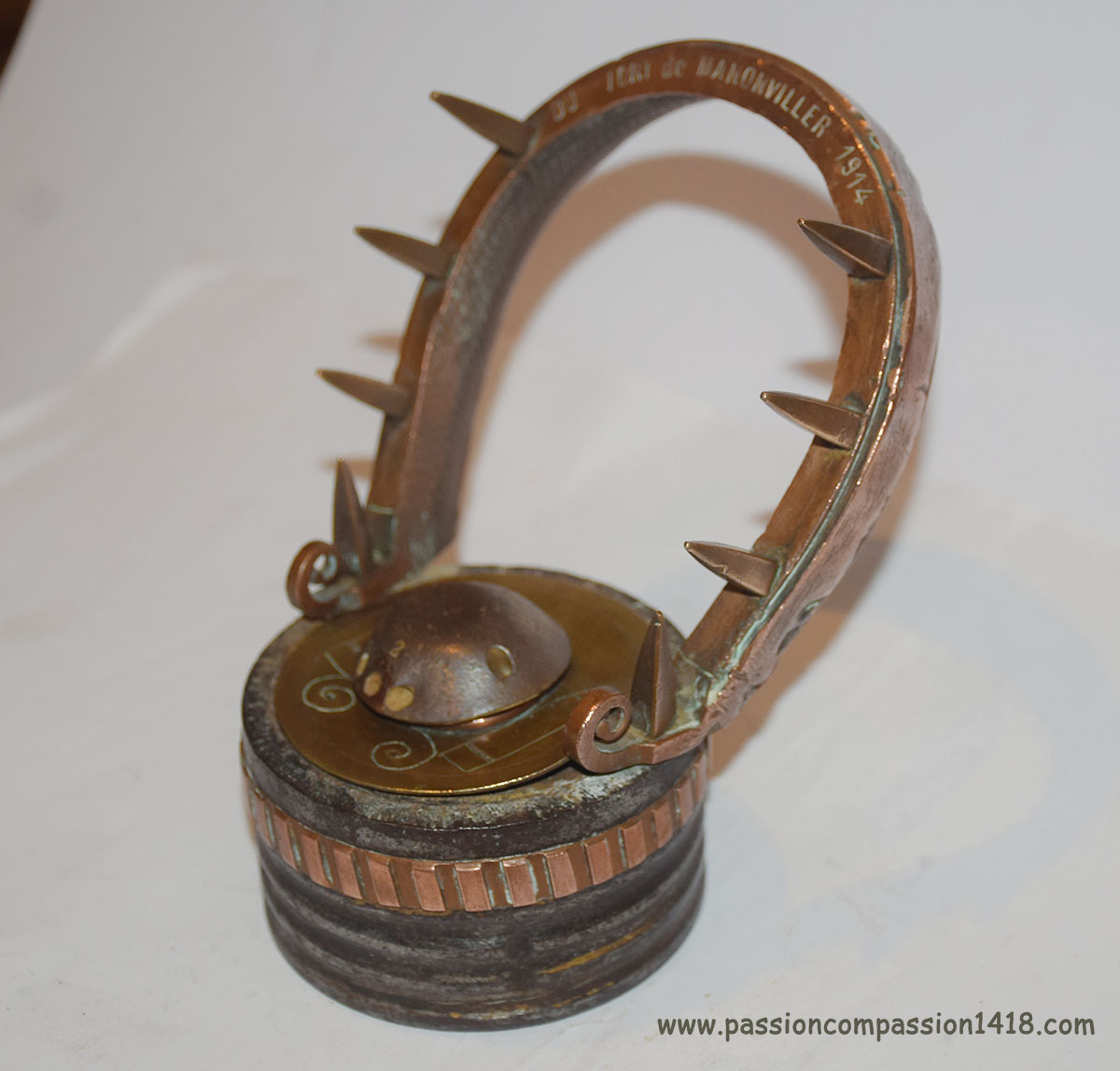
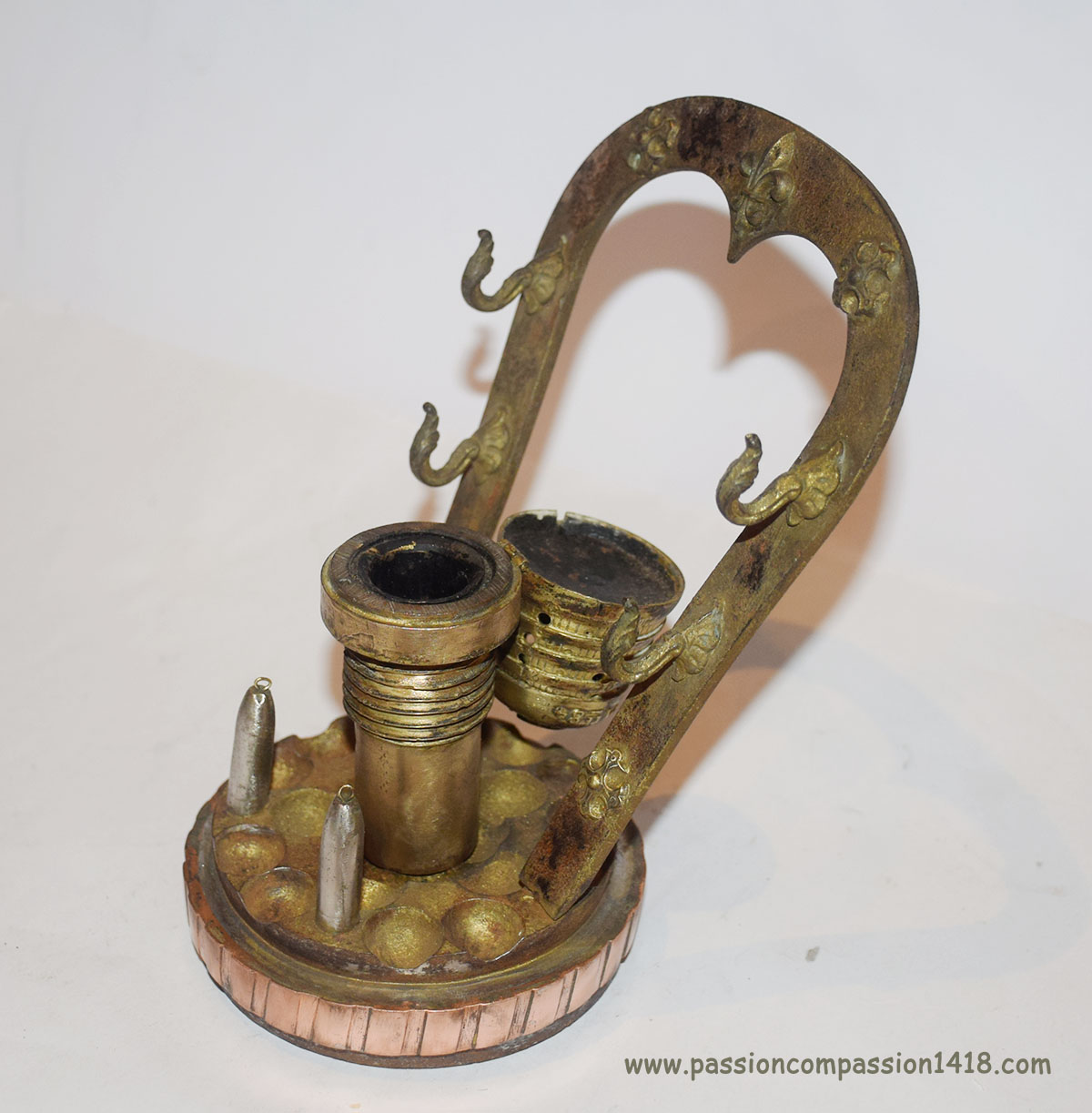
Inkwell made from the upper part of a German HZ 05 Gr double-action fuze, the base of a rear-charge shrbullet shell also German, recognizable by its hollow chamber, crimping grooves, and a copper belt from a shell that was probably never fired (no striations) and of large caliber, shaped like a horseshoe and lined with spikes. |
 |
 |
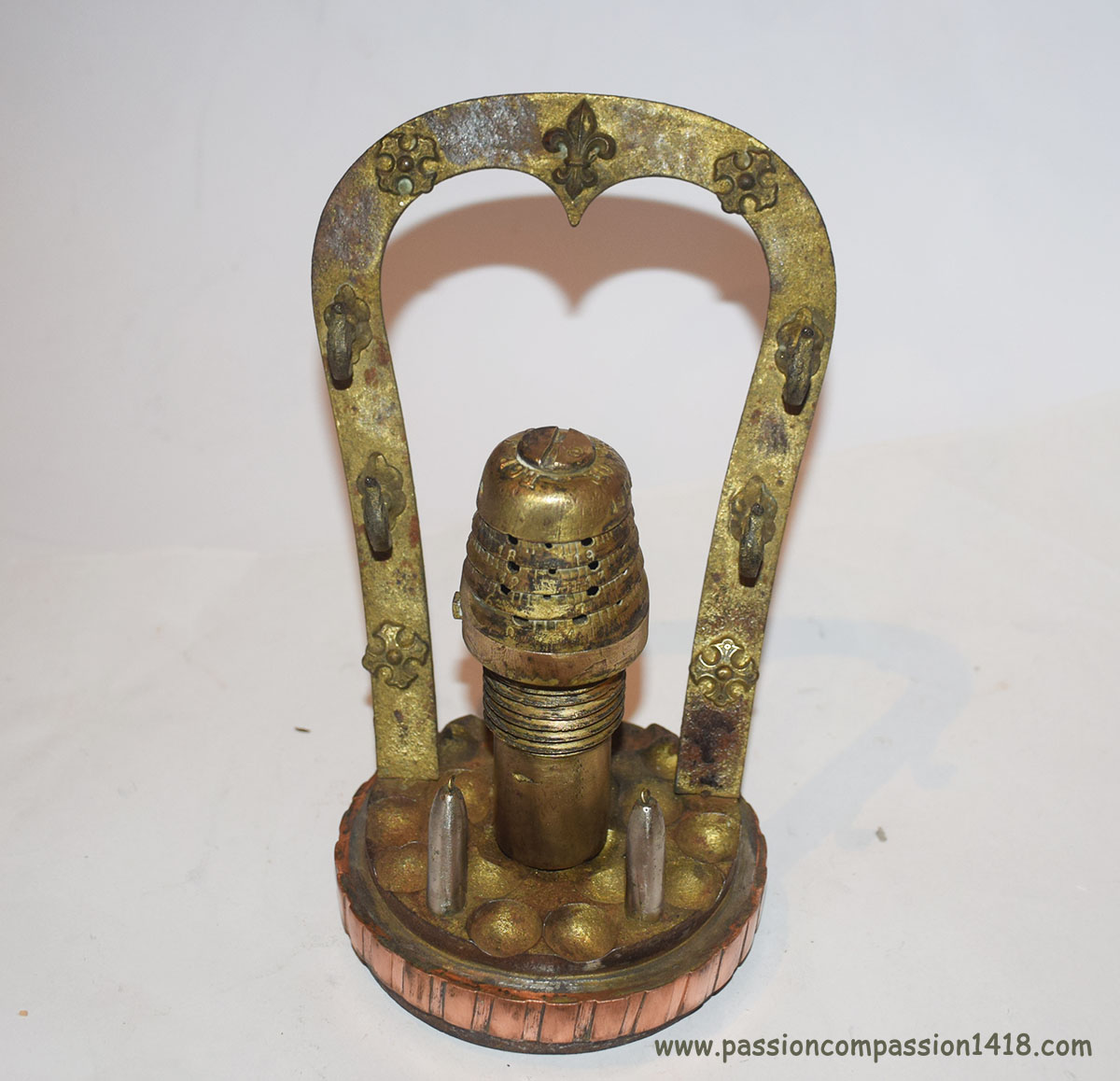
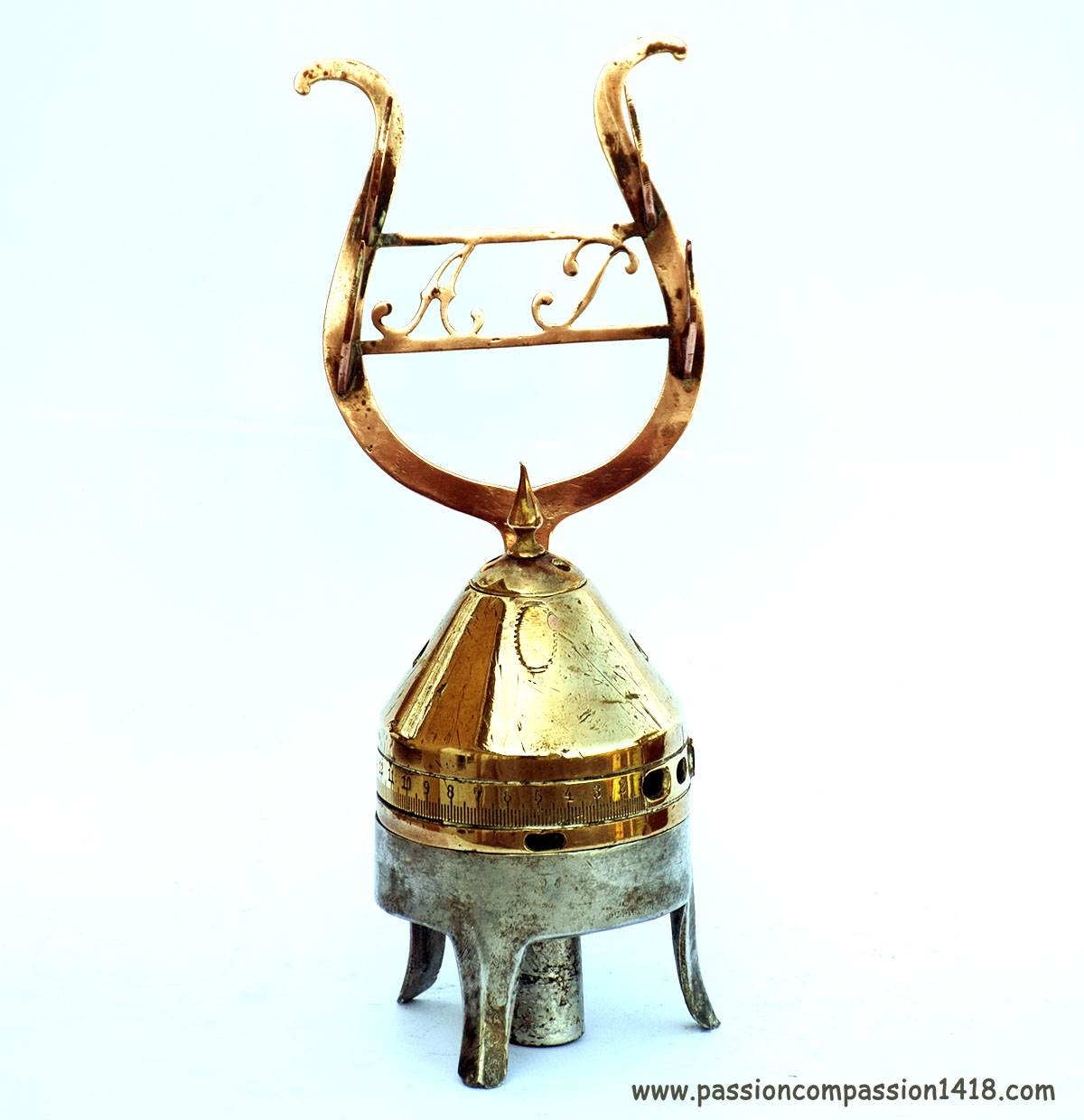
Another version of an inkwell with a fuze, base, and horseshoe shape, this time consisting of a French double-effect fuse 30/38 Mod 1884, a base of French 90mm shrapnel shell base, recognizable by its bullet chambers and convex bottom, and a horseshoe-shaped metal arc decorated with fleurs-de-lis and Maltese crosses and bearing hooks for hanging pens. Two small shiny metal shells complete the set. |
 |
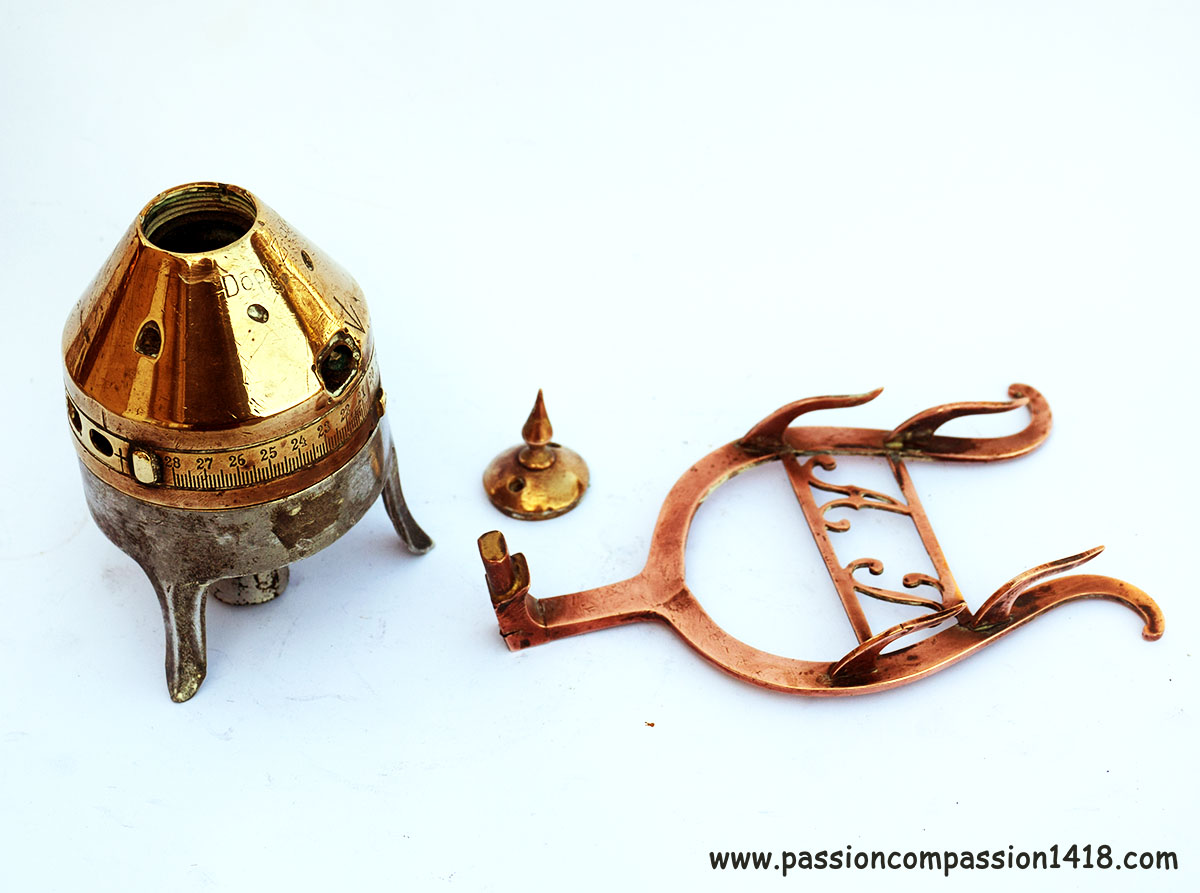 |
Here is a particularly elegant inkwell, based on a German Dopp Z 92 double-effect fuze , whose cap, tipped with a spike ressembling the ones of German helmets from 1914-1915, unscrews to reveal the ink reservoir. |
 |
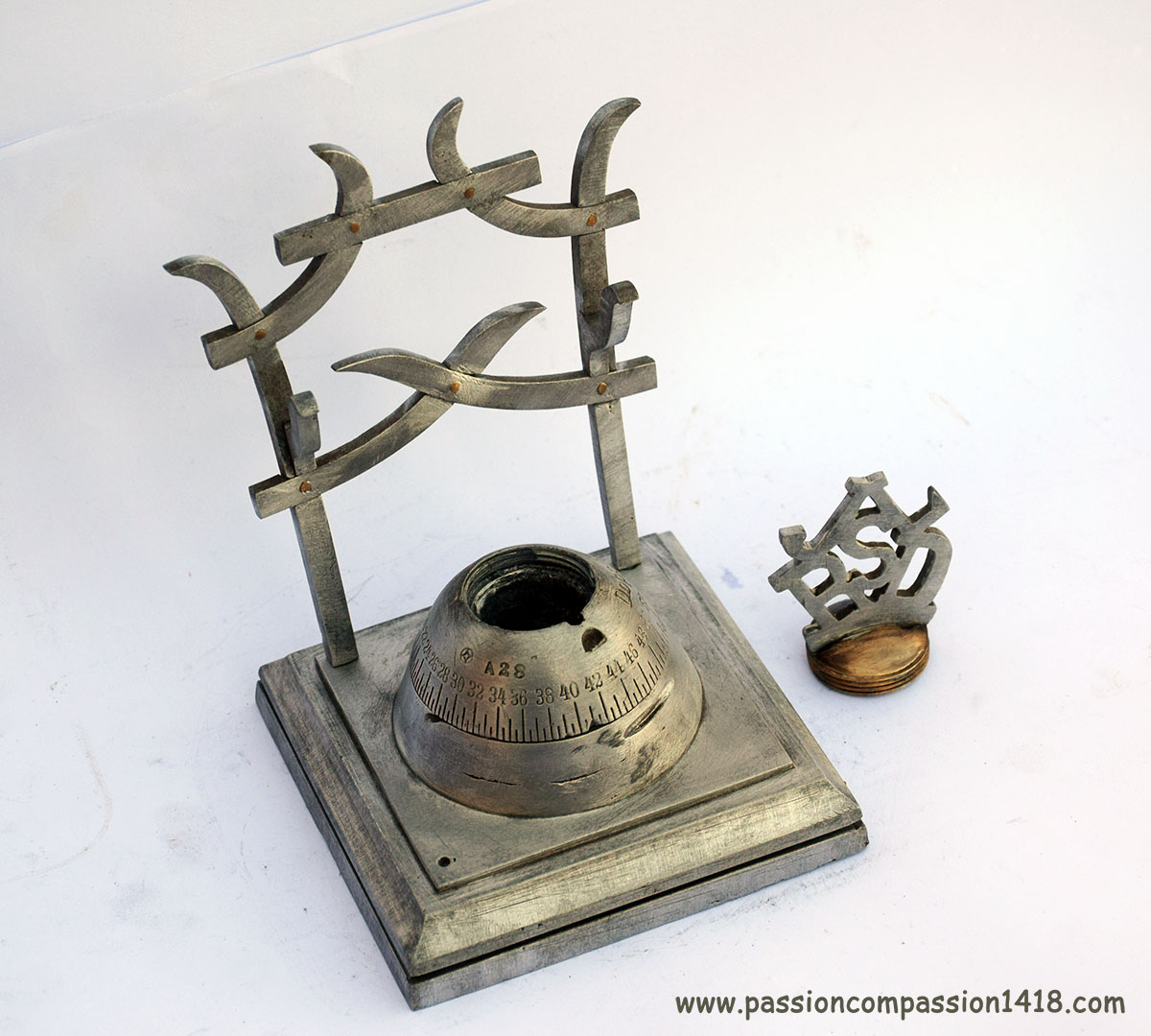 |
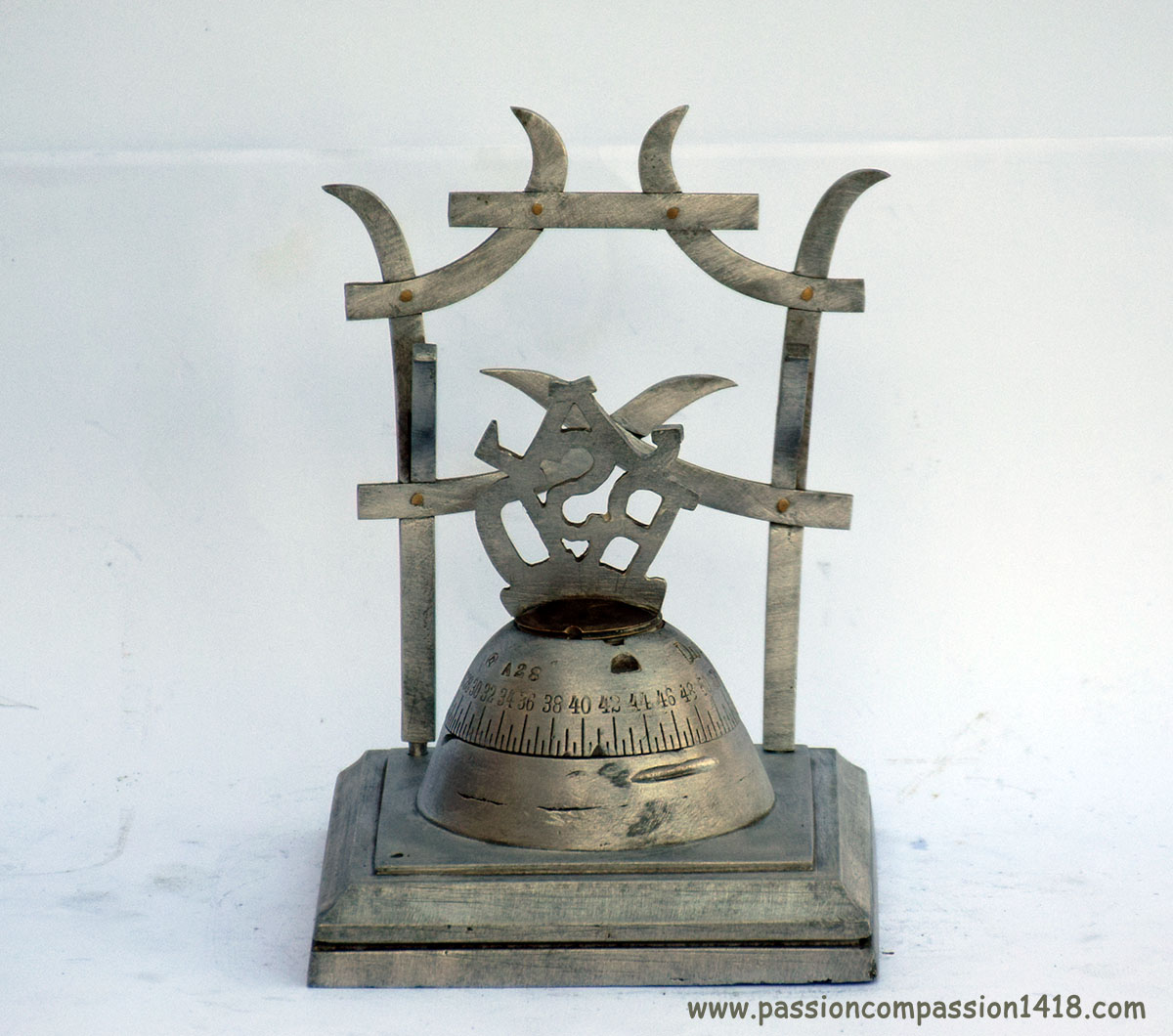
This time, the set has a vaguely Asian feel, with the pen holder motif on the back reminiscent of a Japanese gate. This motif and the base are cast in aluminum, serving as a showcase for a German Dopp Z 96 n/A double-action fuze , whose cap, which can be unscrewed to access the ink reservoir, also features an aluminum motif. |
 |
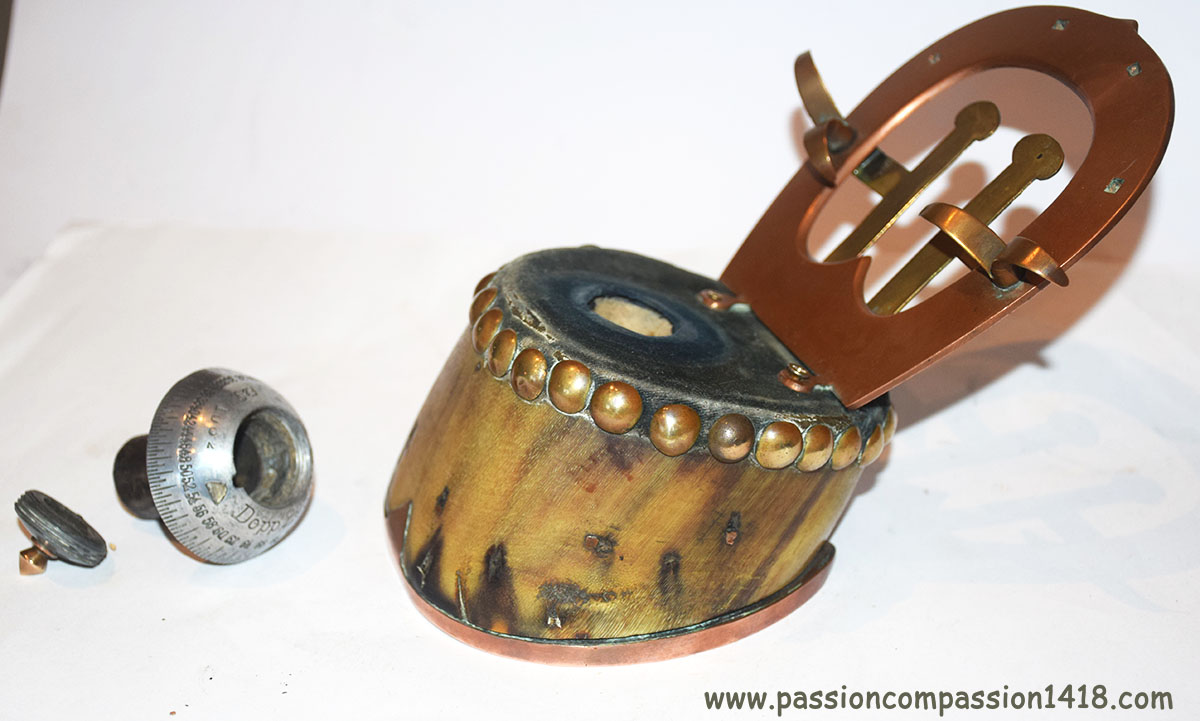 |
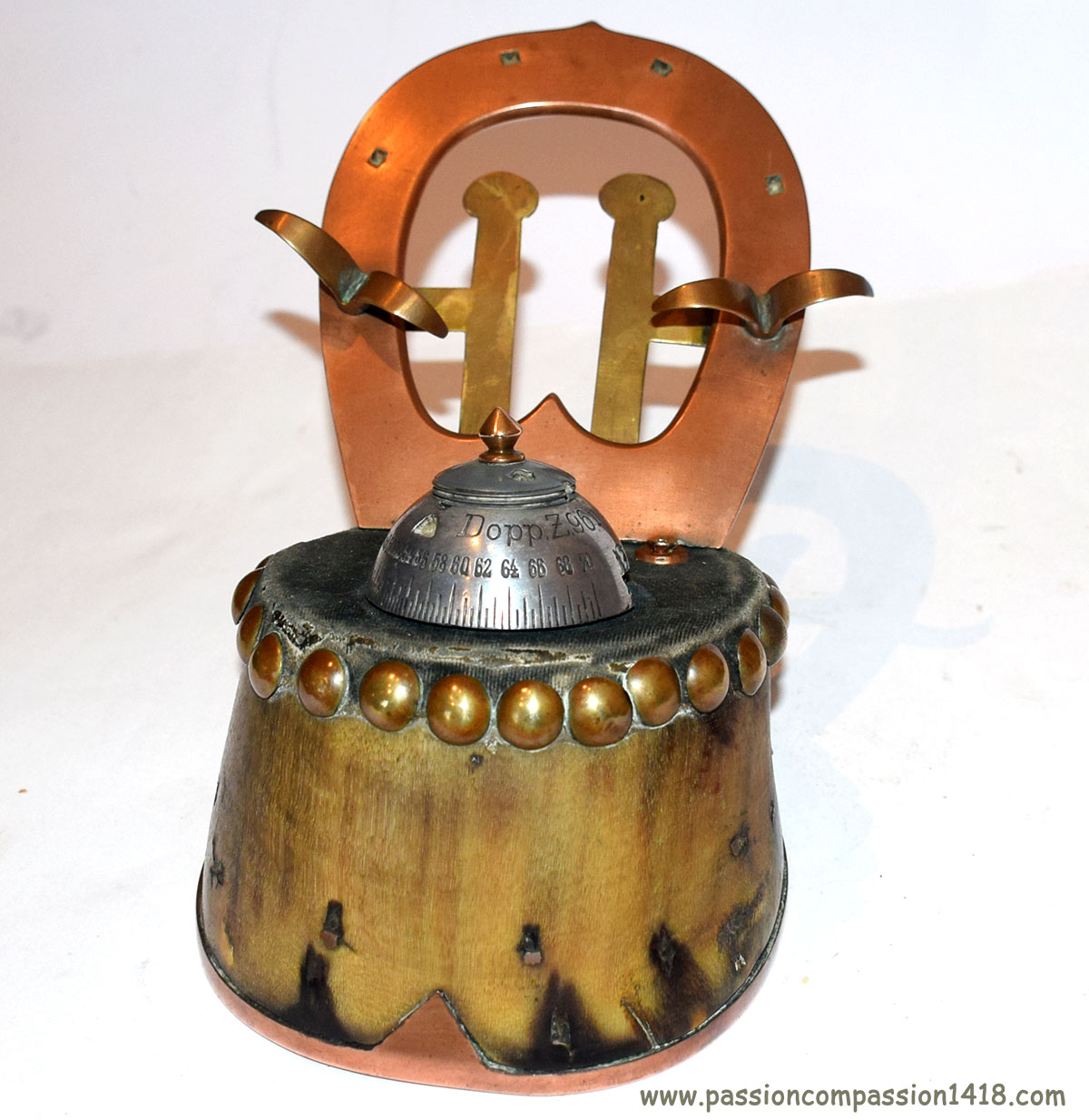
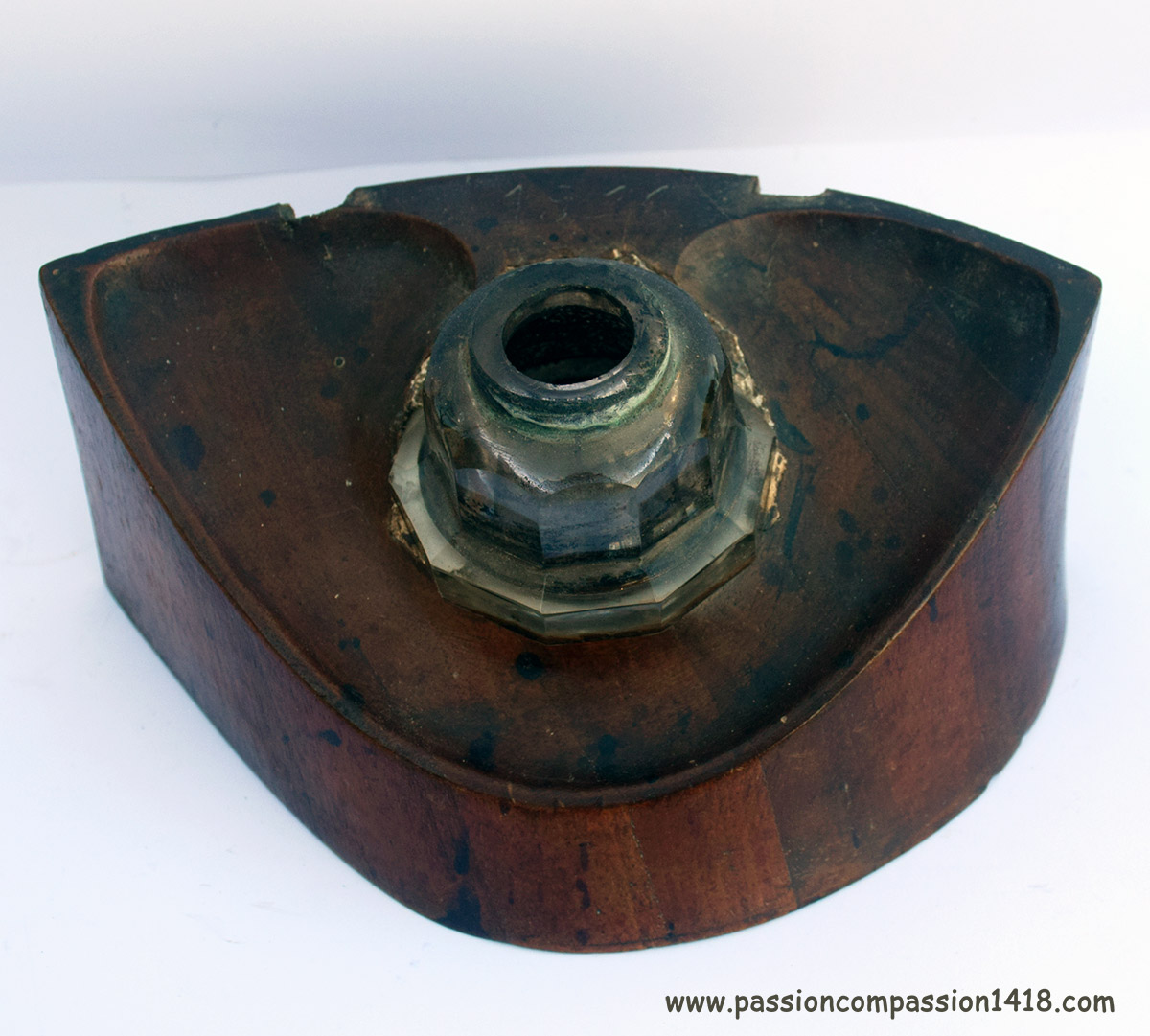
This particularly original inkwell uses a horse's hoof (giving the whole thing a slightly sinister connotation...), decorated with copper nails and shod with the same metal, as a base for an inkwell made from the fixed part of a German Dopp Z 96 n/A double-action fuze. |
 |
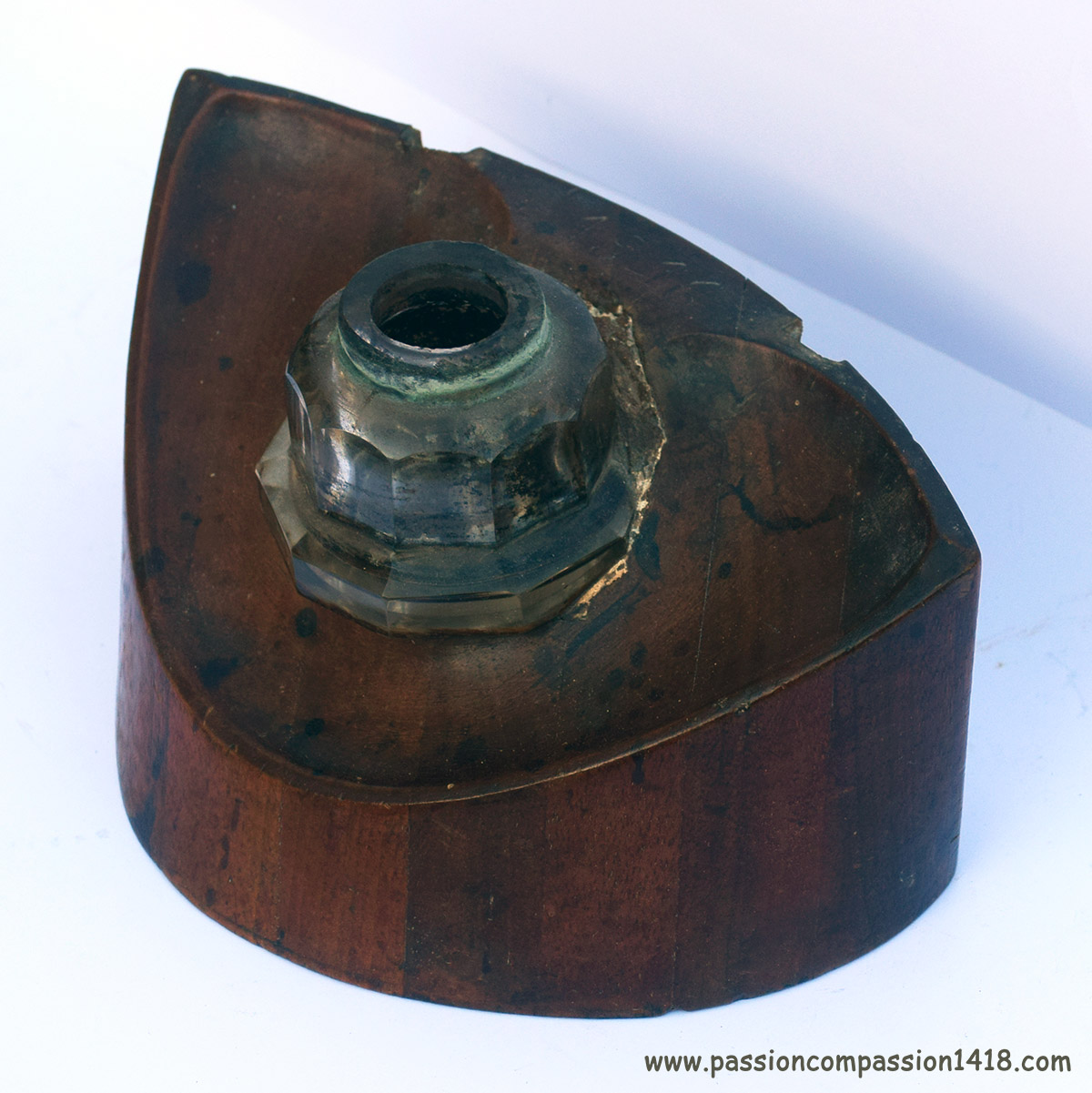 |
This highly original inkwell does not feature an artillery fuze, but rather a section of a wooden propeller blade from an unknown aircraft, into which a glass inkwell has been embedded. The blade section has been carved at an angle on the upper side, and the two notches at the rear suggest that the piece probably originally featured a decorative motif at the back, which has since disappeared. |
 |
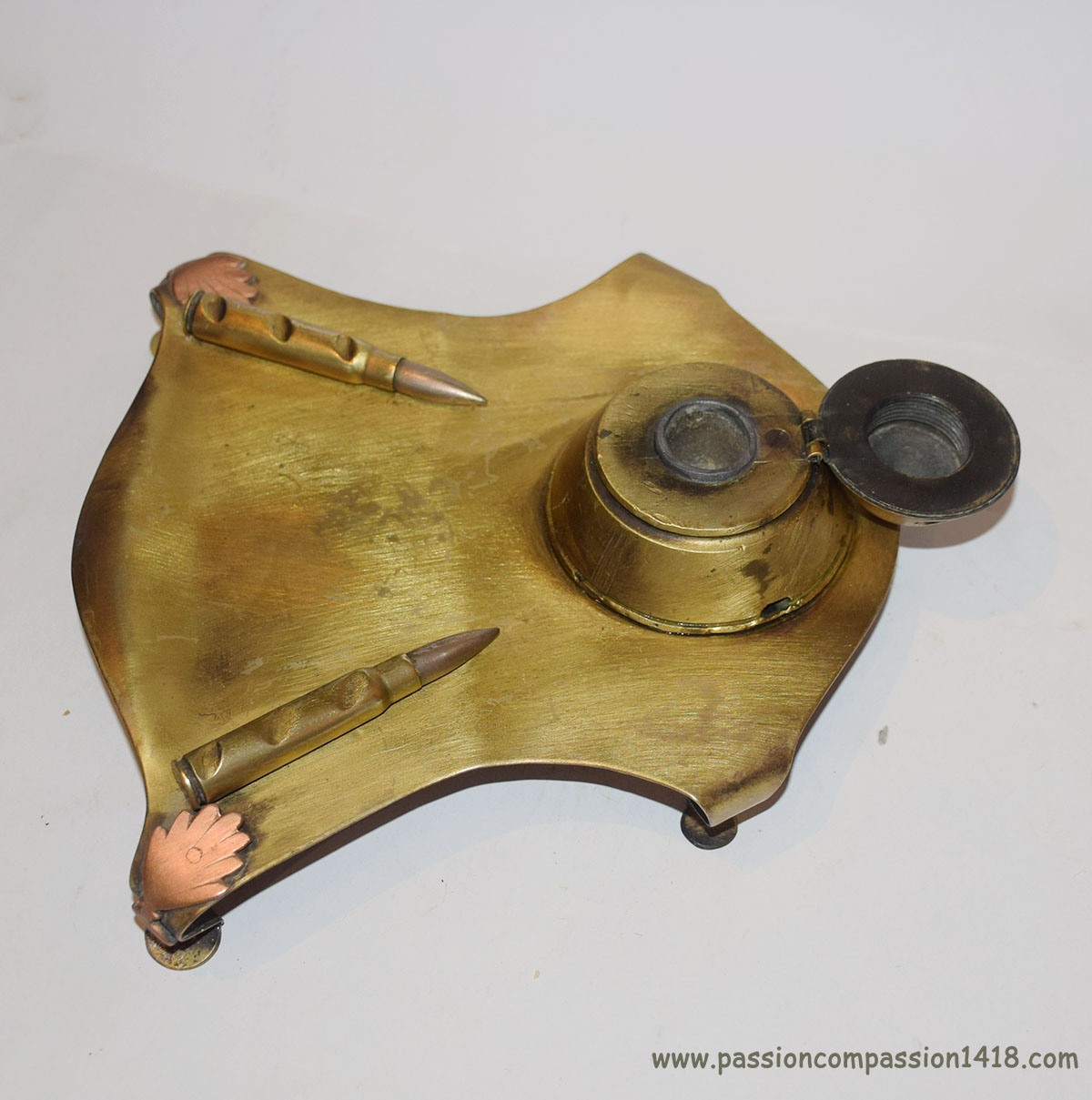 |
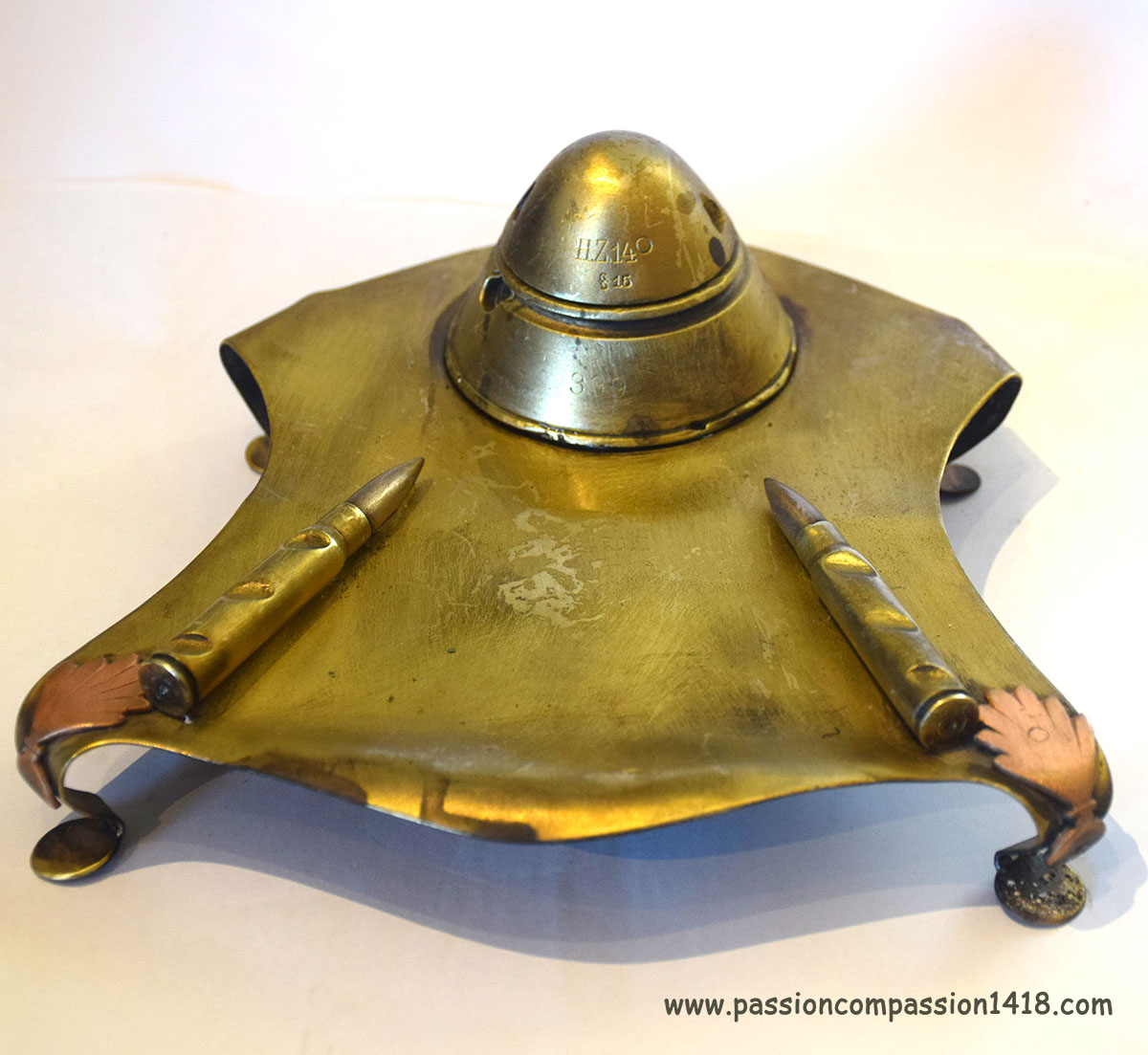
Inkwell made from a German HZ 14 percussion fuze placed on a sheet of copper cut from a shell cartridge and fitted with four feet. |
 |
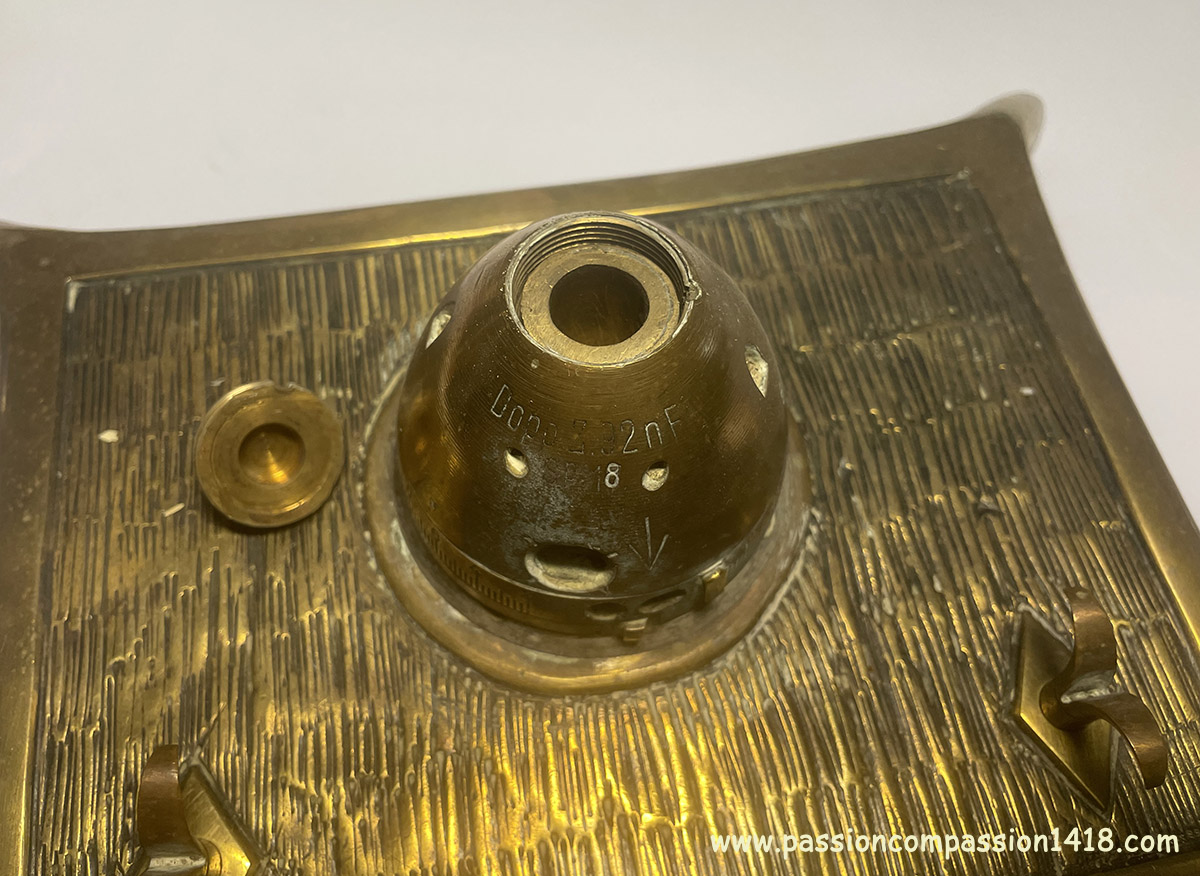 |
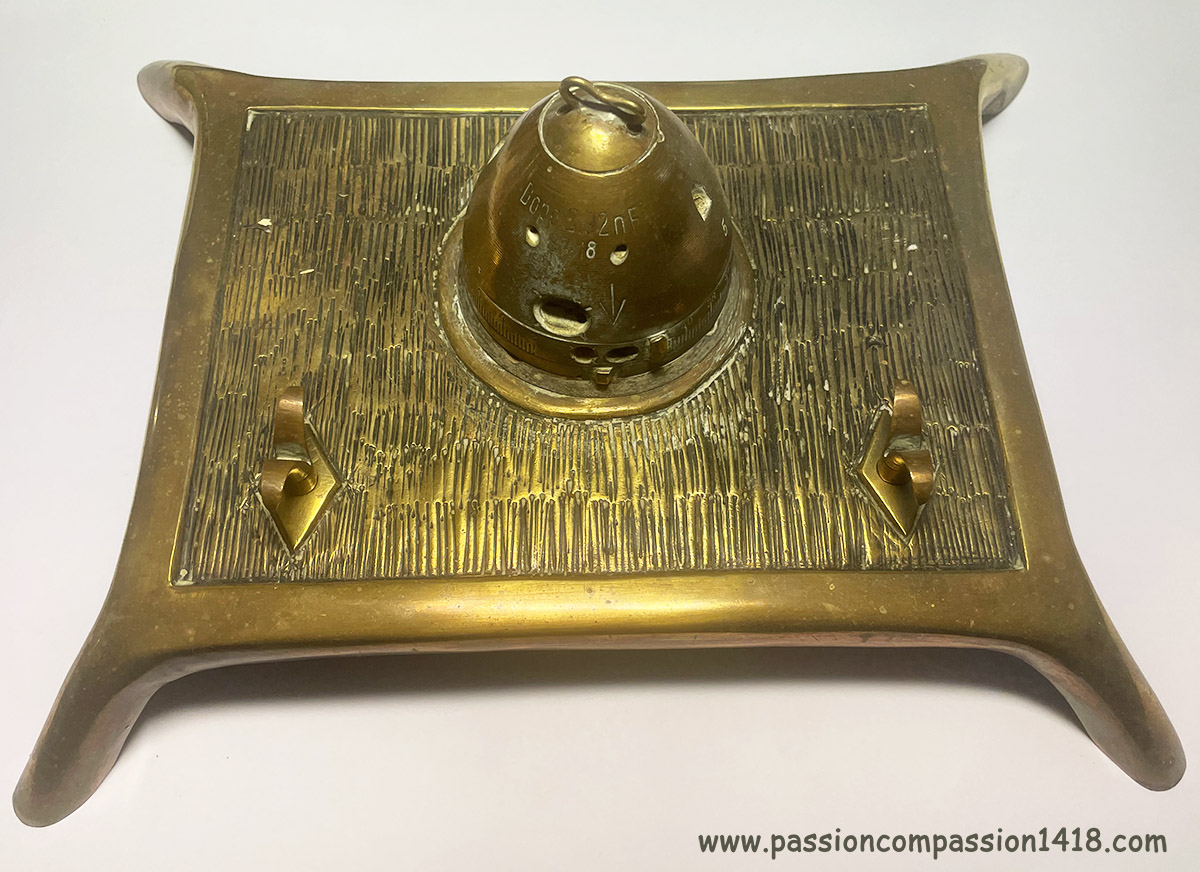
This is a beautiful German double-action Dopp Z 92 nF fuze, which has been transformed into an inkwell by hollowing out the percussion system well and fitting the original head with a brass loop to make it easier to unscrew. |
 |
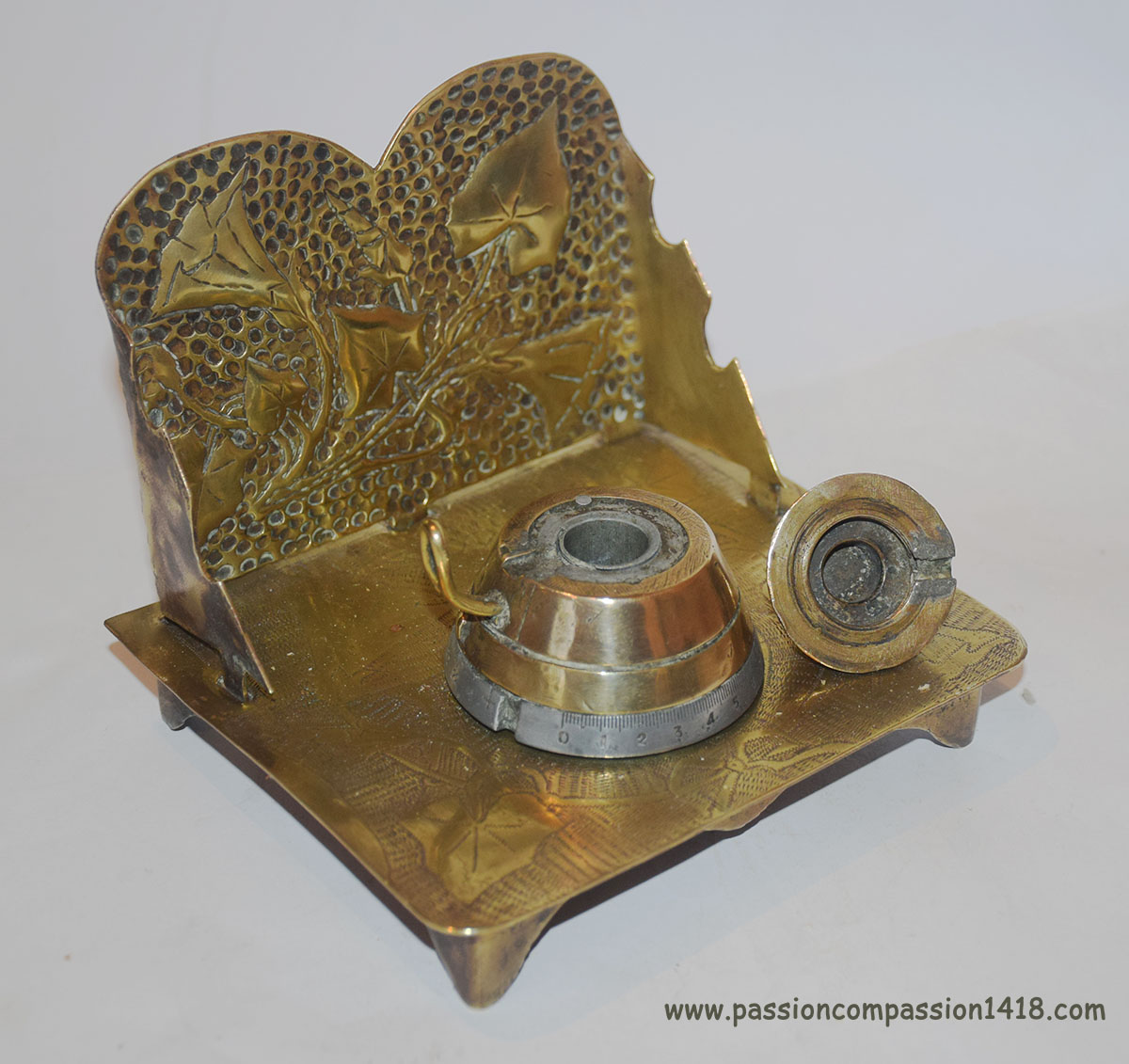 |
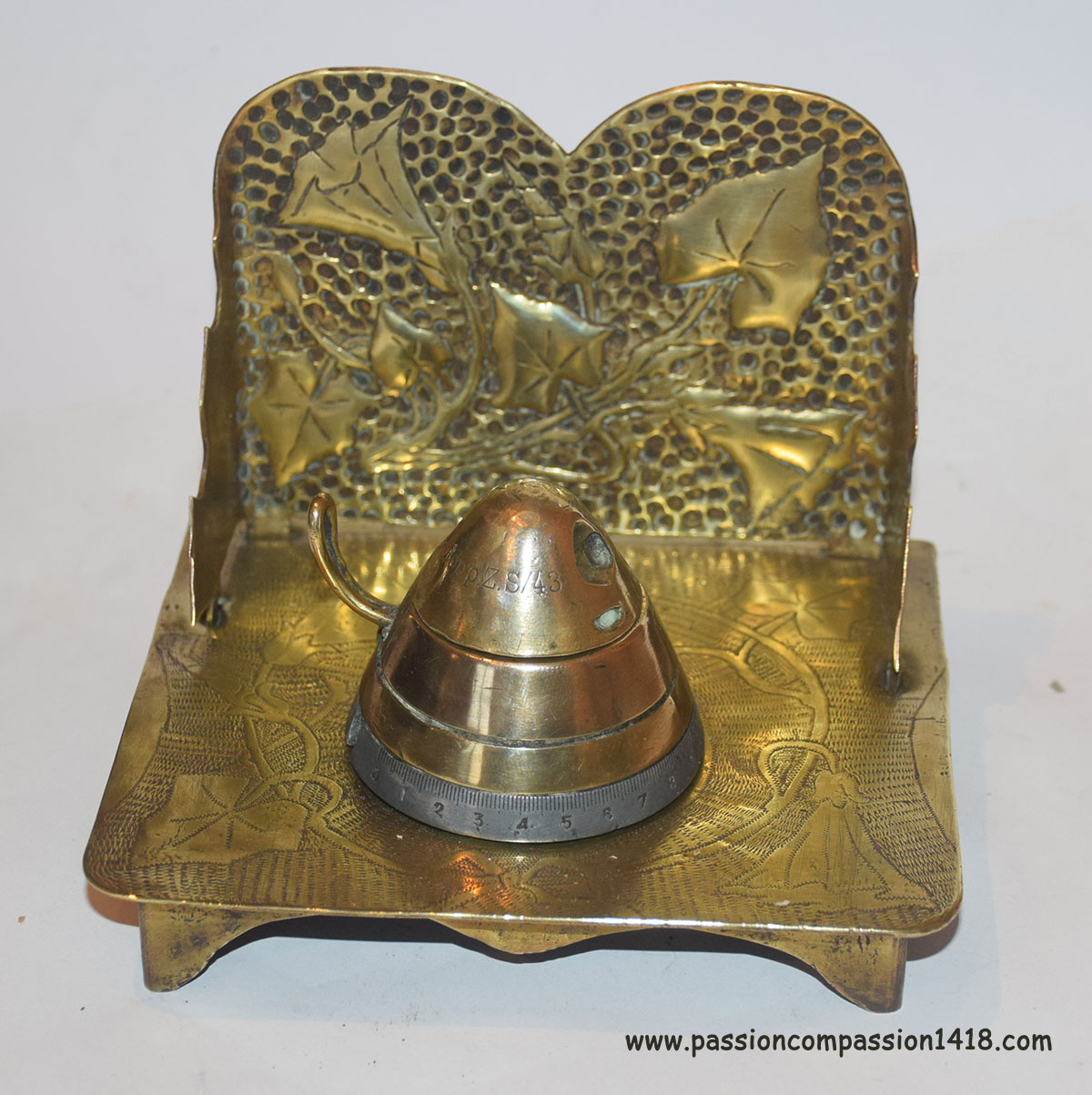
This set is surprisingly based on a motley combination of a top cap from German double-effect fuze Dopp Z S/43 and a body of British double-effect fuze No. 80, placed on a support with a back panel and flaps, both made of copper sleeve. |
 |
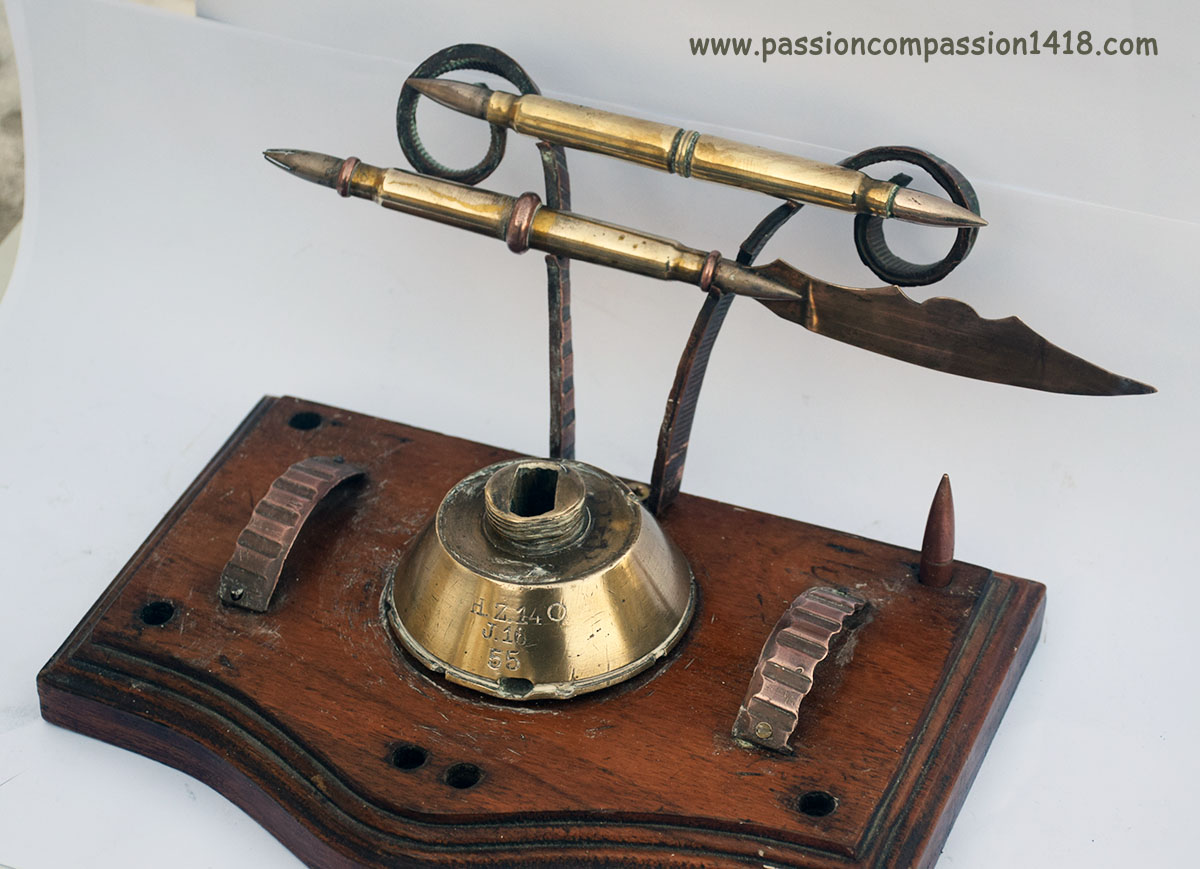 |
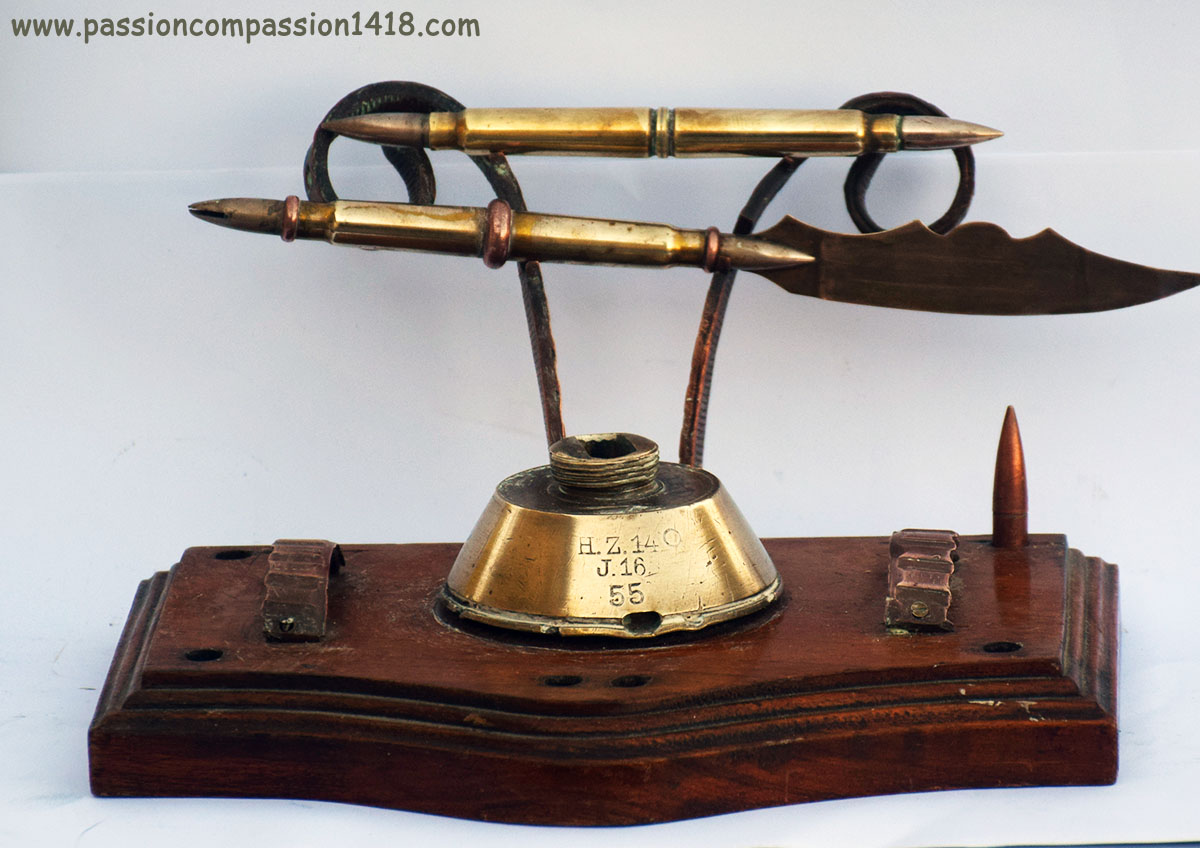
This inkwell strikes me as a rather ambitious project, given the size of the carved wooden base, but the final composition is somewhat disappointing. |
 |
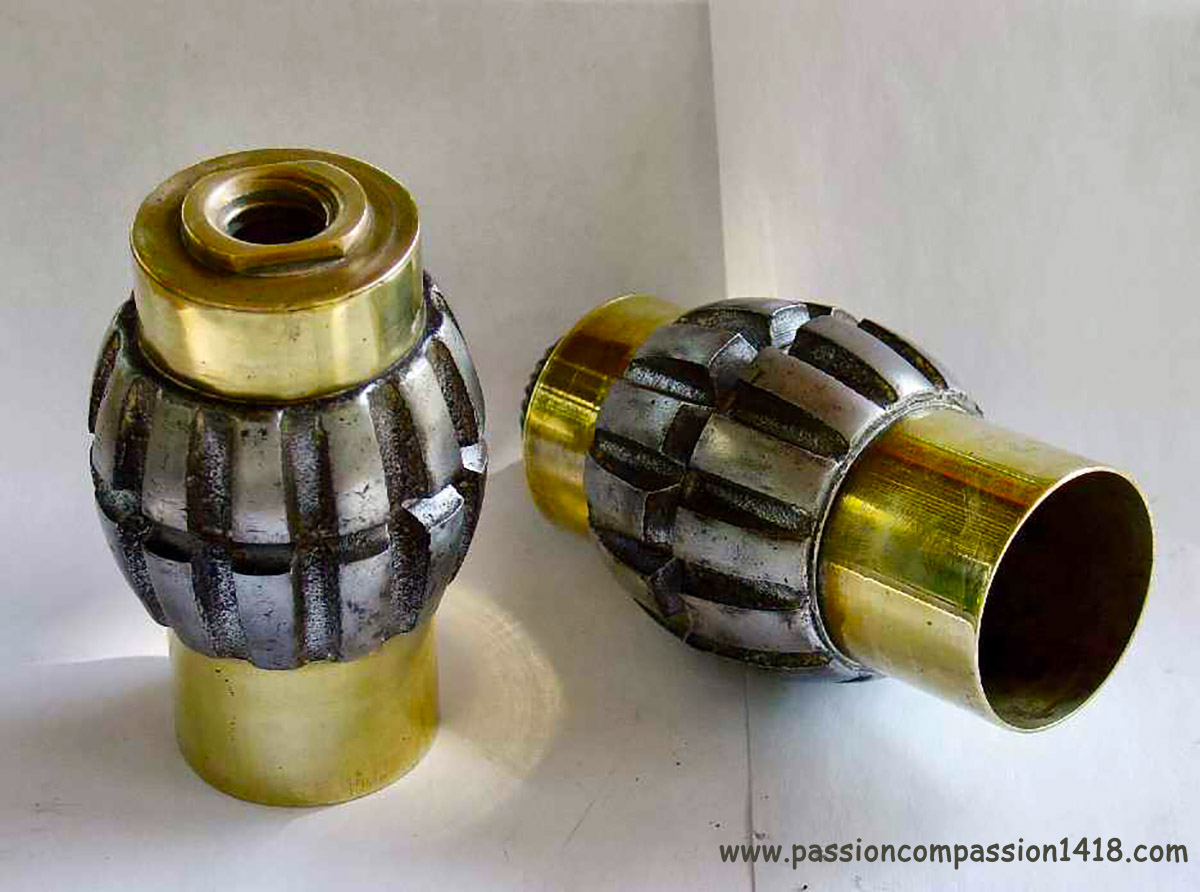 |
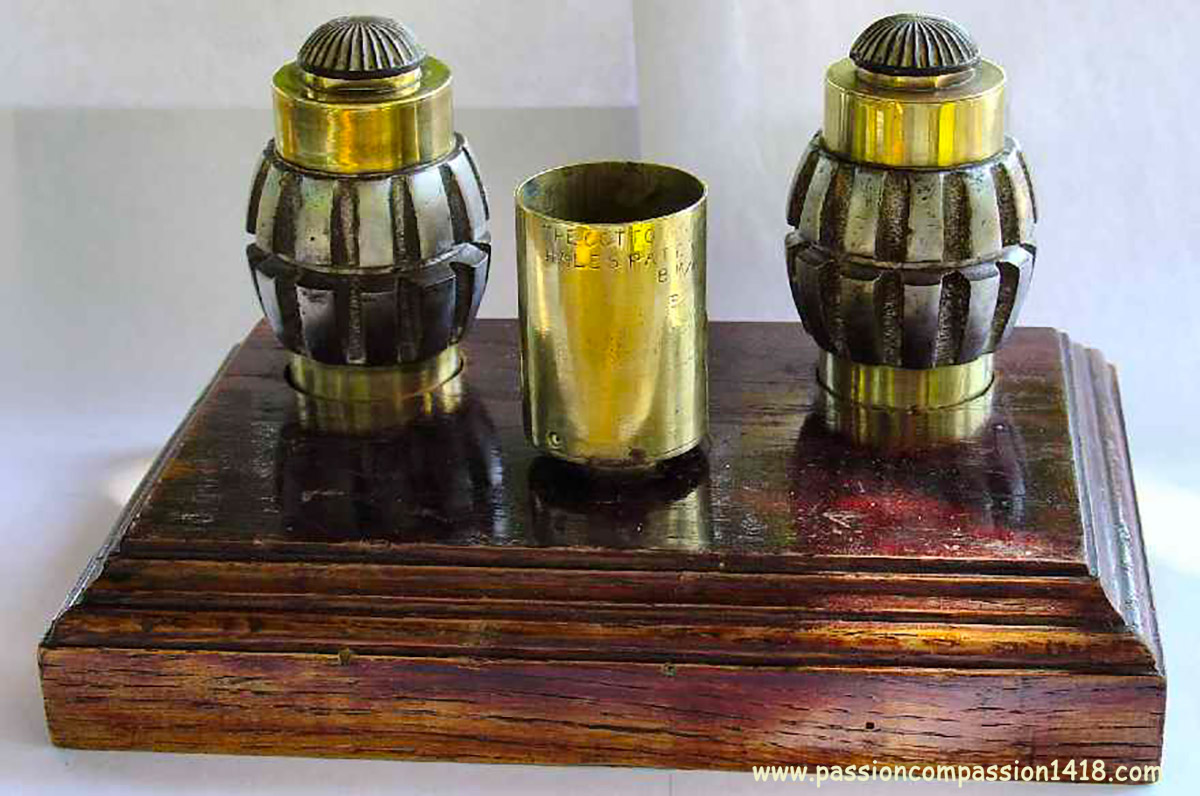
For once, this inkwell is not made from an artillery fuze, but from a grenade. |
 |
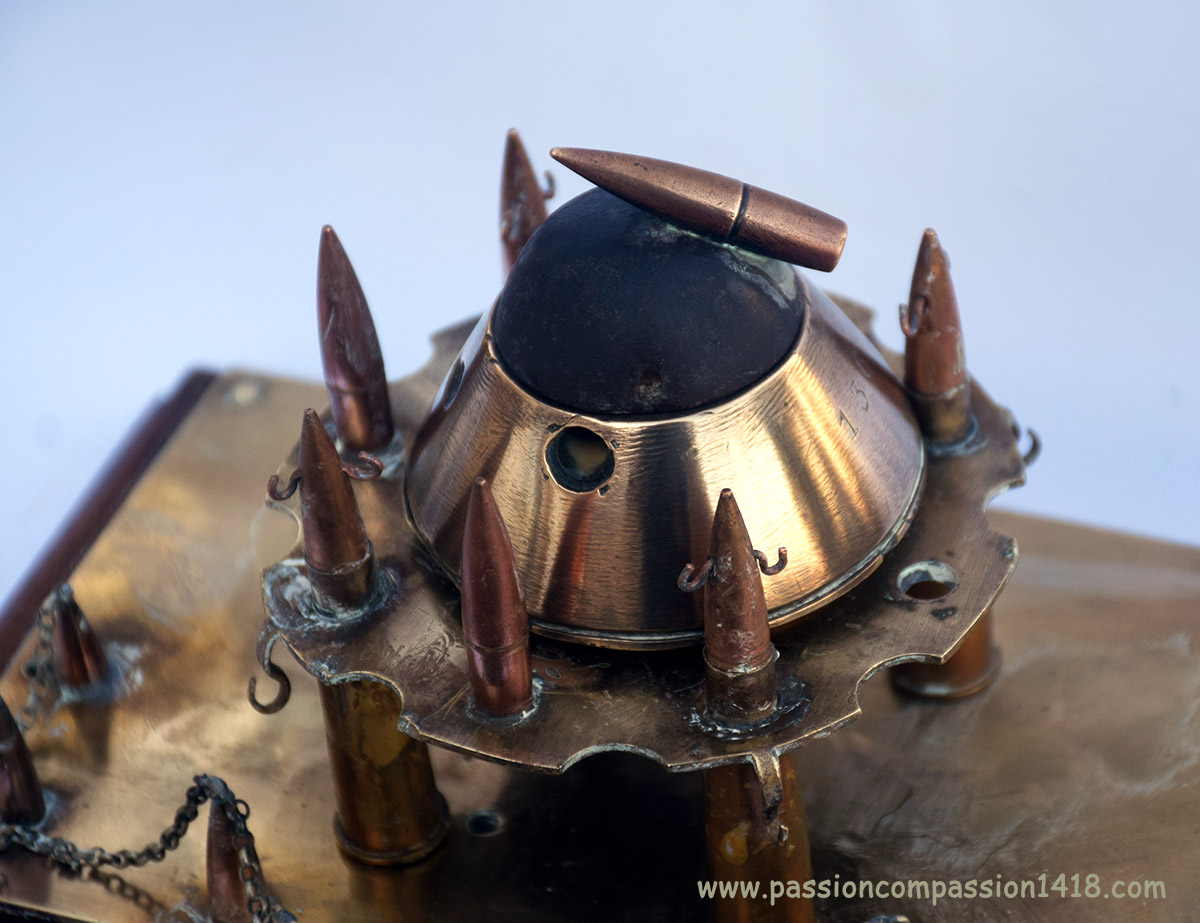 |
A rich and complex composition, the main part of which consists of a German KZ 14 percussion fuze made of steel and brass, whose cap, topped with a French Lebel rifle 'D' bullet, can be removed to give access to the central well, which has been emptied of the percussion system and converted into an ink reservoir. |
 |
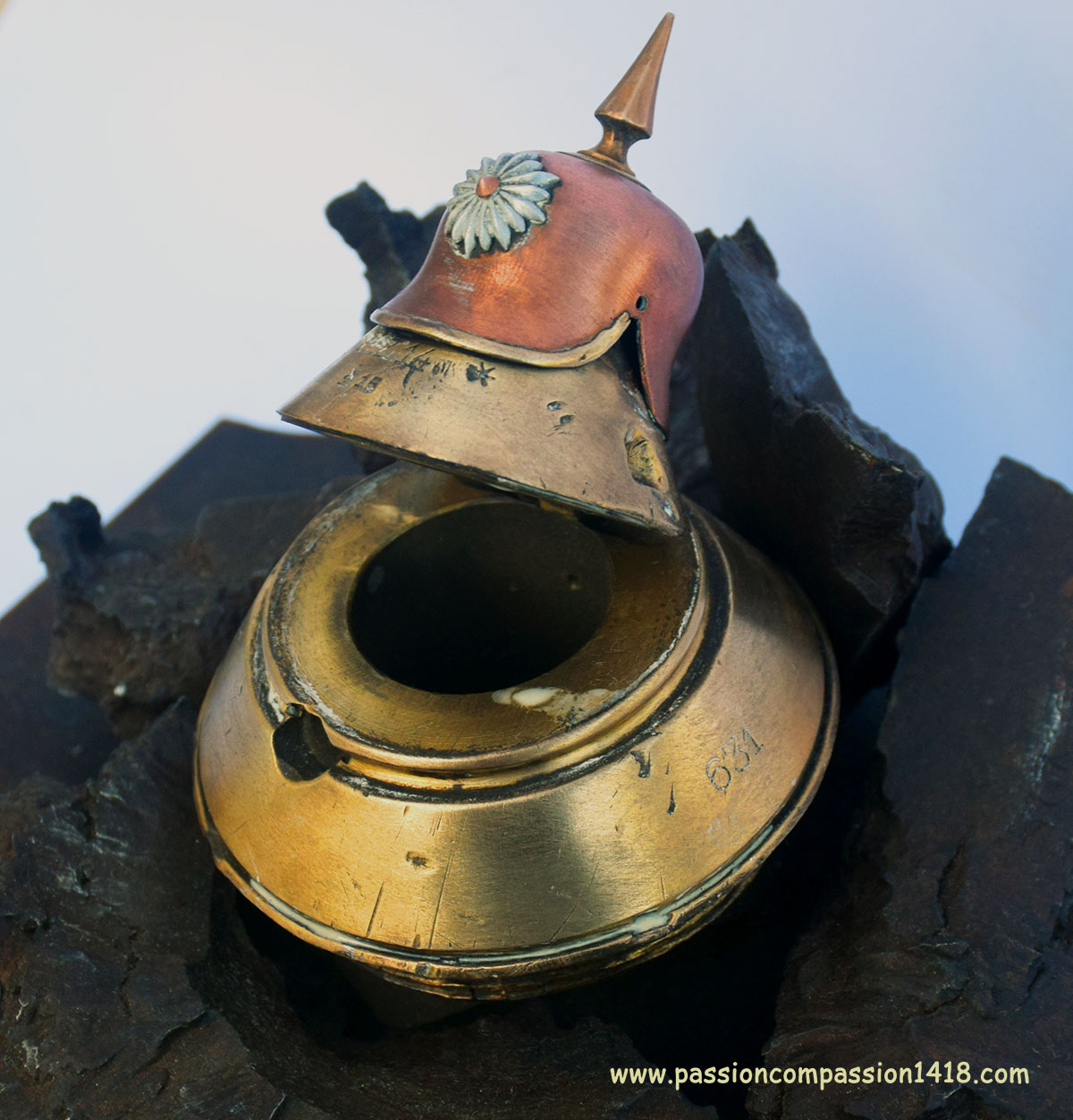 |
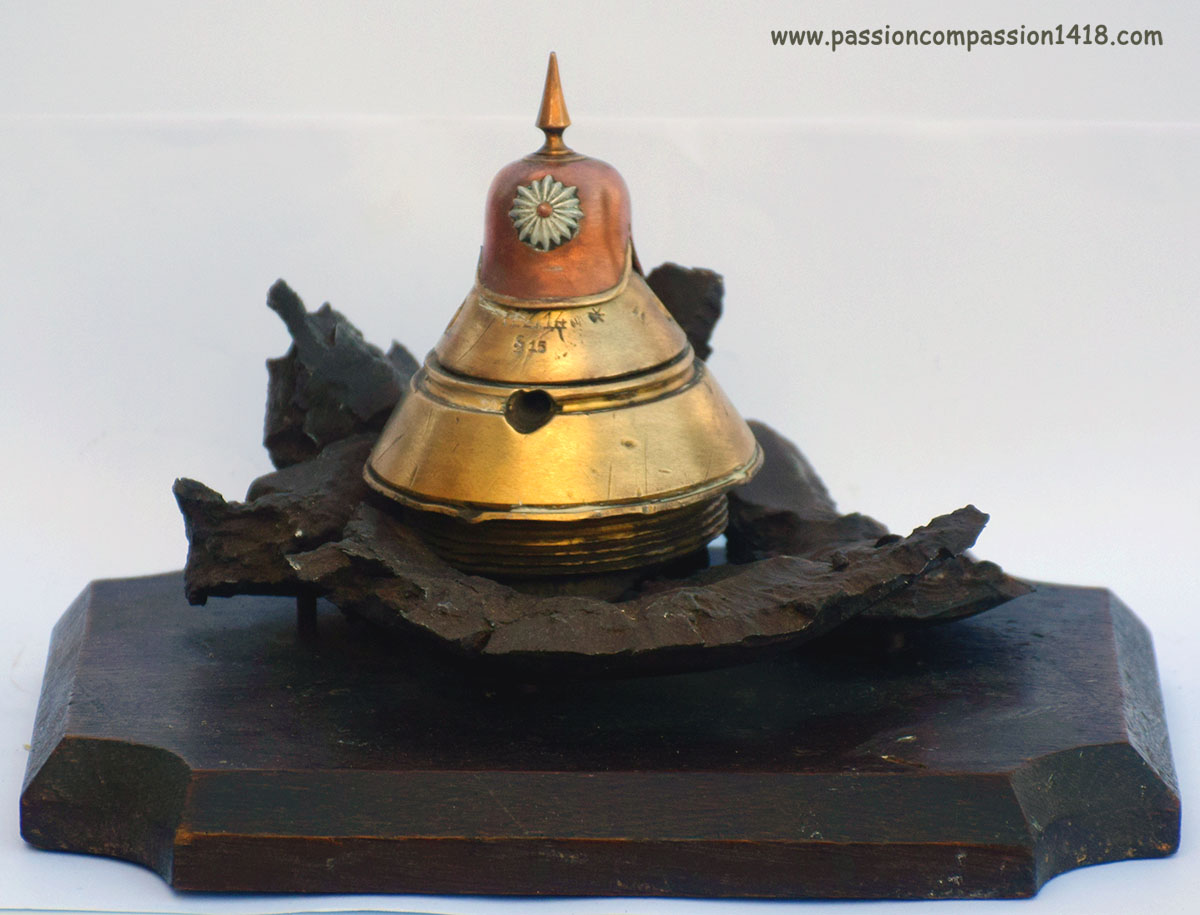
Superb inkwell playing with contrasting materials and benefiting from meticulous craftsmanship. The centerpiece is a German HZ 14 percussion fuze made of brass, topped with a magnificent miniature pointed helmet made of copper, aluminum, and brass. The upper part of the fuze is equipped with a hinge that allows it to be opened to access the hollow central shaft, which has been converted into an ink reservoir. |
 |
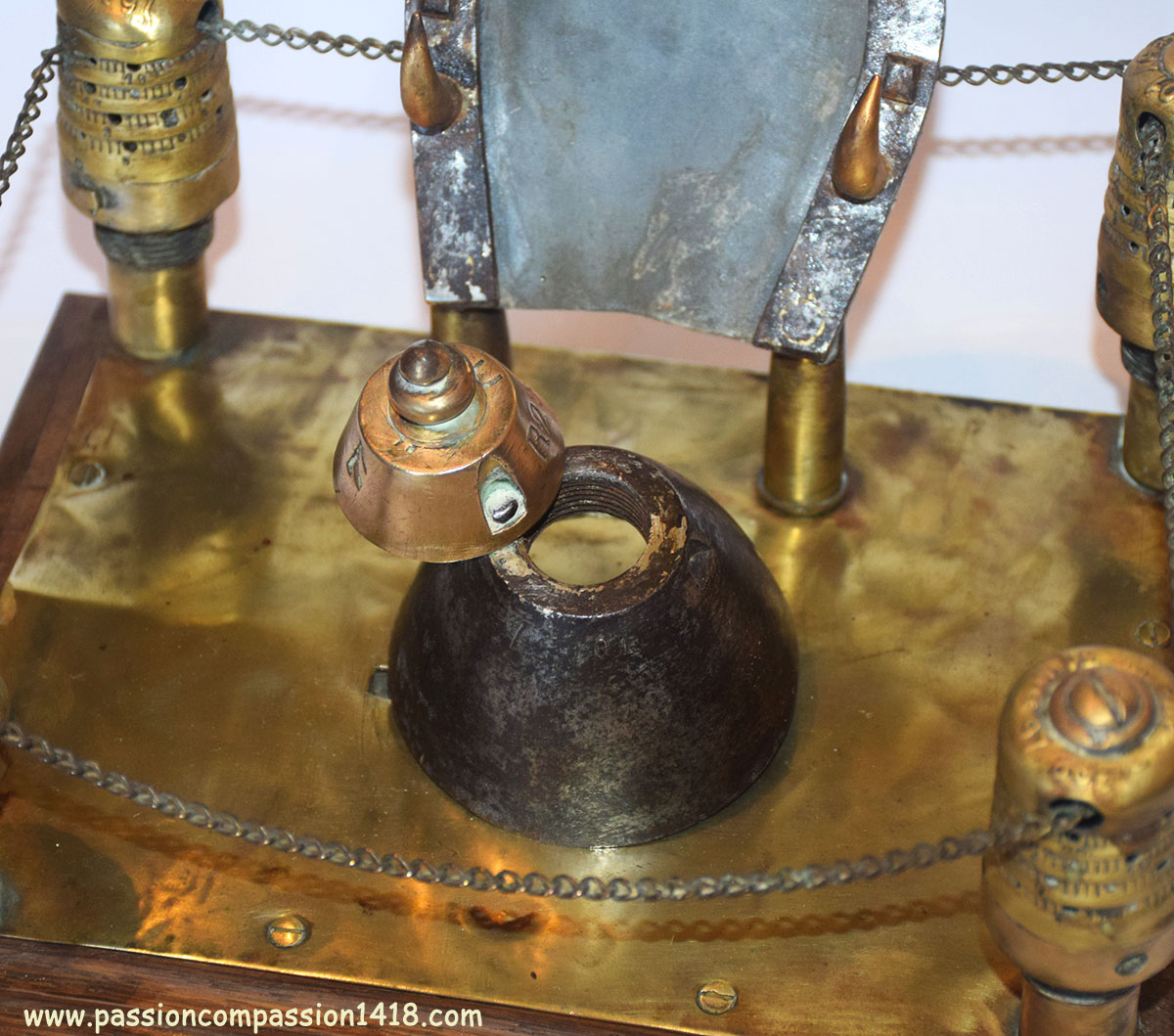 |
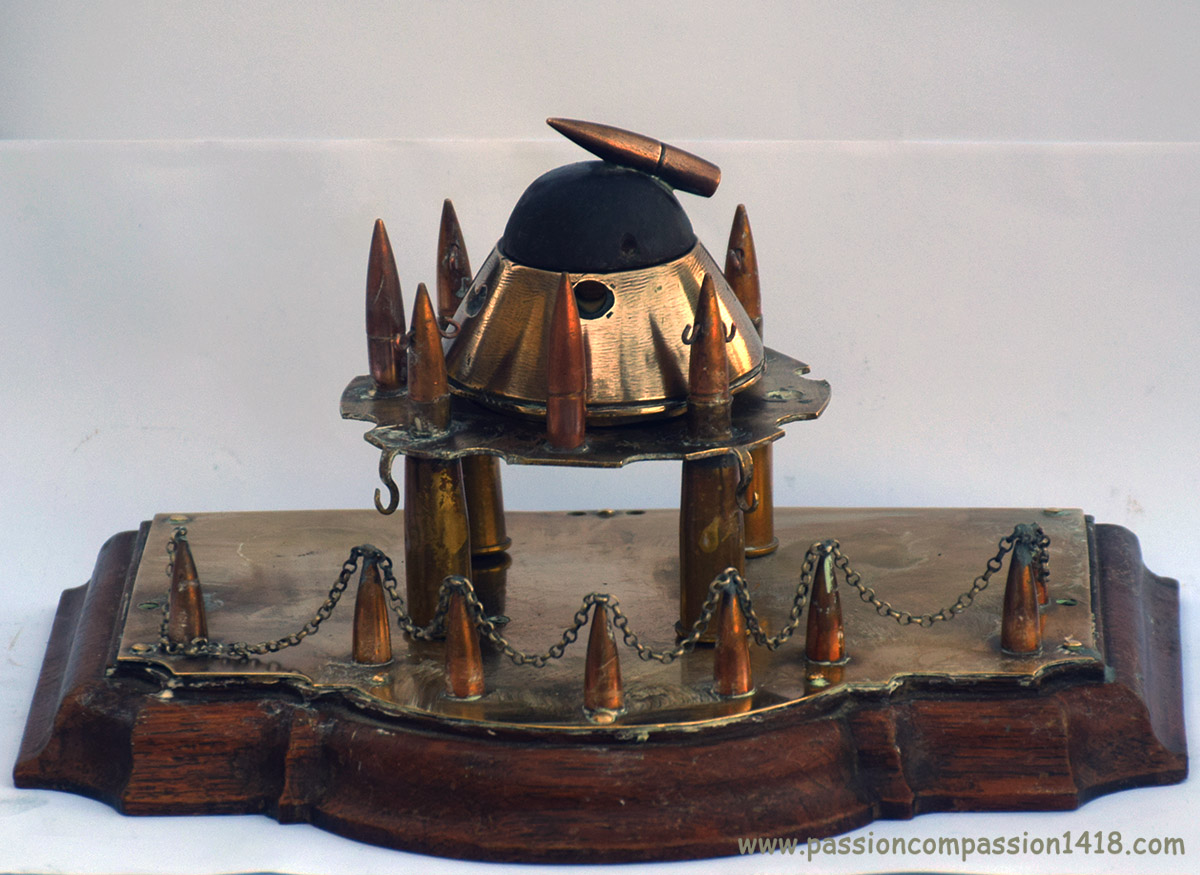
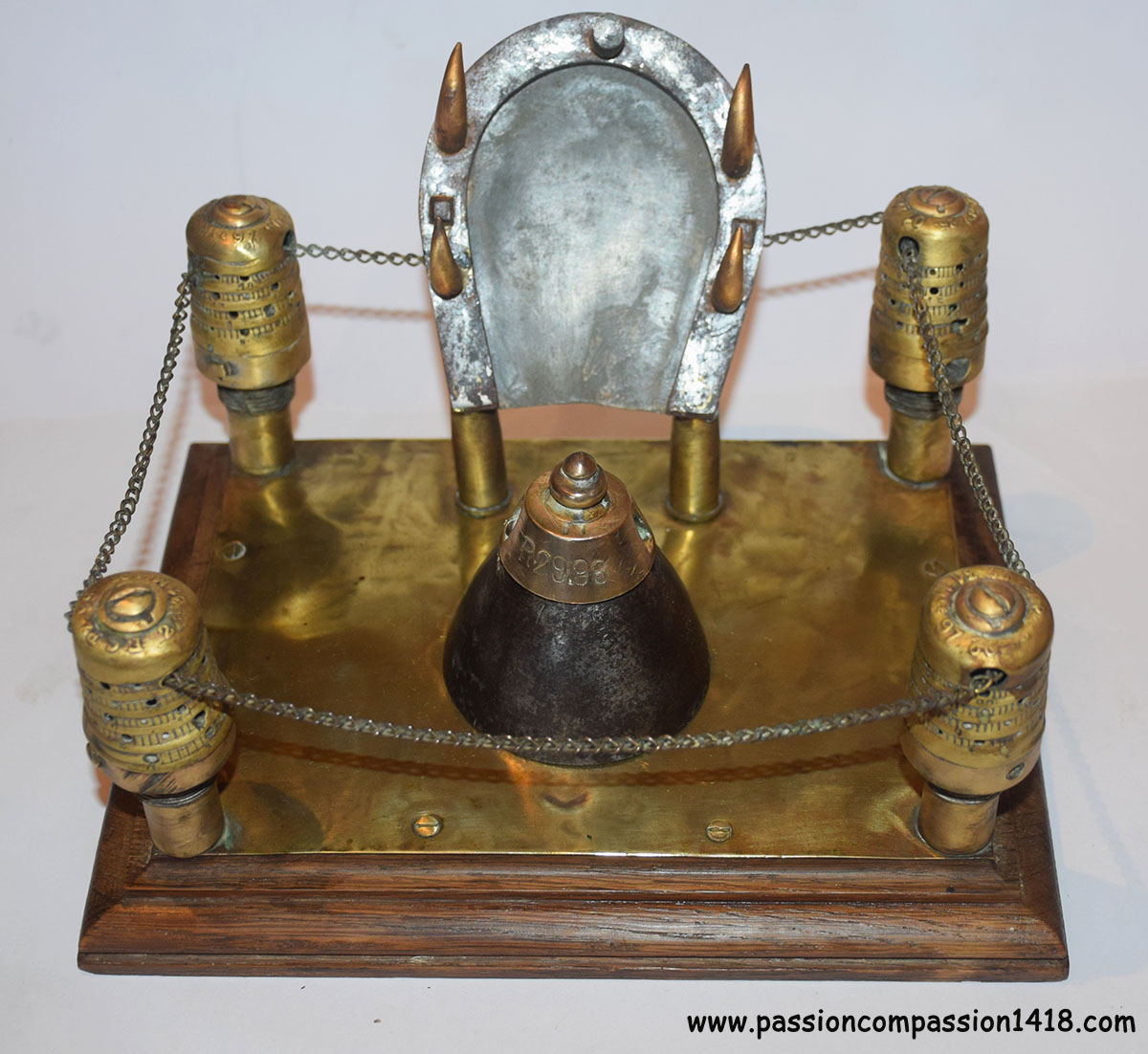
An impressive piece due to its size and monument-like appearance, this inkwell consists of a shell ogive fitted with a French percussion fuze 25/39 Mle 1875 forming an inkwell, placed on a wooden base covered with a smooth brass sheet. At the four corners of the base, 22/31 Mle 1897 French double-action fuzes are erected, connected to each other by a brass chain.
|
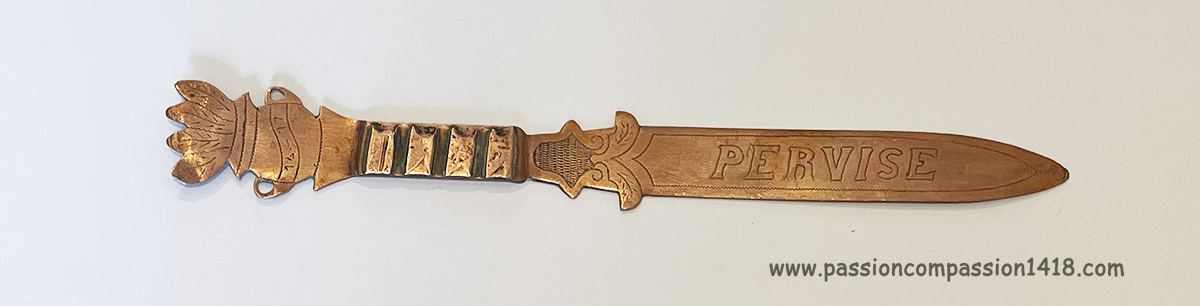 |
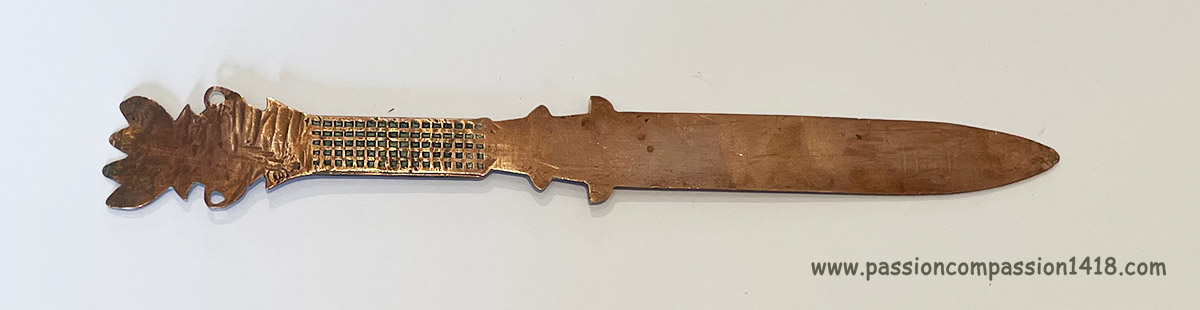
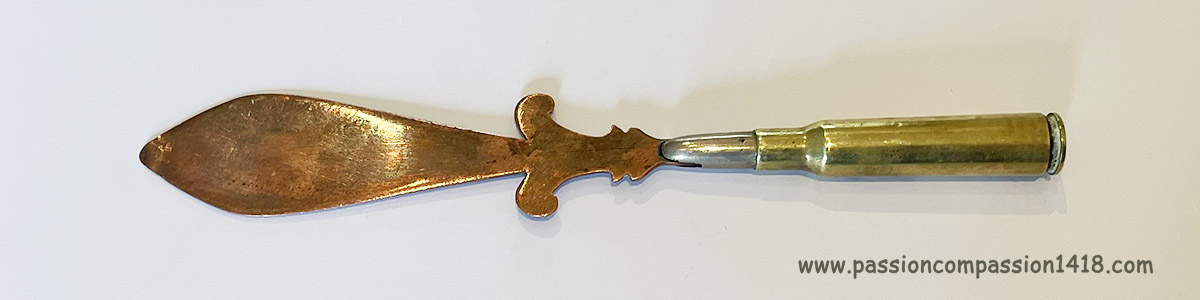
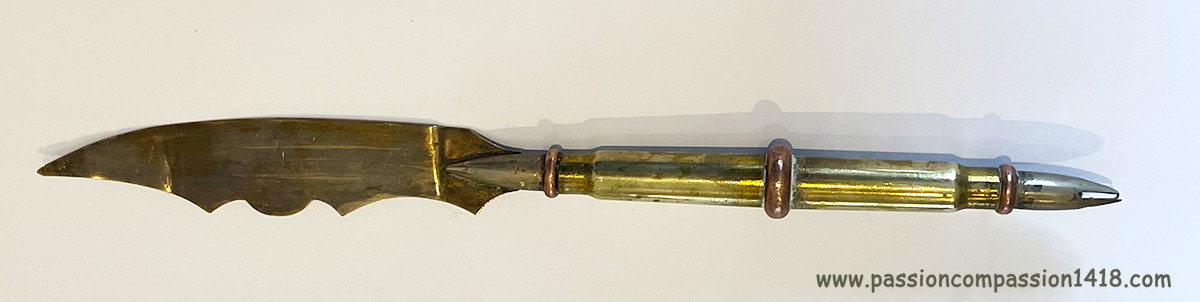
This version of the paper knife trench art concept is probably the one that became most widely used on the battlefield. The shells copper guide belt would often separate from the projectile during explosion, or at least was relatively easy to remove. This soft metal was well suited to cold forming, making it easy to cut, machine, shape, engrave, and hammer into a simple paper cutter. |
|
 |
||
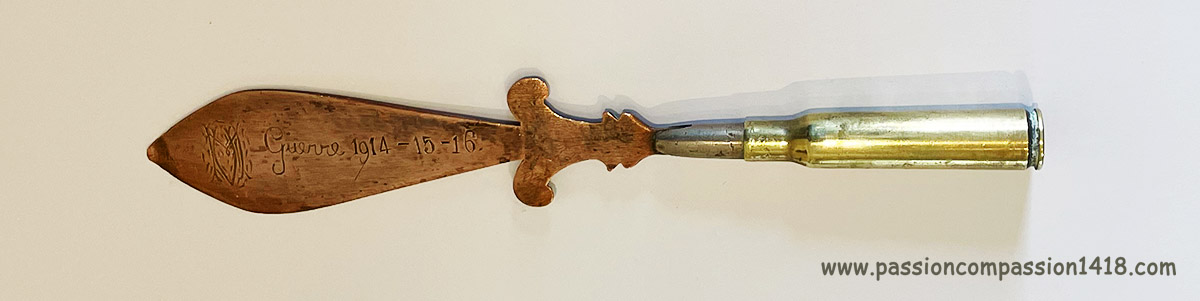 |
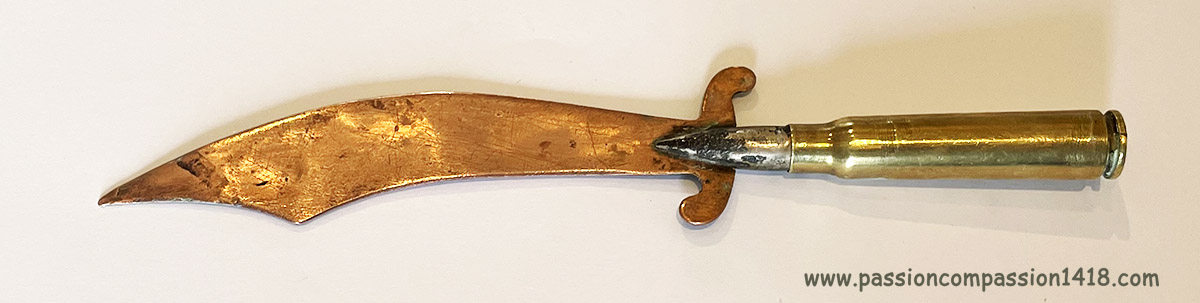
The most common form taken by trench art paper knives is that of a copper blade made from a shell casing or belt, mounted on a rifle cartridge. |
|
 |
||
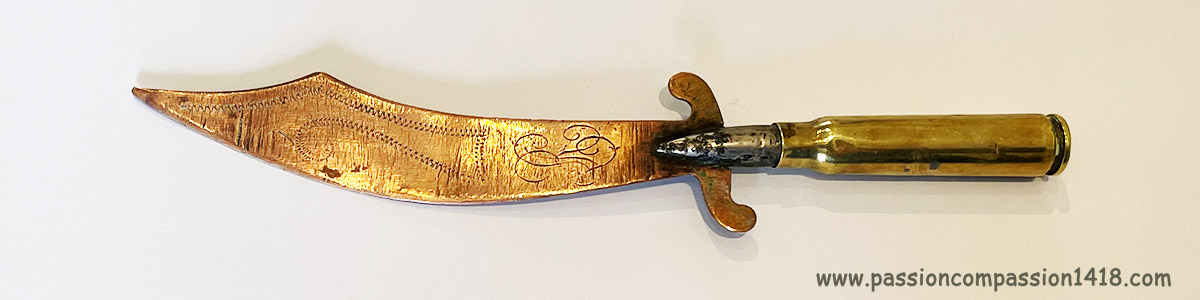 |
This letter opener, with its vaguely Arabic-inspired design, is made from a copper blade taken from a shell casing or shell belt, and rifle ammunition. |
|
 |
||
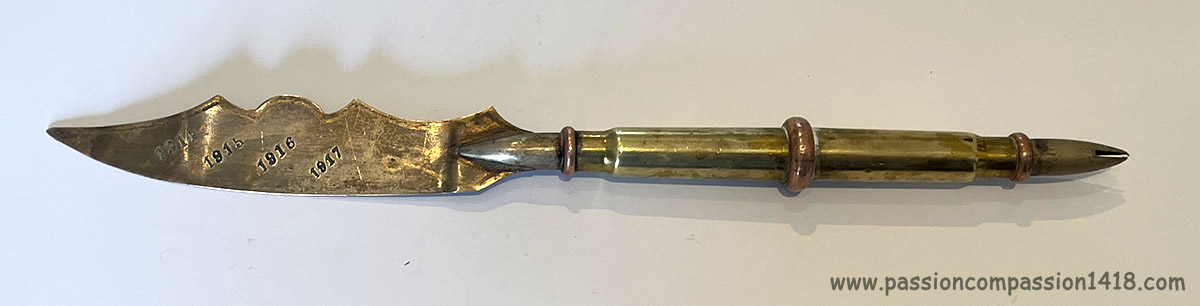 |
On this example, two rifle cartridges (probably from a German Mauser Gewehr 98 rifle, caliber 7.92mm) are welded butt to butt using a copper disc. |
|
 |
||
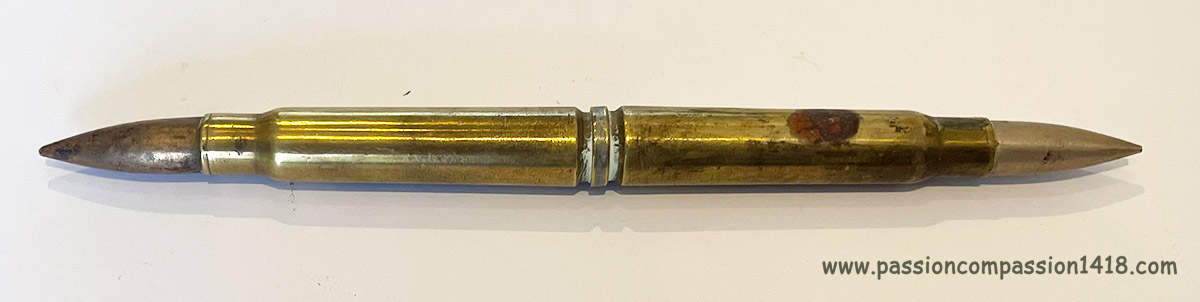 |
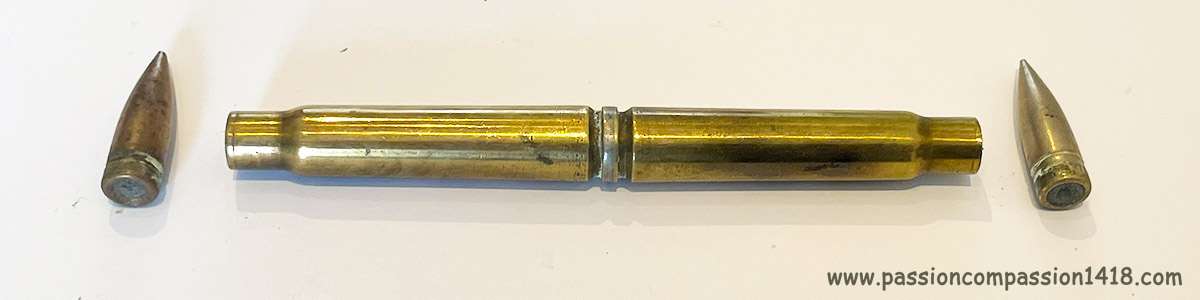
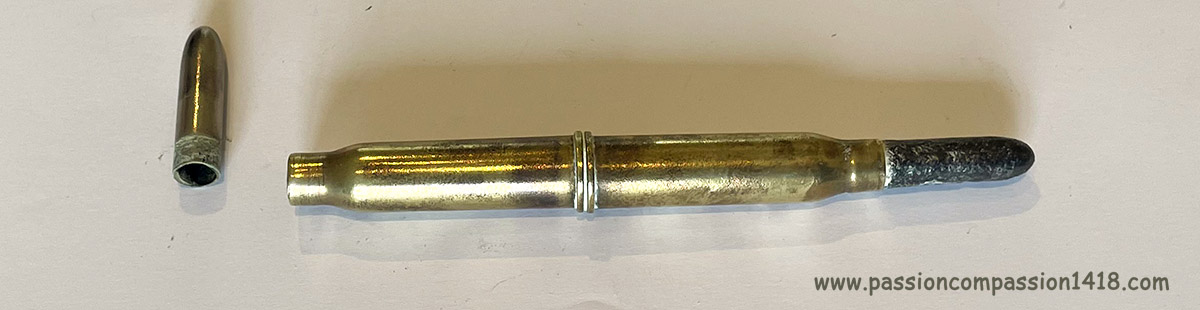
Another classic use for rifle ammunition was to transform it into a pen or pencil holder. The object shown here is made from two cartridges, probably from a German Mauser Gewehr 98 7.92mm rifle, welded end to end by the base. |
|
 |
||
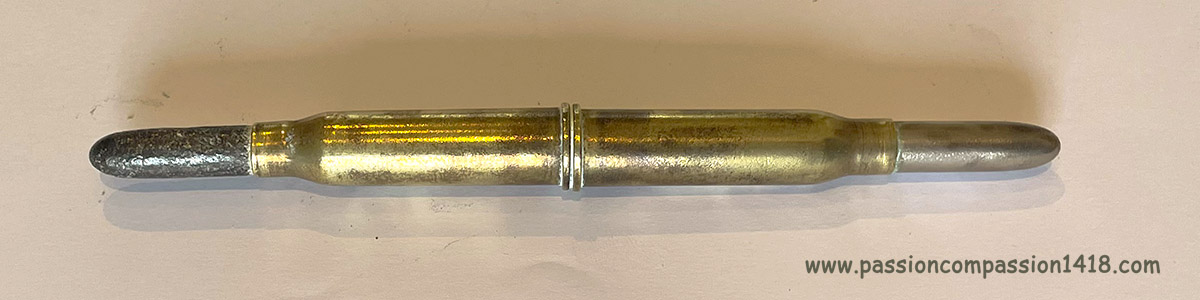 |
There are no markings to identify this pen holder, which is made from two rifle cartridges welded together end-to-end at the base. While the casings closely resemble those of German Mauser Gewehr 98 infantry rifle ammunition, the rounded shape of the bullets is unusual. |
|
 |
||
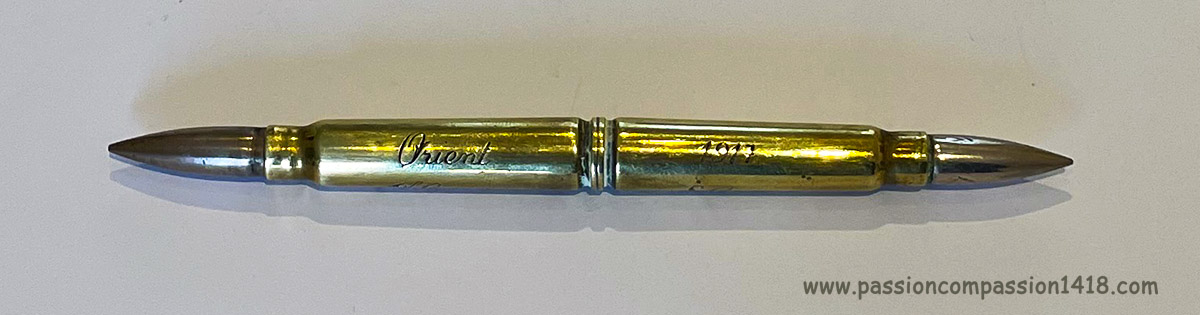 |
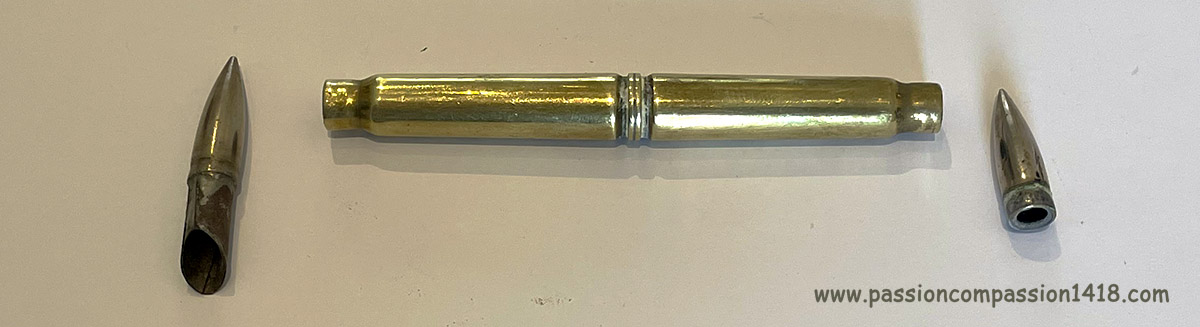
The composition of this desk accessory is classic, with two German Gewehr 98 infantry rifle cartridges welded end-to-end by the base. |
|
 |
||
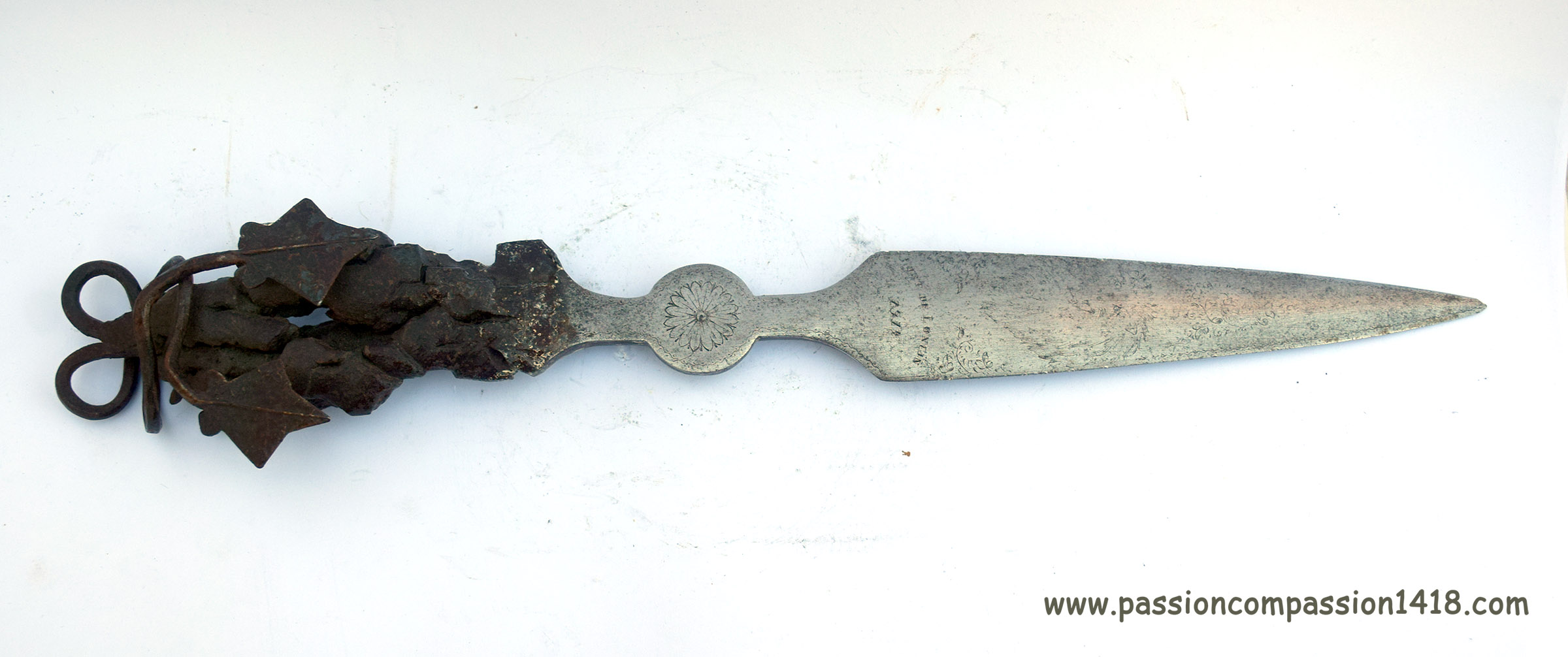 |
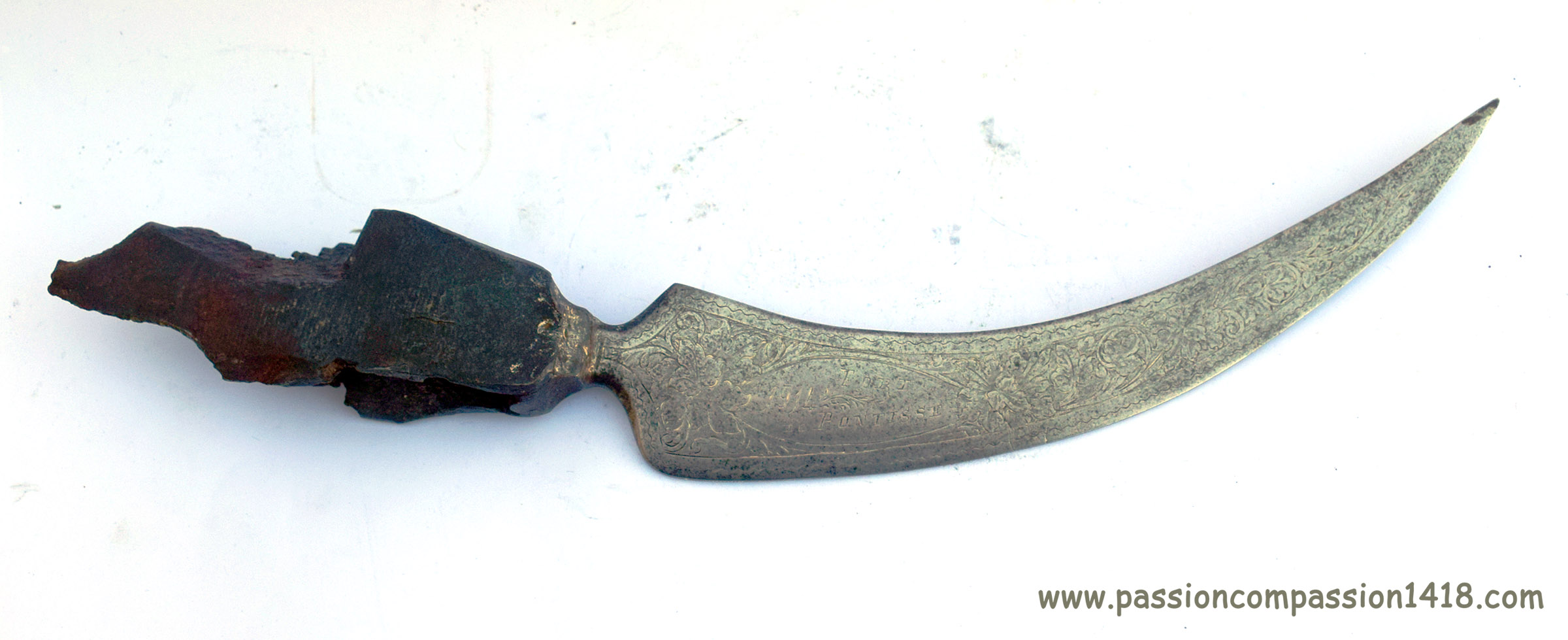
Let's change scale with this imposing dagger-shaped letter opener. The handle is made from shrapnel and twisted steel ivy leaves. |
|
 |
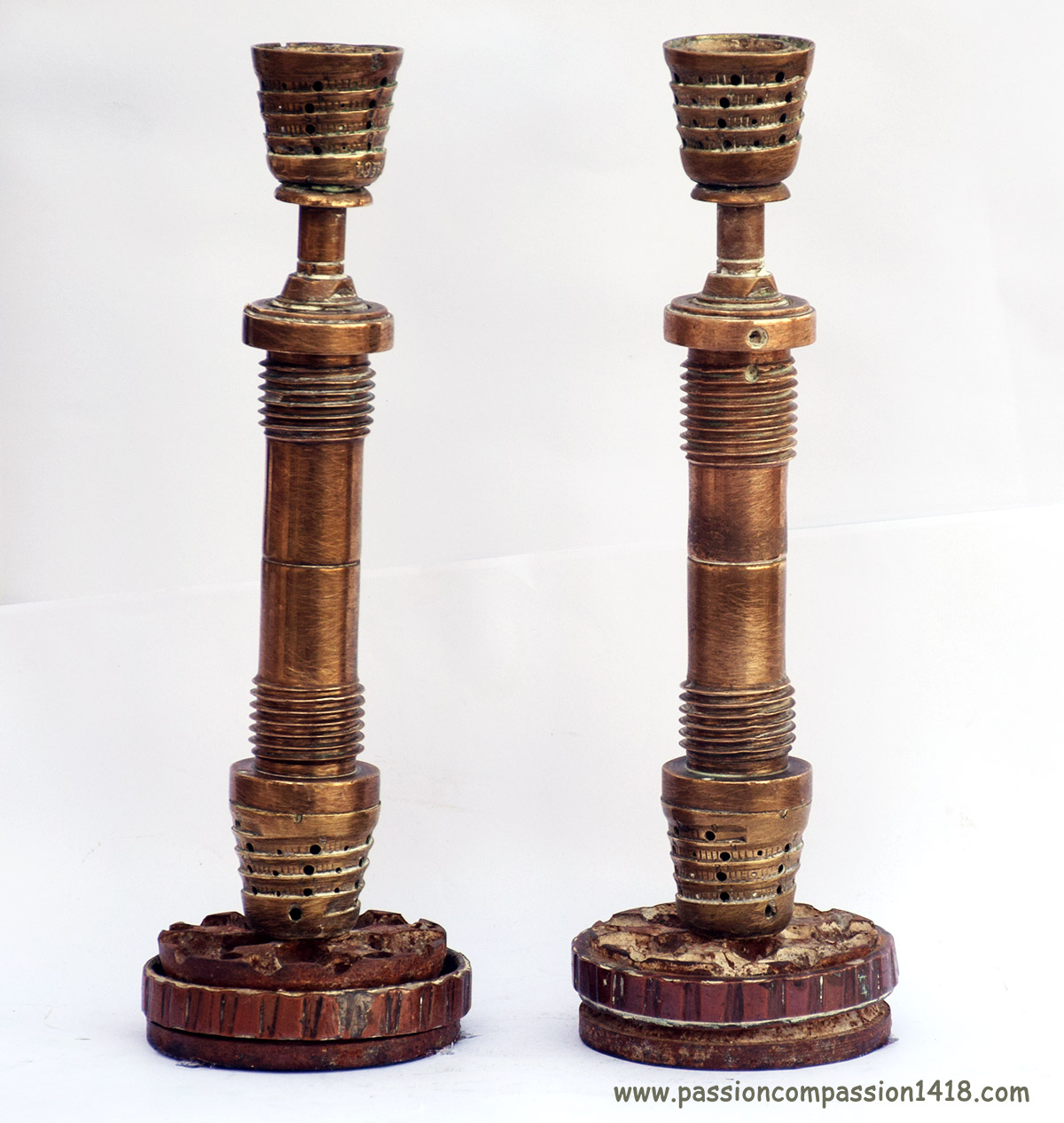
This other dagger, as imposing as the previous one, has an even more elegant crescent shape. |
|
 |
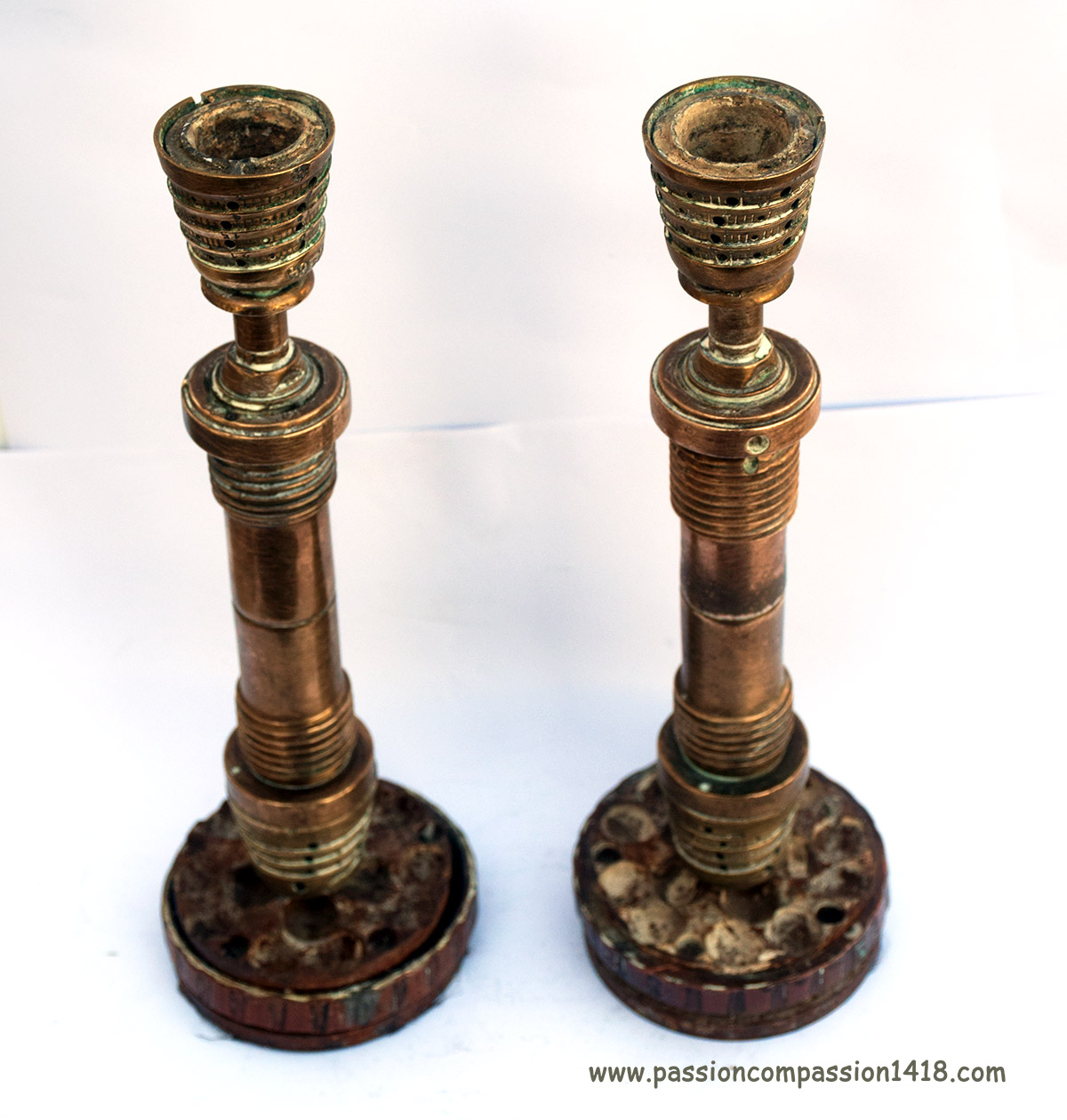 |
The inner part of the spiral lead barrel of a French fuze, with its truncated cone shape, is well suited to the size of many candles. This fact may have been discovered by soldiers on the front lines, who spent much of their time underground in deep shelters lit only by the flames of candles held in makeshift candleholders. |
 |
 |
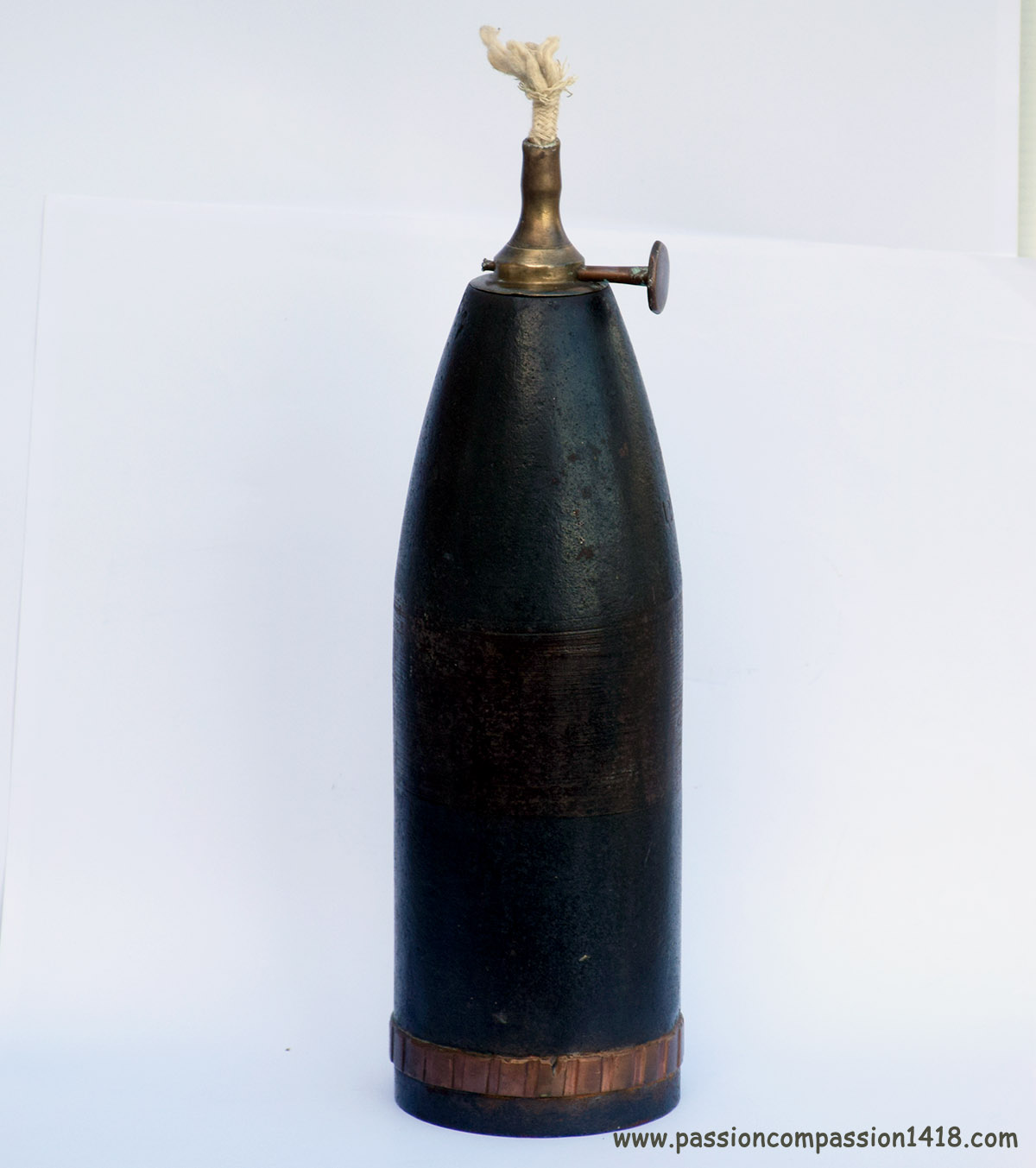
This oil lamp is made of brass and shaped like an artillery shell. |
 |
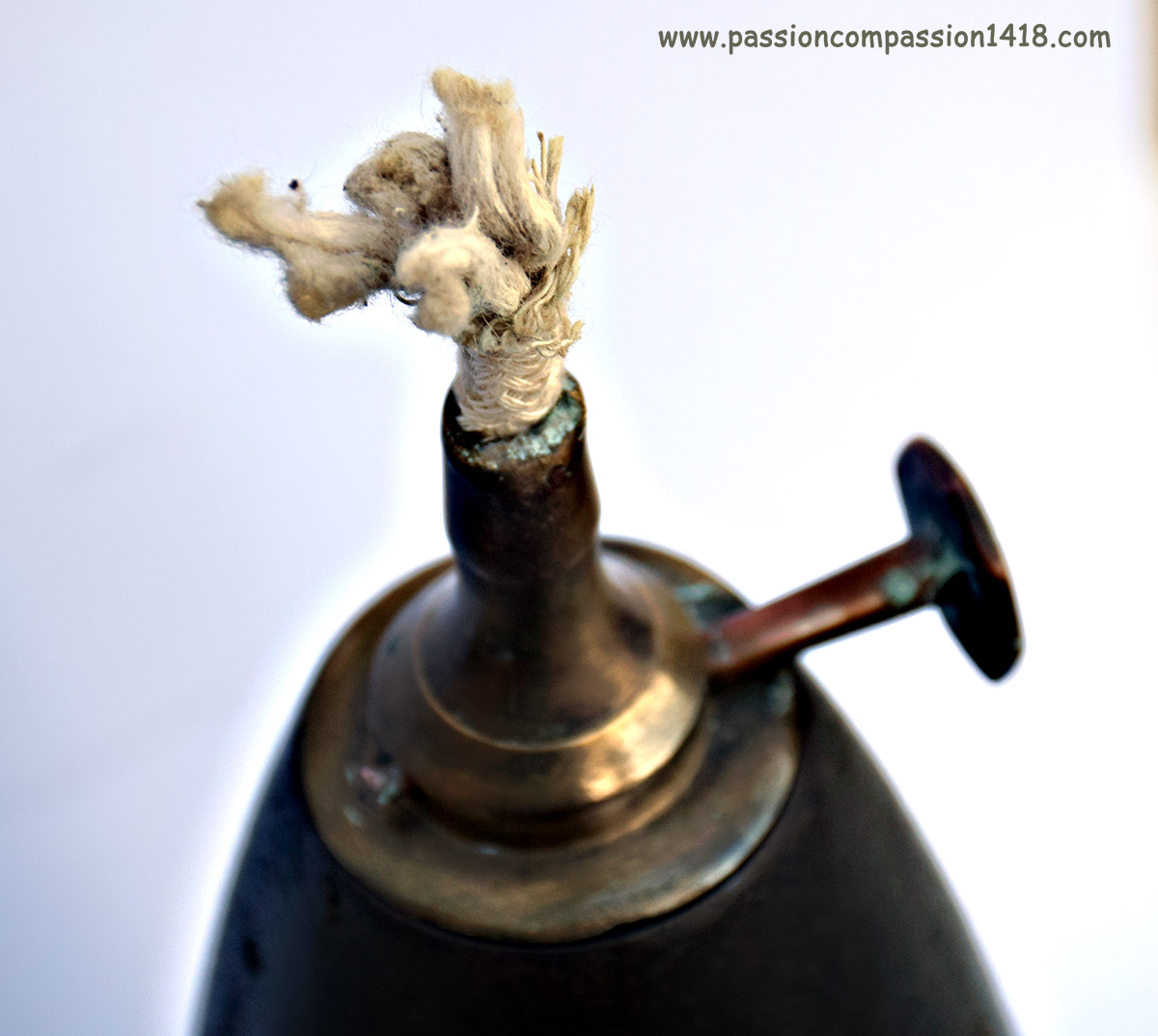 |
It must have taken courage, or recklessness, for the soldier who made this oil lamp from a completely empty and harmless French 90mm explosive shell: it is clearly ammunition that has been fired, as indicated by the grooves on its copper guide belt, and obviously did not explode. The craftman therefore had to unscrew the fuze and empty the black powder that filled this old-generation shell, as carefully as possible, hoping that the ammunition would not change its mind and explode while he was working on it... unless it was a blank shell fired for training purposes. |
 |
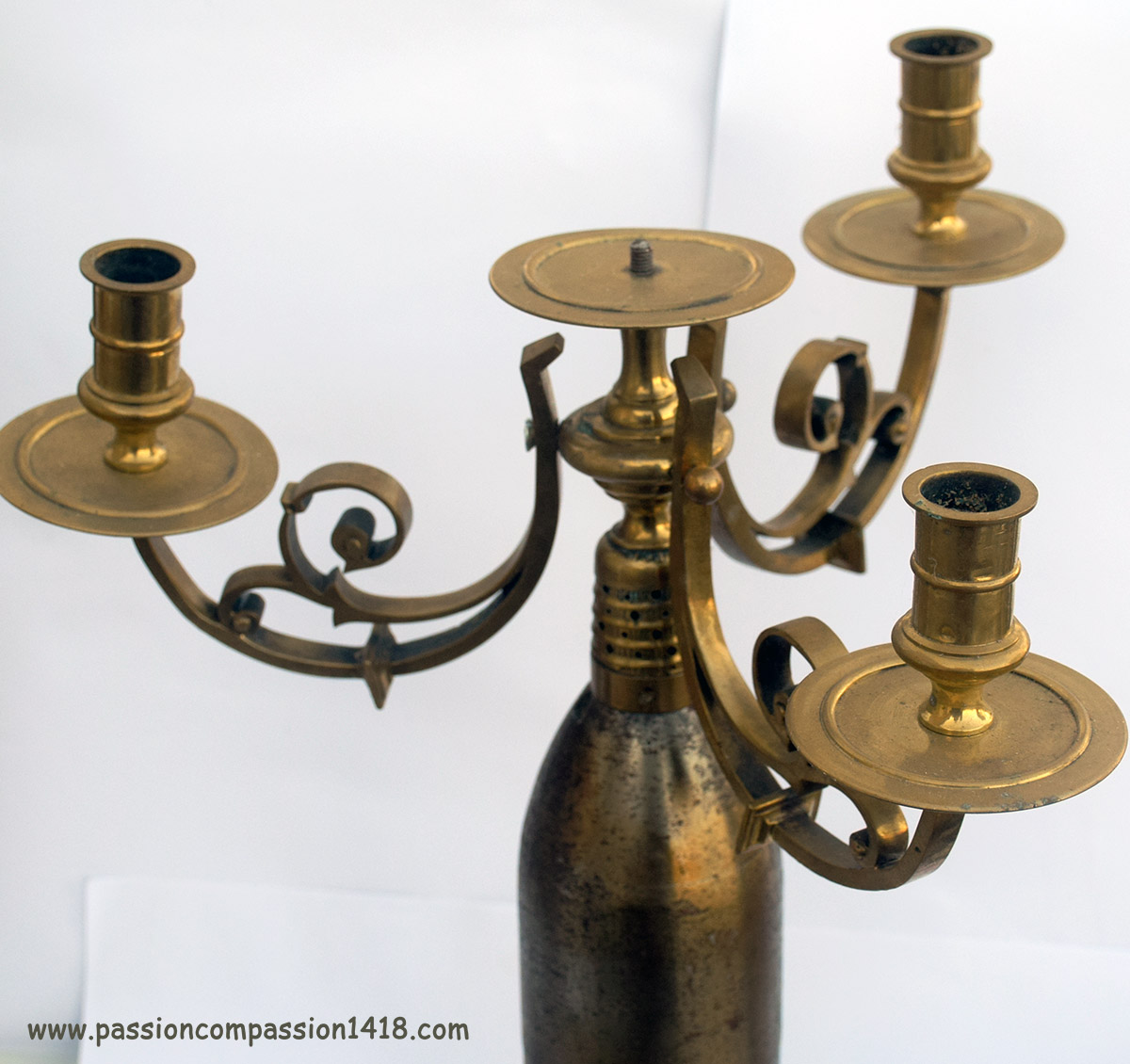 |
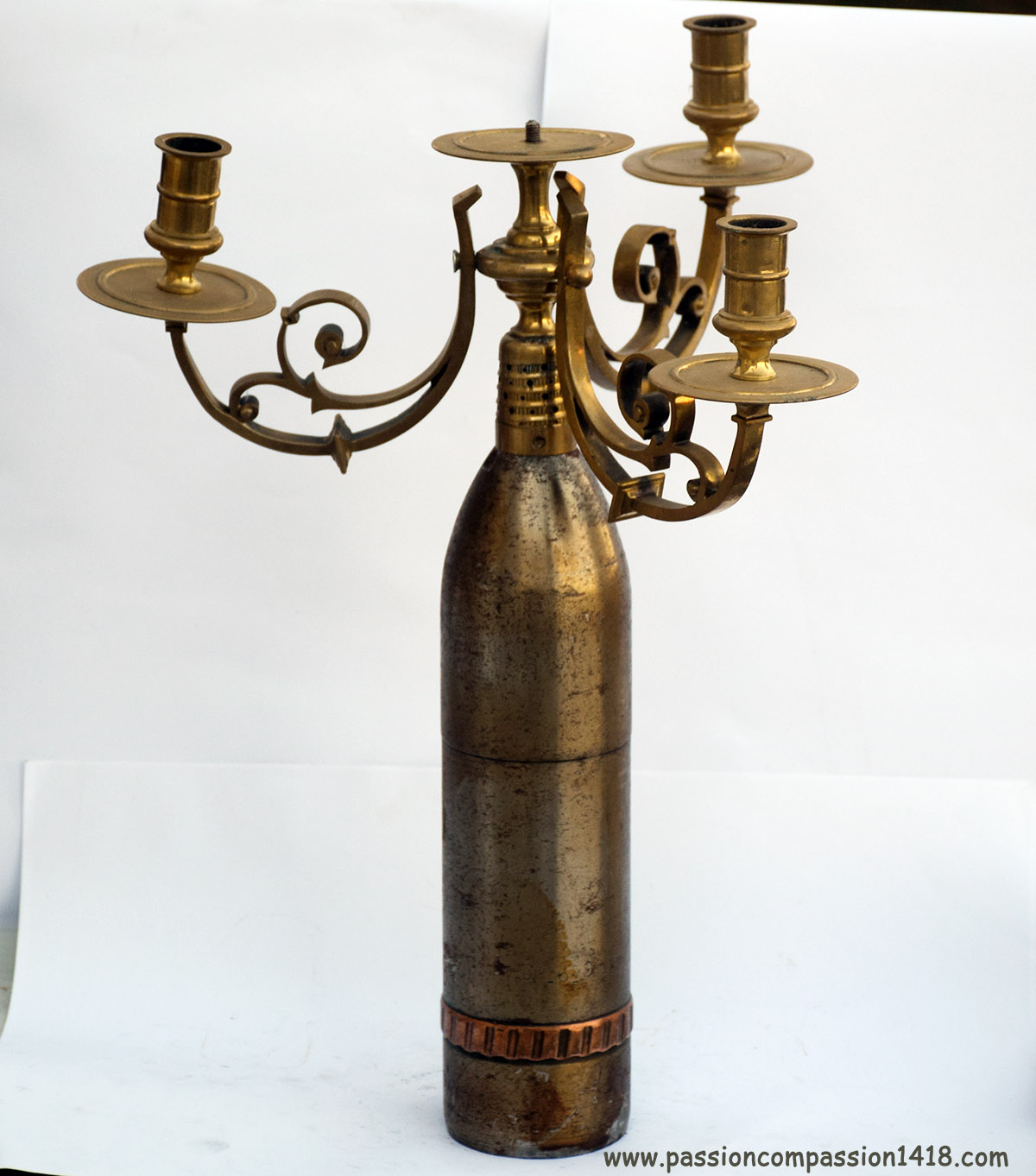
This three-branched candlestick brilliantly fulfills the mission assigned to the most beautiful objects of trench art : combining the evocation of memories, aesthetics, and utility in a single object. |
 |
 |
This assembly was designed to make an electric bedside lamp, but the conductor cable that ran across the room and the socket have been removed. |
Artillery cartridges from the Great War represented a new technology designed to facilitate the ignition of the propulsive charge pre-packaged in this casing equipped with a percussion primer, or even to handle ‘cartridged ammunition', shells and crimped cartridge, in order to significantly increase the rate of fire by reducing reloading time.
Made mostly of thin copper or copper alloy sheet metal, and produced in hundreds of millions of units throughout the conflict, these artillery shells were a material of choice for trench art, abundantly available without the need to get too close to the front line, and easily shaped into decorative objects or vases.
 |
 |
This ‘Souvenir de Gaschney’ evokes the battles of the Vosges, the mountain range of the same name being occupied by the French and facing the German positions at Reichackerkopf. |
 |
 |
Engravings that were too light have sometimes not stood up well to the test of time and repeated polishing of trinkets. |
 |
 |
The 37 mm caliber is unique in that it was used by almost all the belligerent nations of the Great War, in the trenches, on the coast, at sea, and in the air, with a wide variety of artillery pieces. |
 |
 |
The German army also used the 37 mm caliber, which was used by most of the armies involved in the conflict, as shown by this souvenir from the trenches consisting of a complete, neutralized shell. |
 |
 |
The majority of French shells converted by craftsmen in the trenches came from 75 mm Mle 1897 field guns, which were present in large numbers on all fronts. |
 |
 |
The sentimental thoughts of soldiers on the front often turned to women, who were so rarely present in combat zones.
Thus, this engraved shell cartridge of a French 75 mm Mle 1897 field gun bears the inscription 'A MA SOEUR (To my sister) - Marie-Louise Cailleu'. A search for this surname in the lists of soldiers who fell for France reveals only one soldier from Normandy who died in Belgium at the end of August 1914 at the age of 20, far too early in the war to have had time to create this memento. |
 |
 |
Copper metals are easy to work with. In this piece, their suitability for cutting is highlighted with these fine lace patterns carved into the edge of a French 75 mm Mle 1897 field gun. |
 |
 |
This vase with a dented pattern depicting angels in a rose garden is interesting in several ways. Not only is it unusually made from a German shell casing from a 7.7cm Field Gun Model 1896 n/A, but the markings on the base also teach us a piece of history. |
 |
 |
This short shell casing is from a 4.5-inch British howitzer, whose projectiles were separate-charge type. This model was crafted by hammering the background relief and embossing the two thistles in relief. |
 |
 |
I would need some serious restoration skills to bring back the colors of this painted shell cartridge from a French 75 mm Mle 1897 field gun. Not having these skills, I preferred to leave it ‘as is’ to avoid distorting it. |
 |
 |
Intended for decoration on a sideboard or mantelpiece, it is not uncommon for war souvenirs made from artillery shells casings to come in pairs. This is the case with these French 75 mm Mle 1897 field gun cartridges, which are identical in every way. |
 |
 |
The high malleability of copper metals and the relatively thin walls of shell casings made from this material allowed artists to shape them in sometimes spectacular ways, as with this pair of casings from French 75 mm Mle 1897 field gun. |
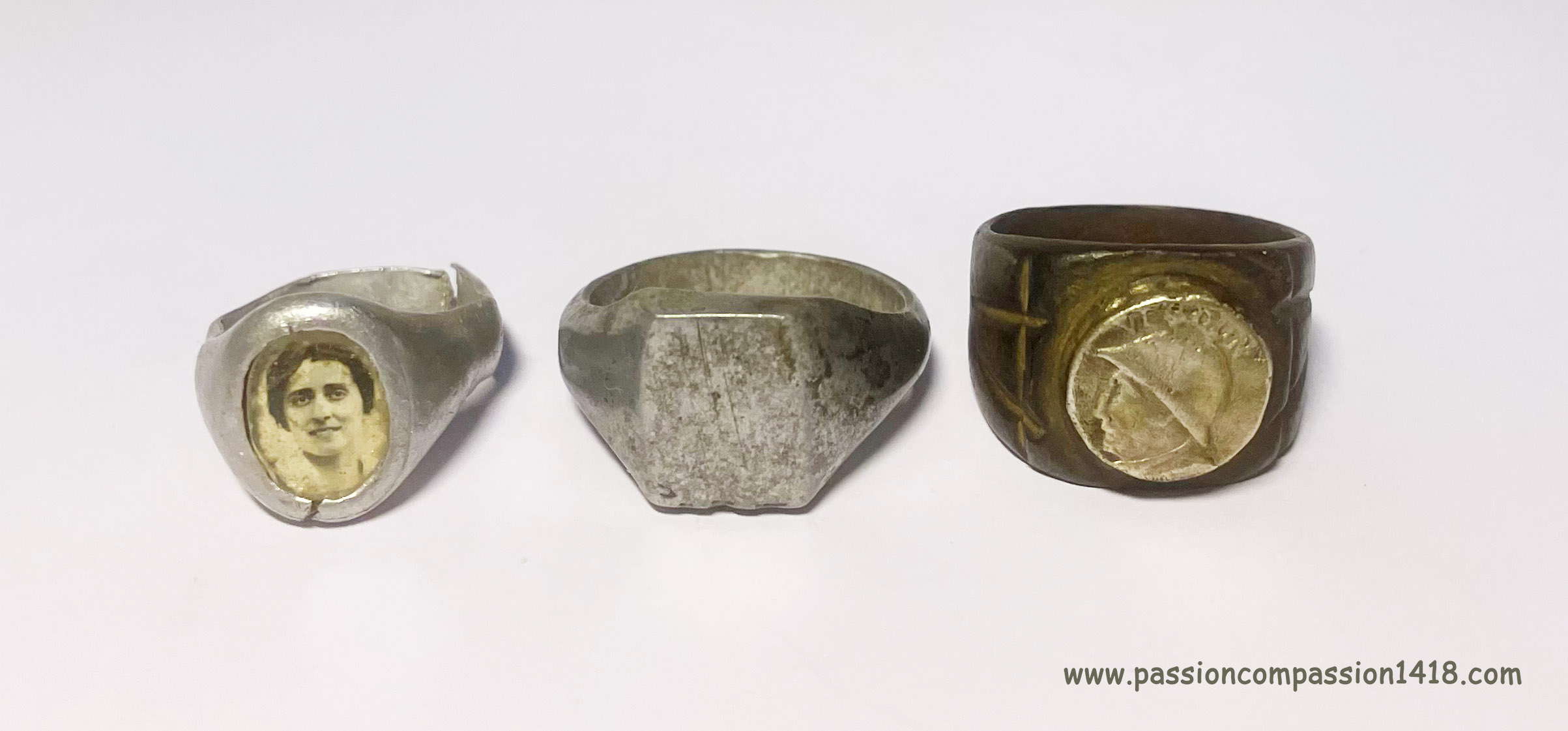 |
Aluminum, an essential component of the German Dopp Z 96 n/A double-effect fuzes used by the 7.7cm FK96 n/A field guns, is available in abundance on the battlefield from the start of combat, and it has the very practical property of melting at a relatively low temperature (660°C in its pure state) and being very malleable in its solid state. |
|
 |
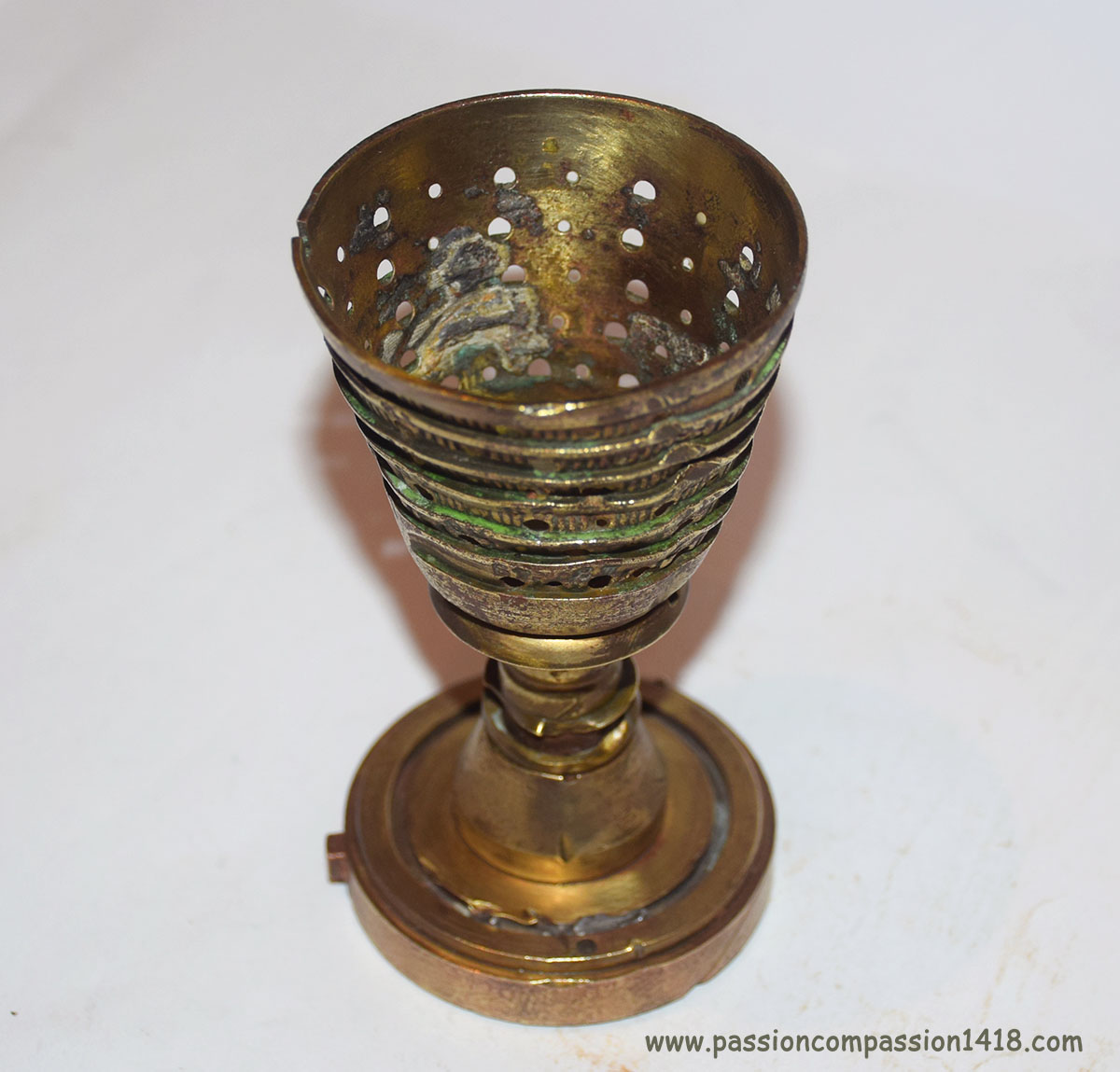 |
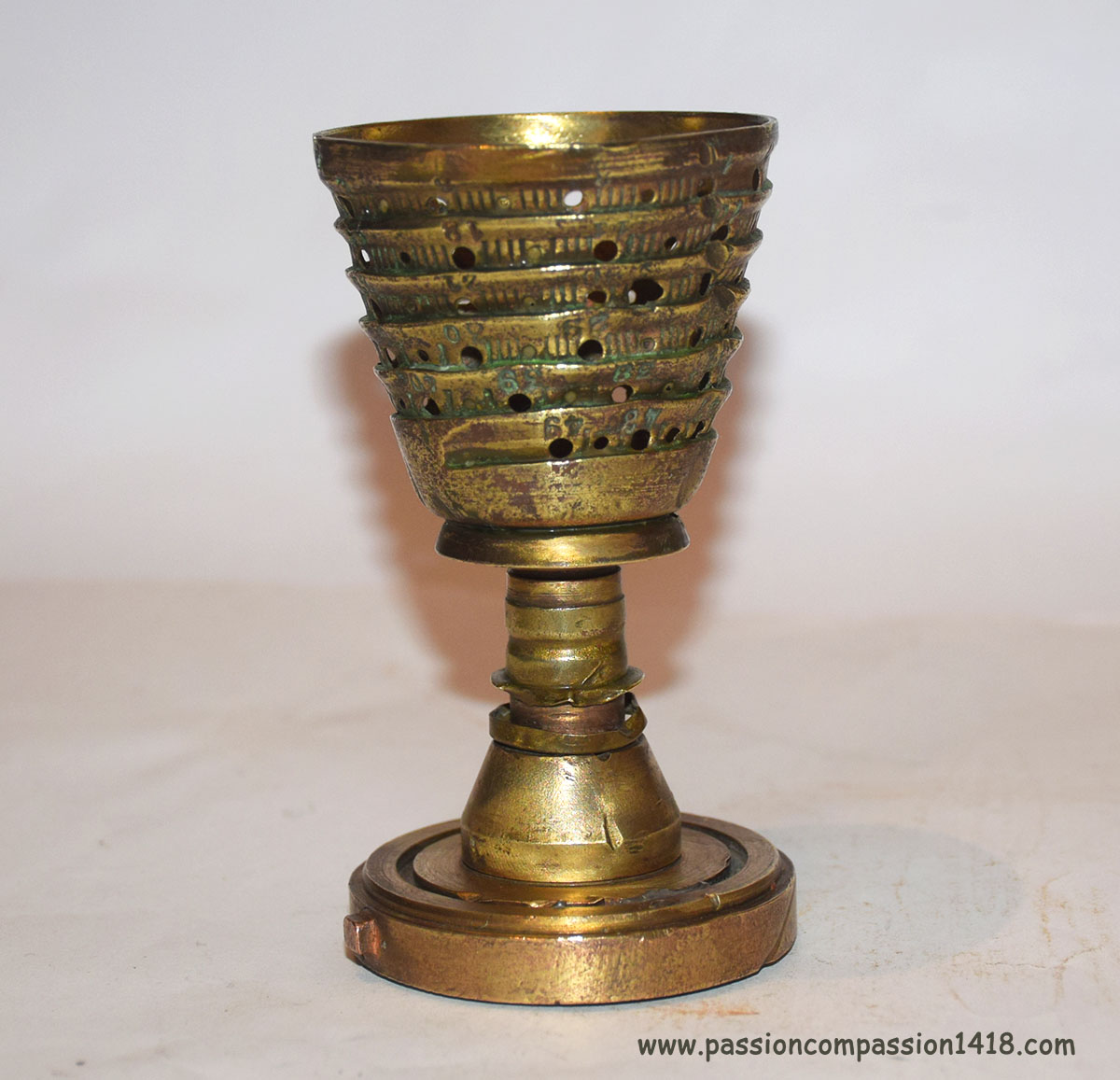
There must have been a soldier one day who realized that the cap of the large French barrel fuzes fit well on chicken eggs... and that it only took a few simple steps to transform a French 30/55 Mle 1889 double-action fuze into an egg cup. |
 |
 |
Tobacco, which was very popular in the 20th century, also played a prominent role in trench art. |
 |
 |
The creative spirit of soldiers was equally suited to abundance of raw materials as it was to frugality. |
 |
 |
This other lighter is made of steel. There is no evidence that it was manufactured at the front or with materials collected from the battlefield. |
 |
 |
The dinner table could also hold war souvenirs. This wooden salt shaker is a fine example. |
 |
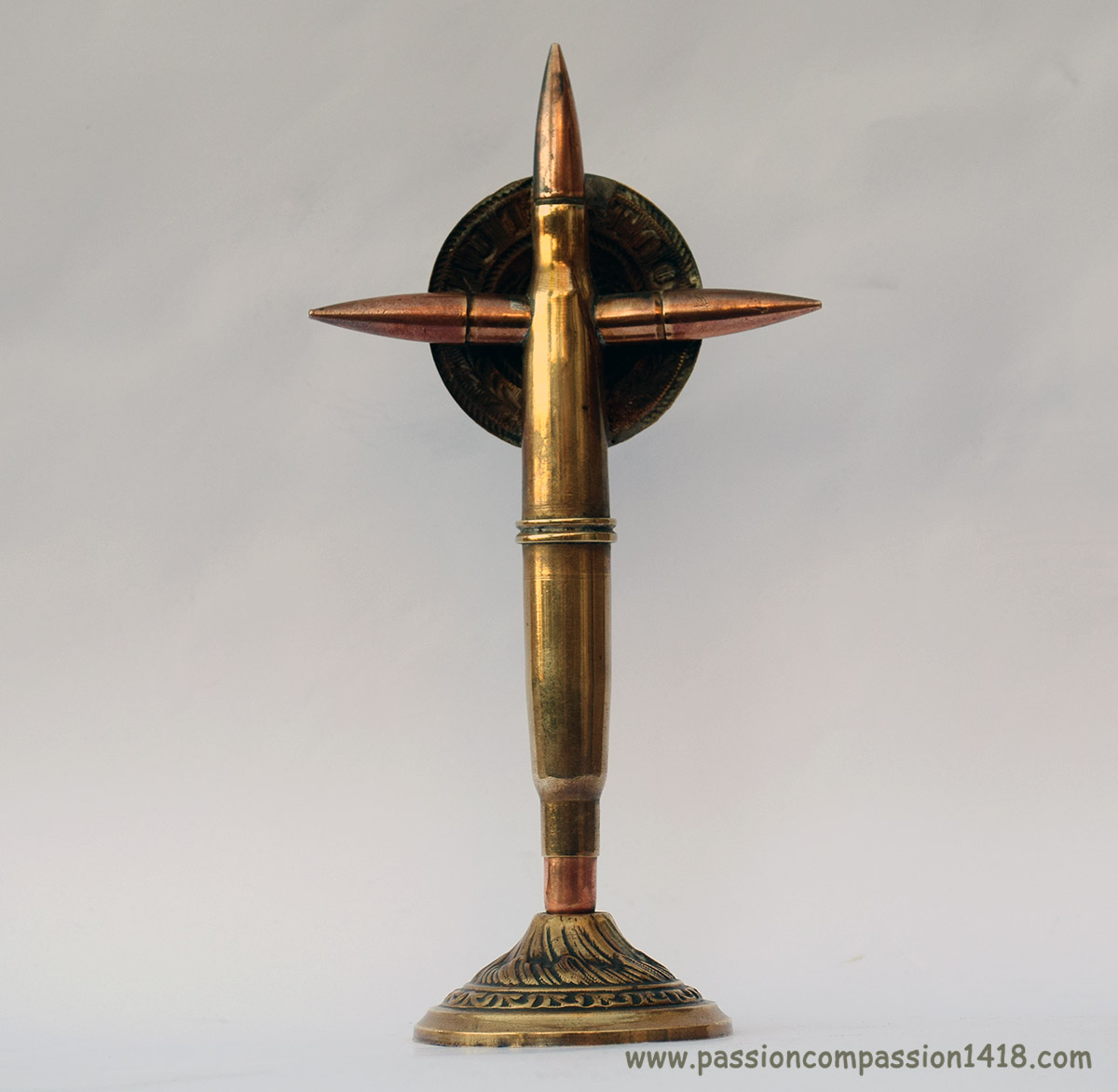 |
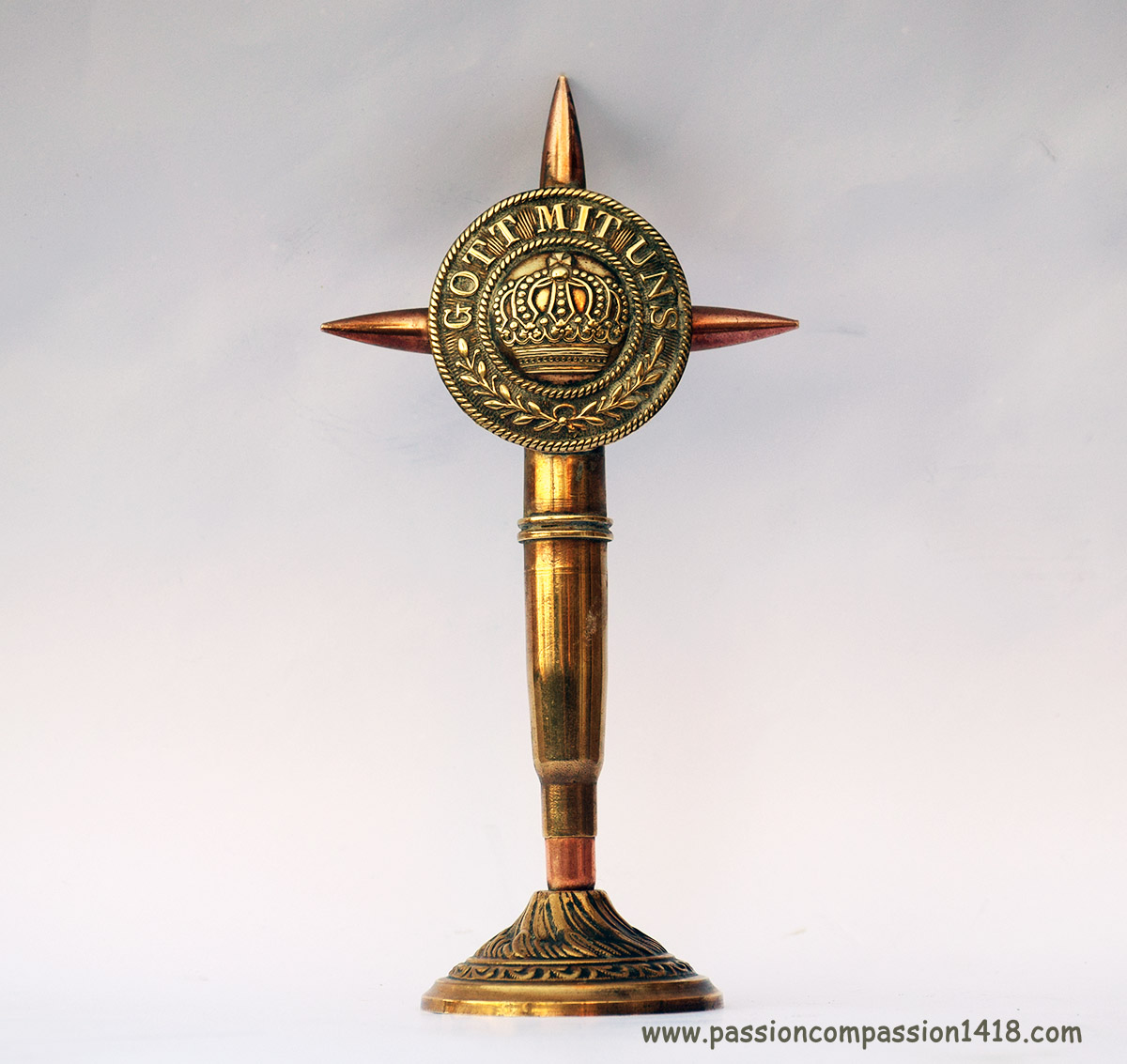
Another classic trench item, crucifixes made from metal collected on the battlefield come in many shapes and forms. They were undoubtedly inspiring objects for soldiers who had brushed with death, even if some of them were so traumatized that they lost their faith. |
 |
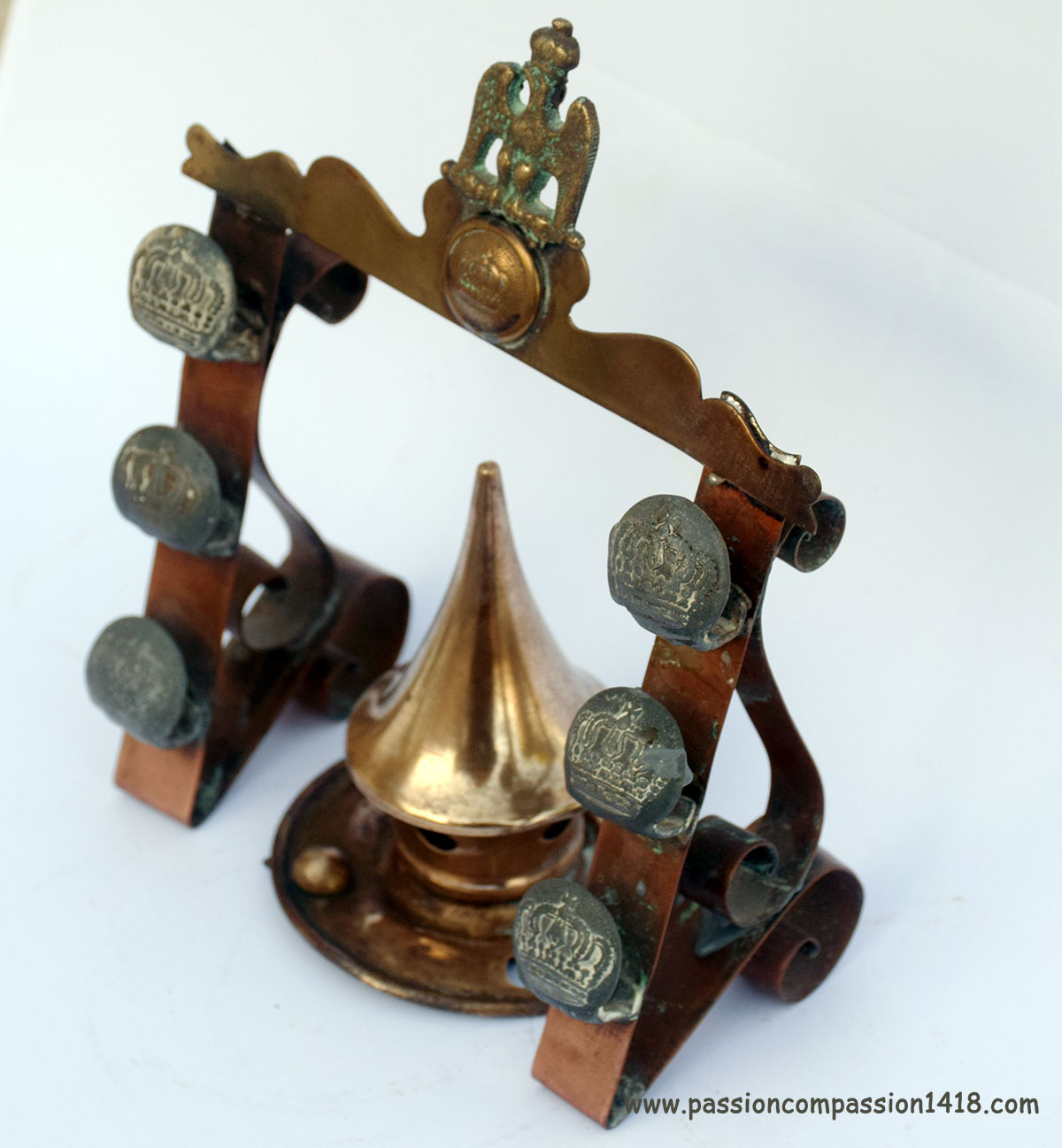 |
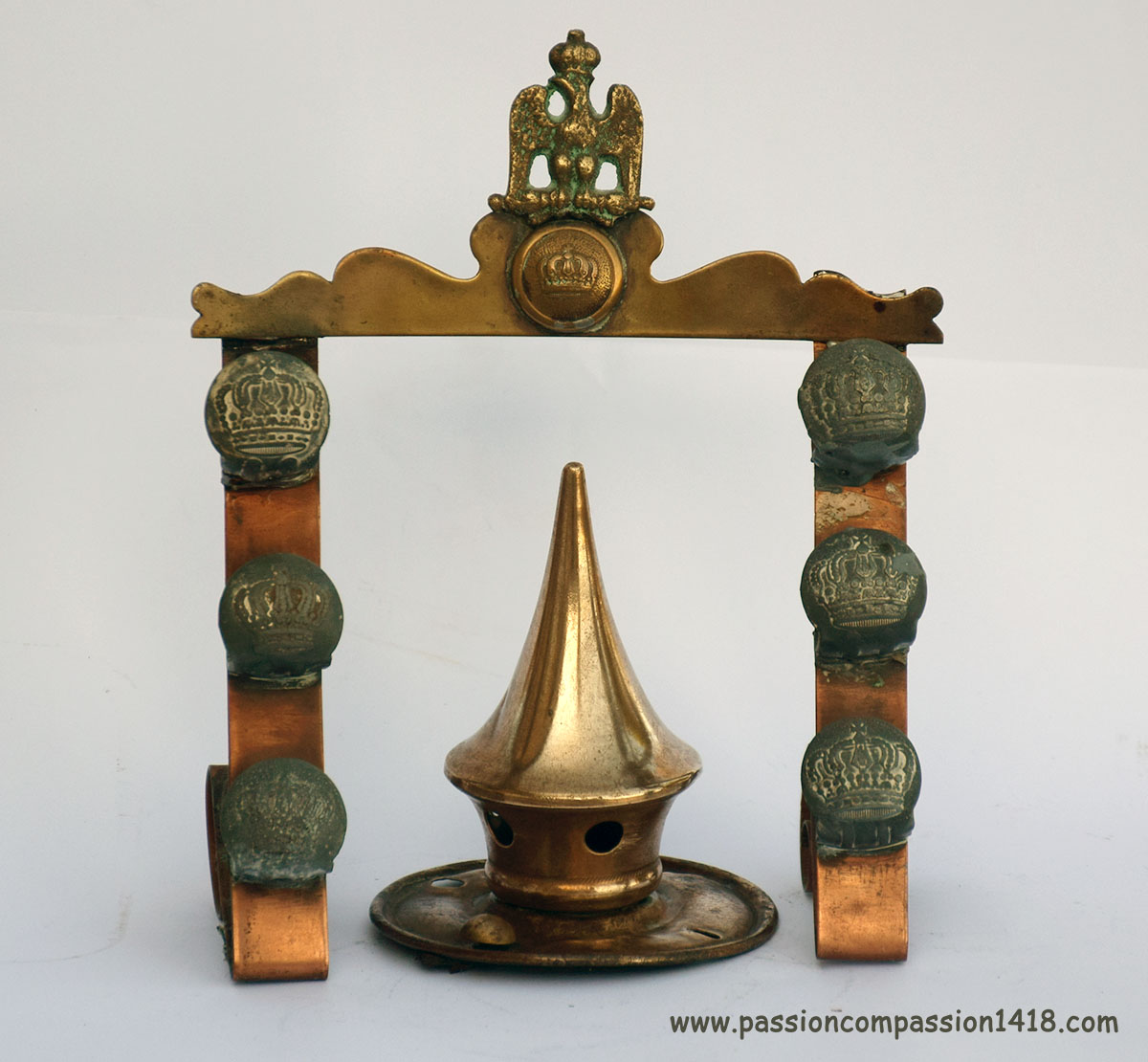
For this original and aesthetic work, the creator worked with copper-plated metal collected from battlefields and shaped into thin strips to form a portal framing the spike of a German helmet. Six German uniform buttons were welded onto the uprights and can be used as pen holders. |
